
OPERATION GREEN TURTLE WAS CONSIDERED ONE OF THE MOST AUDACIOUS FAILURES IN THE HISTORY OF CONSERVATION BIOLOGY—UNTIL A STUNNING NEST IN BERMUDA (DOCUMENTED BY THE NONSUCH EXPEDITIONS TEAM IN 2015) INSPIRED SCIENTISTS TO RECONSIDER ITS LEGACY.
Read more“Vega” The 2024 CahowCam1 chick has Fledged!
May 28th 2024 @1:45 AM: the Cahow chick that the DENR & Nonsuch Expeditions Teams, scientists, students and followers from around the World, and the diligent volunteers from the Cornell Lab of Ornithology have been watching grow via the CahowCam1 LiveStream over the past few months has fledged!
When she was last checked by Jeremy Madeiros on May 26th (as seen in the video below) and subsequently named “Vega” by his daughter Lizzy, her weight and wing chord measurements were well within the range when she would normally be expected to fledge, however she still had an excessive amount of down that needed to slough off prior to finally fledging.
She had already started her nightly explorations around the colony, flexing and exercising her wings, whilst imprinting on her surroundings so that she could find her back 4 to 6 years from now should she survive these next few years at sea…
She is one of a record 25 chicks to hatch on Nonsuch this year, from a record 39 breeding pairs split between Nonsuch Translocation Colonies A & B, out of this year’s 75 egg pairs (that were proven to lay their single egg wether or not it hatched) found throughout the Colonies including Nonsuch and the nearby Islets.
Nonsuch Expedtions founder and CahowCam creator J-P Rouja was tracking her throughout the night with the remote controlled infrared surface Camera as she made her way around the Colony ant finally captured her launching into her first flight.
Stay tuned for a video highlight reel of those activities….
Pre-Fledge Health Check for CahowCam chick!
CahowCam 1 chick gets banded as we prepare to witness her fledge!

Happy Bermuda Day (and Memorial Day to our American Friends) from the Department of the Environment and Natural Resources and Nonsuch Expeditions Teams on Nonsuch Island!
There is great Conservation News once again from Nonsuch Island where one of our most culturally significant species, the Critically Endangered Bermuda Petrel or Cahow, is in the middle of a record-breaking nesting season on Nonsuch Island to which it was successfully translocated starting less than 20 years ago. This year we have a record 25 chicks from 39 eggs (1 per pair) that were laid from the confirmed 41 Nonsuch Translocation Colony pairs. The Nonsuch-born chicks are now returning, having chicks of their own and recruiting mates from the outer Islands, the final stage in determining Translocation success!
Watch the video below as our star CahowCam1 chick gets banded during her May 10th health check. Keep watching the CahowCams after dark as she (Jeremy has predicted her sex based on her bill size) explores the colony at night exercising and imprinting on her surroundings so that she can make her way back after her initial few years at sea.
Amazing Cahow Facts - The Endemic Bermuda Petrel

FAQ: The Nonsuch Cahow Translocation Colonies are breaking records this year - This is what makes this so significant:
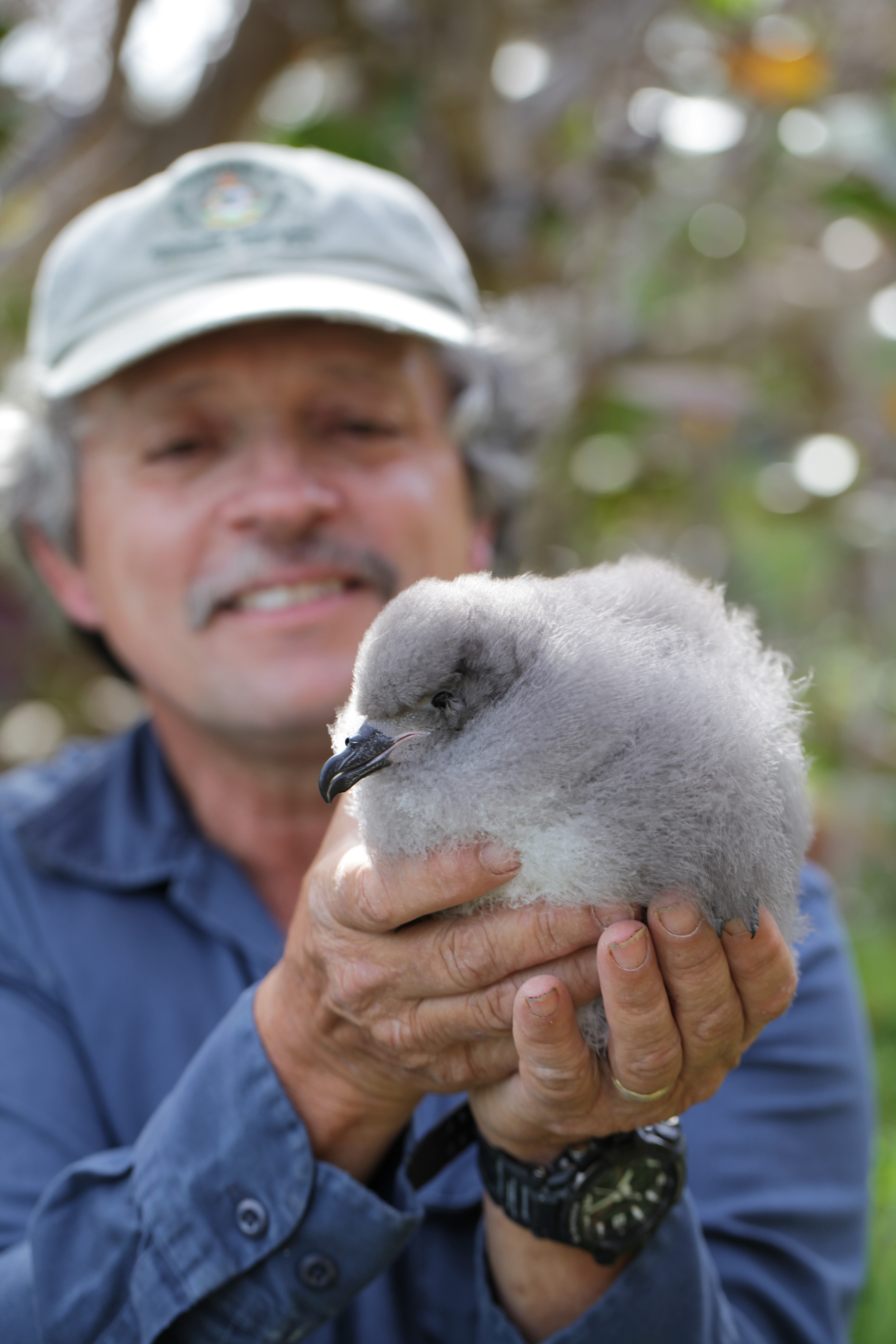
The Bermuda petrel (Pterodroma cahow) is a gadfly petrel. Commonly known in Bermuda as the Cahow
The Cahow is the 3rd rarest seabird on the planet;
The total number of Cahows now existing in the world is approx 450 (including immature birds too young to breed);
Bermuda, specifically Nonsuch Island and the surrounding rocks, is the only location on the planet where the Cahows come to breed;
They were thought to be extinct for 330 years (1620 – 1951) making them a "Lazarus species";
There were only 17 – 18 breeding pairs in 1960 when the Cahow Recovery Program was started by David Wingate;
There were 55 breeding pairs in 2001 when David's successor Jeremey Madeiros took over the Program and started the translocation process to establish new breeding colonies on Nonsuch Island;
Under Jeremy's stewardship the breeding population is now up to a record number of 185+ breeding pairs (that are confirmed pairing up in a burrow, but not all produce an egg);
Each breeding pair, when successful, produces only 1 egg each year, of which 40% to 50% fail to hatch;
In 2024, 164 pairs were confirmed to have produced their single, from which in the Nonsuch colonies a record 25 chicks hatched ;
In the 2023 season, 156 eggs were laid from which 76 chicks successfully fledged from all nesting islands, including 19 from Nonsuch;
Eggs take 53 to 55 days to hatch, and are incubated by both adults;
Chicks take from 88 to 105 days from the time they hatch until they mature and fledge out to sea;
Adult Cahows abandon chicks up to 1 week before they fledge to sea, with the chicks flying to sea and learning to survive on their own;
Cahow chicks spend 3 to 6 years alone at sea before they mature and return to the breeding islands in Castle Harbour, Bermuda, to find a mate and nest burrow;
Banding studies have shown that only 28% to 38% of naturally fledging chicks survive their first years at sea and return to nest;
49 of the 102 cahow chicks translocated to Nonsuch Island between 2004 and 2008 by Jeremy Madeiros returned to Nonsuch or the other nesting rocks – this 48% return rate exceeds that of chicks raised solely by the adult birds.
Throughout the nesting season Jeremey conducts conservatively 2,000+ health checks, on average checking every chick in the colony every 2 days, often under very challenging weather conditions.
More amazing Cahow facts:
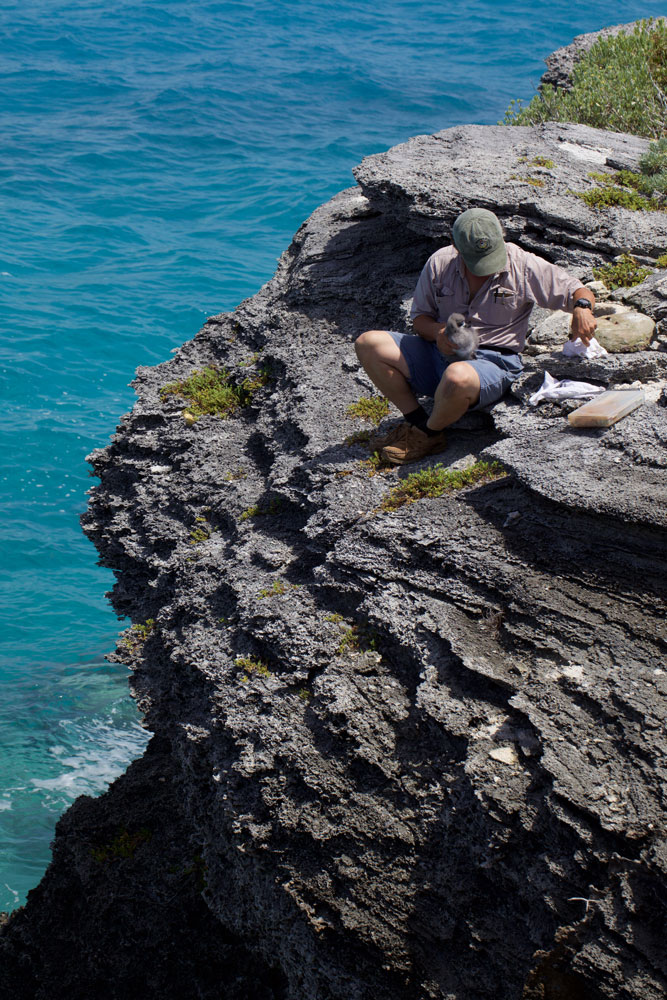
Jeremey conducts health assessment.
All male Cahows return to the breeding islands first at 3 to 4 years of age, and look for a empty nest burrow close to the nest they originally fledged from, often landing within a few feet of their original nest;
Females return later at 4 to 6 years of age to look for prospective mates;
Cahows nest in underground burrows or deep rock crevices; only nests deep enough to be completely dark are chosen;
85 % of all Cahows now nest in artificial concrete nest burrows constructed for them as part of the Recovery Program;
It takes approx 600 lbs of concrete to make a burrow;
Returned male Cahows try to attract prospecting female birds to their chosen nest burrows; if the female accepts the male as a mate, they will return to the same nest every year for the rest of their breeding lifespan (possibly 30 to 40 years);
Archival geolocational tags attached to the legs of adult Cahows by Jeremy Madeiros between 2009 and 2012 recorded the birds travelling amazing distances to gather food for the growing chicks;
The distance an adult travels to gather food to feed the chick once ranges from 1650 miles to 4500 miles or more, taking 4 to 9 days; the record distance for one feeding trip was almost 10,000 miles;
Cahows can cover distances of 250 – 500 miles a day, using free wind energy from Atlantic storms and gales;
Cahows eat mainly squid, small fish and shrimp-like crustaceans; studies with geolocators have also shown that Cahows predominantly feed in colder waters well north of the Gulf Stream;
Cahows are pelagic (oceanic) birds, which only visit land to breed; one of their adaptations for a life on the open ocean are special glands in their tube-like nostrils which enable them to drink seawater, by filtering out the salt so that they can use the resulting fresh water. The excess salt is sneezed out as drops of salty brine;
Another pelagic adaptation is an ability to sleep in flight by letting one side of the brain doze while the other half stays alert, then switching sides to let the other side get some rest.
The Cahow is Bermuda's National Bird.

Cahow identification band.
Nonsuch VIP Visit and CahowCam History

On April 14th Jeremy and J-P hosted VIP visitors from the American Bird Conservancy, the Critical Ecosystem Partnership, and the Mohamed Bin Zayed Species Conservation Fund, for a private tour of Nonsuch Island to give them an overview of the historic and ongoing conservation efforts.
Whilst Jeremy gave them a tour of Translocation Colonies A&B which ended in the naming of “Tahiry”, this season’s chick from the most prolific pair in the history of the program, J-P the Nonsuch Expeditions Founder and CahowCam creator gave them an overview of the Platform (see videos below), which has been LiveStreaming from the Nonsuch Cahow burrows, for the past 13+ years.
John C. Mittermeier, PhD, Director of the Search for Lost Birds for the American Bird Conservancy:
“In our work on lost birds, we are often faced with the question of whether these lost species are simply lost causes. The fact that the Cahow, thanks to the recovery project on Nonsuch, is now making a comeback after being lost for 300 years makes it the ultimate example of how a lost species can be rediscovered and return. It was inspiring to see the Cahow recovery project firsthand with Jeremy and Jean-Pierre and consider how this special bird can help motivate conservation work on other lost species around the world!”
Olivier Langrand, Executive Director of the Critical Ecosystem Partnership Fund (CEPF) & member of the advisory board of the Mohamed Bin Zayed Species Conservation Fund (MBZ):
“Thank you very much for sharing this amazing experience and also for the amazing conservation success for the conservation of the Cahow. I know what it means as the amount of work that is behind this is absolutely huge.”
A year-over-year 25% increase in the number of chicks in the Nonsuch Translocation Colonies

The increase from last year’s record of 19 fledged, to 25+ hatched this year, keeps us on track for setting a new record should the majority successfully fledge this year, and is further validation of the success of the Translocation Program initiated by Jeremy in 2004.
The CahowCam1 chick is being fed regularly as documented by the LiveStream and is now the largest in the Colony, however, next door in CahowCam2 the news isn’t as good as despite the surprise latest Cahow egg-laying on record, the original male and his new mate (which joined him after his original one failed to return last year), will not be hatching a chick this season, though historically this is to be expected of newly formed pairs, see Jeremy’s explanation in the video below:
“I went out to Nonsuch on the 27th to carry out a Cahow nest check; I had intended to try and land on some of the smaller islands, but there was a large ocean swell, almost a ground swell, up to 11-14 feet on the outer reefs, caused by a low pressure center that passed over us the day before and was now to the southeast - unsafe to go around Coopers Point or even attempt landings. Even at Nonsuch, there was quite a surge at the dock.
I can give an update for Nonsuch though - as of Wednesday, 27th March, i can confirm a record number of 25 chicks on Nonsuch, significantly breaking last year's record of 19 fledged chicks, so we have finally broken the 20-chick mark!
Most of the chicks had been recently fed, with several over 300 grams in weight, so the adult Cahows have obviously been taking advantage of the storm system that gave strong winds and rain over the last few days. The heaviest chick on Nonsuch was none other than our own CahowCam 1 chick (nest number R831), which, on its last growth check a week ago on 20th March, weighed in at 190 grams with a wing chord length of 45mm. Yesterday, on March 27th, it had increased to 319 grams (as heavy as an adult female Cahow!), with a wing chord length of 55mm. As this chick is only one-third fledged at this point, with an eventual wing chord length of up to 275mm by the time it will be ready to fledge in about 2 more months, it is obvious that this chick is being well cared for by both adult birds, and I suspect it will become considerably heavier if it continues to be as well taken care of by the parents!
In addition to the chicks, there were also a fair number of adult birds recorded in nests on Nonsuch where the egg had failed. This is normal, as even when the egg has failed in a Cahow nest, the adults will often continue to visit the nest up until the beginning of April, both to strengthen the pair bond and connection to the nest, but also to defend the nest burrow from being taken over by young adult Cahows, newly returned from 3 to 5 years at sea after fledging as chicks, and looking for an empty nest burrow of their own. If the resident male Cahow returns to find a stranger in its nest, it will aggressively eject the stranger from the nest. These fights can be quite vicious, as a Cahow's wicked hooked bill is quite strong and razor-sharp (as I know well, sporting a collection of scars on my hands from adults objecting to me removing them from their nests for id band checks and measurement!)
Finally, to finish up, I was able to confirm at least 1 new pair of Cahows in a spare nest burrow on Nonsuch. I was able to determine from the band number on its leg that the male bird was translocated to the "B" colony site back in 2017, while the female bird originated from a nest on one of the small original nesting islets. This pair should hopefully return next year to the nest to lay their first egg together, which would bring the total number of established breeding pairs on Nonsuch up to 40. There is also still a week or two remaining to discover other new establishing pairs, and hopefully the weather conditions will allow us to make more visits to the nesting islands so that we can determine the total number of hatched chicks for the entire island.”
A 60+ year rewilding Effort: The Nonsuch Island Ecological Restoration Project

Southampton Island, Horn Rock, Nonsuch Island (top right with house and beach) and Green Rock
For World Rewilding Day 2024, here is an overview of one of the earliest ecosystem-wide Ecological Restoration Projects, (now known as Rewilding) that was started in 1960 on Nonsuch Island in Bermuda, and continues to this day, from which the Nonsuch Expeditions project is based.
Biodiversity Photography Project
Nonsuch Island is 16.5 acres in area, is well known as Bermuda's most important Nature Reserve and is where many of Bermuda's rarest and most critically endangered plant and animal species survive. Due to the ongoing massive impact of man on Bermuda through development, habitat destruction and introduced mammal predators, some of these species can only survive on offshore islands that are managed to control invasive species and human access. It is also home to several "Lazarus species", that is, species that were thought to be extinct, but were rediscovered barely surviving in unexpected locations, and are now the subject of recovery programs or captive breeding and re-introduction projects.
Nonsuch is also notable as one of the first examples on Earth of Ecological Restoration, or "Rewilding" as it is now known, where restoration and recovery work is being carried out not just for one or two species, but with the entire ecosystem that these species live in and need to survive in the wild. This also involves removal or control of all non-native or introduced plant and animal species that do not belong in that ecosystem but were accidently or deliberately introduced by man. It also involves ongoing management to ensure both survival of the re-introduced native and endemic species, and the continued control or eradication of additional invasive introduced species making their way out to the rewilded areas.

Bermuda Petrels as seen in CahowCam LiveStream
A keystone species the recovery of which is a signature part of this effort is the Cahow, or Bermuda petrel which was rediscovered in 1951 after being thought extinct since the 1620s, by Robert Cushman Murphy, Louis S. Mowbray and a teenage David Wingate. Eighteen pairs were eventually found breeding on four of the smaller Castle Harbour Islands, which led to these islands, including Nonsuch, gaining Nature Reserve status.
In 1962, after studying zoology at Cornell, Dr. David Wingate moved to Nonsuch Island as caretaker, where he conceived and initiated the "Living Museum" project, a monumental, and at the time ground-breaking ecological restoration or rewilding project that aimed to restore Nonsuch as an example of Bermuda's pre-colonial flora and faunal communities and habitats. He was appointed as Bermuda Government Conservation Officer in 1966, with the "Living Museum" project securing Government funding.

David Wingate, 1992 Nonsuch Tour
Between 1960 and year 2,000 when he retired,10,000+ seedlings of Native and Endemic plants were planted on Nonsuch by Dr. Wingate, on the initially virtually barren island, which was followed by another 6,000+ by Jeremy Madeiros once he took over as Warden in 2000 (see below).
Between 1967 and 1978, 16,000 green turtle hatchlings were hatched and released to sea from Nonsuch South Beach, in an effort to re-establish a breeding population in Bermuda. This project was ultimately unsuccessful, due to reasons that were not fully understood at the time.
In 1975 and 1992, two artificial ponds were excavated on Nonsuch to create wetland habitats, which were previously missing from the island. The freshwater pond was excavated in the center of the island and fitted with an impermeable liner to create a freshwater marsh habitat that continues to thrive and create a freshwater source for bird and invertebrate species. A sea-level saltwater pond was excavated and planted with Mangroves in the dune area behind the South Beach, but was damaged by hurricanes in 1995 and 1999, and then totally destroyed by major hurricanes in 2003 and 2010.
Between 1976 and 1978, 44 Yellow-crowned Night Herons were shipped from Tampa Bay in Florida to Bermuda in a collaborative project with the U.S. Fish & Wildlife Service. These were hand-reared on Nonsuch on land crabs and released into the wild. These began breeding here and elsewhere on Bermuda by 1980, eventually encouraging the Fish-eating Green Heron to naturally colonize Bermuda by 2002.

Top Shells and Portuguese Man-0-War in Nonsuch tide pool
In 1982, the re-introduction of the large intertidal West Indian Top Shell or "Whelk", which was wiped out on Bermuda after being collected as food by the early settlers, was carried out on Nonsuch Island, using 86 shells imported from the Turks and Caicos Islands by famed diver Teddy Tucker. This project was successful and the top shell started reproducing by 1986 on Nonsuch and has since recovered island-wide on Bermuda.
By 1990, the native forest planted by David Wingate matured enough to begin self-seeding; this forest has since developed into a closed-canopy, mature forest composed entirely of endemic and native tree and shrub species. Planting of shade-loving fern and shrub species that need the shelter and shade of a mature forest has continued until the present day.
In 2000, Dr, Wingate retired as Conservation Officer, with Jeremy Madeiros, who had worked with Wingate since 1984 as an apprentice and Parks Superintendent, becoming the new Conservation Officer by 2001. Madeiros travelled to Australia in 2001 to receive training for the handling and translocation of Petrels and numerous other seabird species. He has continued as the warden and manager of the Nonsuch Island project for the last 24 years.

From 2004 to 2008, in the first phase of the Bermuda Petrel Translocation Project initiated by Mr. Madeiros, 102 Cahow chicks were translocated from the 4 tiny original islets where the species had barely survived for almost 400 years, to artificial concrete nest burrows constructed on Nonsuch, where they were hand-fed on squid and anchovies and allowed to imprint upon and fledge from Nonsuch Island, so that they could return there to nest once they were mature. This project was successful and the first of the birds returned as adults to Nonsuch in 2008, with the first Nonsuch-born Cahow chick since the 1620s hatching in 2009. Almost 50% of all translocated chicks eventually returned as adults to Nonsuch and the original nesting islets, compared with an average of 33% of chicks that are naturally raised by adult Cahows that return.
Following a number of strong hurricane impacts, which destroyed hundreds of Tropicbird (Longtail) nest cavities on the Castle Harbour islands, over 100 artificial "Igloo" Tropicbird nests were installed on Nonsuch and 5 other Castle Harbour Islands between 2003 and 2012. These have helped to keep the number of Tropicbirds breeding in this area, which represents the largest number of breeding pairs of any single location in the greater North Atlantic area, from declining, and have contributed to this population actually increasing over the last 10 years. A survey of breeding success of over 300 Tropicbird nests was initiated by Madeiros in 2006, and continues to this day.

Jeremy in Cahow Translocation Colony “A” with an almost fully fledged Cahow chick
After the success of the first phase of the Cahow Translocation Project, a second translocation project was carried out at a second location on Nonsuch Island, with a total of 65 Cahow chicks translocated between 2013 and 2017 to artificial nest burrows at this new location. This second translocation has also proved to be successful, with the first birds returning and chicks produced by 2018. The number of Cahow breeding pairs at both Nonsuch nesting colonies reached 39 pairs in 2024, with 25 chicks being confirmed.
In 2010 the Nonsuch Expeditions team launched the CahowCam project which has contributed greatly to the management of the species. They continue to develop tools to solve conservation challenges with the latest, an AI-assisted rodent detection system, with support from the Nature Conservancy, that aims to give early warnings to a global rewilding problem. (see more below)

Another "Lazarus species" that was thought to be extinct by 1963, the endemic Greater Bermuda Land Snail (Pocilizonites bermudensis), was rediscovered in 2000 with small populations located in a couple of locations around Bermuda. These were the subject of a captive breeding program at Chester Zoo in the U. K., from which over 10,000 individuals were brought back to Bermuda and re-introduced to Nonsuch Island starting in 2014. This population began to successfully breed and has been monitored and censused ever since, with a survey conducted in 2023 by Dr. Kristiina Ovaska estimating a minimum of 150,000 now living on about one-third of Nonsuch's total area.

The endangered endemic Bermuda Skink also survives in good numbers on Nonsuch Island, with one of the largest populations still to be found in Bermuda. The confirmation in 2023 that Skink populations are increasing around the two Cahow colony sites strongly suggests a symbiotic relationship between the two species, (as filmed by the CahowCams) ,which is doubly important in light of the fact that the few remaining populations on the main Bermuda Islands are all in decline and may collapse in the near future, due to introduced predators such as feral cats and Kiskadee Flycatchers.
The Lesser Bermuda Land Snail (Pocilizonites circumfirmatus), another endemic species that, like its larger cousin became extinct in the wild by the early 2000s, was also the subject of a captive breeding program at Chester Zoo in the U. K., using some of the last individuals collected before the species disappeared. The first 800 young snails from this program were re-introduced to Nonsuch starting in 2020, with another 3000 snails released in 2022-23. Although breeding has not been confirmed on Nonsuch yet, the released adult snails have survived and there are plans to supplement this population with additional releases in the near future.
The Native and endemic forest cover of Nonsuch has now fully matured and the various tree and shrub species are reproducing well in the absence of invasive pest species such as rats and mice, which eat almost all seed produced by surviving native & endemic plants on the main islands. Annual baiting and trapping programs to prevent these pests (along with a new Ai rodent detection system see below), which can swim on rare occasions across from nearby Coopers Island from becoming established on Nonsuch and the other Castle Harbour Islands. Invasive trees, in particular the invasive Australian Casuarina tree, originally planted on these islands as a windbreak in the 1960s, have now been completely removed from Nonsuch as of 2020. Seed from other introduced pest plant species still are carried out to Nonsuch in the excreta of introduced pest bird species such as European Starlings and Kiskadees, and are removed by an ongoing annual culling program carried out by the Conservation Officer, with 6,000 to 15,000 seedlings removed every year.
Jeremy Madeiros, Senior Conservation Officer (Terrestrial Conservation) Dept. of Environment and Natural Resources BERMUDA
The Nonsuch Expeditions was founded 20 years ago by Jean-Pierre Rouja in support of these ongoing efforts. Our mission is to participate in, support, and showcase the ongoing conservation and rewilding work taking place on Nonsuch Island, its surrounding waters, and the Sargasso Sea, whilst using Bermuda’s wide range of habitats (with Mangroves, Coral Reefs, Deep Ocean & the Sargasso Sea/High Seas, all within 30 min) as a field station for the development of conservation tech. Please Contact Us for more information.
These efforts include:
Development and ongoing updating of this (www.nonsuchisland.com) website for education, global outreach, and engagement.
Producing weekly film and blog updates throughout the 9-month nesting season for the past 15 years.
The 2005 Higher Ground Educational Film documenting the original Translocation Process
Designing and building the CahowCams (launched in 2010), from which over the past 13+ years 10’s of millions of minutes of video of the otherwise unknown underground Cahow nesting activities, have been watched by scientists, educators, and viewers from around the World (now in partnership with the Cornell Lab of Ornithology).
BioAcoustic reef soundscape and spawning aggregation studies with Cornell
Shipwreck and Coral Reef photogrammetry with UCSD
Studies of Sargasso Sea eco-systems as Ambassador to the Sargasso Sea Commission
“Message in a Bottle” Ocean Plastic Tracking Project with Arribada
“The Sound of Science” Bermuda Whale Song Project, with The Centre for Cetacean Research & Conservation, and Cornell University
Development of a Sea Grass monitoring platform under a UK Darwin+ grant with Arribada
Installation of an Ai rodent detection system using off-grid, wirelessly meshed camera traps and the cloud to recognize rodents when they first reach Nonsuch Island, with assistance from the Nature Conservancy.
Tracking Bermuda Petrels on the High Seas as part of the Bermuda Petrel Biomonitoring Project with global partners
Producing the first Reference Genome for the Cahow and follow-on population study with BioQuest powered by CariGenetics
Ocean Technology Development with Station-B, MIT, Woods Hole, URI, UCSD, etc.
A record 22 Cahow chicks on Nonsuch Island, with more on the way!

Jeremy Madeiros and Letizia Campioni with 2024 CahowCam 1 chick.
“A total of 22 Cahow chicks were found to have already hatched, with two additional eggs confirmed as "pipping" in the early stages of hatching, while an additional 3 eggs were confirmed as fertile with normally developing.”
“Following an extended period of time off for a nasty bout of covid, then an additional several days off to recover after testing negative and to satisfy an abundance of caution before handling the birds again, I was finally able to get out to Nonsuch Island on Thursday, 07 March 2024, with research collaborator Letizia Campioni, the last day before she returned home.
I am very thankful to both Conservation Officer Peter Drew (my assistant and strong right arm!) and Letizia for stepping up while I was incapacitated to continue regular Cahow nest checks, so that we had a good idea of the numbers and dates of Cahow chicks hatching on the various nesting islands, as well as checking any adult Cahows found in the nests, to record adult weights and band numbers.
I have been instructing Peter for a number of years in carrying out nest checks and handling and measurement of the adult and fledgling Cahows, as well as White-tailed Tropicbirds (Longtails), which are the main two seabird species under study and management by the Terrestrial Conservation Division of the Dept. of Environment and Natural Resources, while Letizia has extensive experience handling and studying a variety of seabird species.
My check on the 7th March confirmed that as chicks have continued to hatch on Nonsuch Island, we are now at record numbers of chicks for the newly established nesting colonies on Nonsuch. A total of 22 Cahow chicks were found to have already hatched, with two additional eggs confirmed as "pipping" in the early stages of hatching, while an additional 3 eggs were confirmed as fertile with normally developing embryos and were still being incubated by adult Cahows. This would well exceed last year's record number of 19 successfully fledged Cahow chicks for Nonsuch Island.
A highlight of the check was finally being able to check and weigh the Cahow chick in the CahowCam1 (R831) nest, the first time I have been able to do so since this chick hatched on February 27th. This chick has been fed almost nightly since hatching, mainly by the male parent (band no. E0197), who was also present when the chick hatched. During the check on the 7th March, however, the female parent (band no. E0212) was in the nest with the chick after arriving the previous night and feeding the chick. Meanwhile, the now 9-day old chick had already increased from its hatch weight of 34-38 grams to 126 grams and is already one of the heaviest chicks measured on Nonsuch. Letizia was able to take a number of photos of this and other chicks on Nonsuch.
At this point, we are just waiting to see how many of the remaining eggs hatch, to know just how many Cahow chicks we end up with on Nonsuch, but it looks all but certain that Nonsuch will host a record number of chicks, and may in fact exceed Horn Rock for the first time as the nesting island with the highest number of chicks fledged for 2024.
This is only 20 years after the translocation program was started to establish new nesting colonies on Nonsuch Island, that are high enough to not be subject to the hurricane flooding and erosion damage that is an increasing problem on all 4 of the smaller original nesting islets. The original islets were the sole nesting location for this critically endangered species for some 400 years, after hunting, destruction of habitat and the introduction of mammal predators such as rats, cats, dogs and pigs destroyed the nesting colonies on the larger islands of Bermuda.
2024 is looking like it will be an eventful one for Bermuda's National Bird!”
(4th) day in the life of a Cahow chick, video highlights - one of many Nonsuch Conservation Tech projects

4 day old chick resting with parent in the CahowCam1 burrow, as seen in screen grab from the infra-red CahowCam video feed.
See video highlights from the CahowCam1 burrow LiveStream where this year’s star chick continues to be well attended to by its parents. The clips in the video below were edited from the archival video from when it was 4 days old. (The cameras live stream video when internet access is available, while in parallel recording and archiving it locally for scientific purposes).
The Nonsuch Expeditions, founded and managed by ConservationTech Developer J-P Rouja, has been LiveStreaming from two of the man-made underground nesting burrows in Translocation Colony A from the world-renowned Nonsuch Island nature reserve in Bermuda for 10+ years. The platform uses custom-built cameras and military-grade 940nm IR lighting arrays, which, as Nonsuch Island is completely off-grid requires ongoing solar power and wireless internet to get the signal back to the Bermuda mainland. From there, it is uploaded to: the cloud, project partners the Cornell Lab of Ornithology, and then on to YouTube etc., all of which has been designed and built to be as Hurricane resistant as possible.
For the past 7 years, through a partnership with the Cornell Lab of Ornithology 10’s of millions of minutes of “CahowCam” LiveStreams, archival video replays, and regular nest check videos with the warden Jeremey Madeiros have been watched by scientists, students and the general public from around the World. These observations and lessons learned about the otherwise hidden and unknown lives of one of the rarest seabirds on the planet are contributing greatly to the recovery and conservation of the species and are a key component of the official management and recovery plan.
We leverage, and when required develop technologies to assist with Biodiversity Conservation and to solve conservation challenges, using Nonsuch Island, Bermuda’s wide range of marine habitats, and the Sargasso Sea as a field station and testing ground for conservation tech, with a wide range of global partners, whilst collaborating with and assisting the Bermuda Department of the Environment and Natural Resources.
This includes a recent Darwin+ grant for Sea Grass monitoring, The Bermuda Petrel Biomonitotiong Project, The Bermuda Whale Song Project, The Message in a Bottle Plastic Tracking Project, several passive acoustic projects with Cornell, a cloud-based AI-assisted rodent detection system with The Nature Conservancy, a coral reef photogrammetry project with UCSD, and most recently creating Reference Genomes of the Cahow and other keystone, signature Bermuda species with the new BioQuest NGO, of which JP is also the Director.
Please contact us if you would like more information, or to donate to support this critical work.
13 Cahow chicks confirmed hatched on Nonsuch this far this season, well on track to break record!

CahowCam1 egg shown pipping on Feb 23rd. Photo thanks to L. Thorne
March 5th Update from Nonsuch Warden Jeremy Madeiros: “I have not been unable to get out on the islands since the 23rd February, right in the peak of the Cahow egg-hatching period, as I have been recovering from my first-ever bout of covid, which has kept me sidelined for over a week.
During my last visit on the 23rd, (watch nest check video here) only 1 chick had hatched on Nonsuch, with another 3 eggs pipping, or in early stages of hatching. Although I have finally tested negative this morning, I will not be handling any birds for another couple of days, and it was with great relief to me that my assistant, Conservation Officer Peter Drew, whom I have been instructing in the handling and measurement of Cahows and Tropicbirds for just such a scenario, and visiting researcher Letizia Campioni, who has worked extensively with seabirds including Albatrosses, Shearwaters and Petrels, and has been working with us since 2019 (as part of the Bermuda Petrel BioMonitoring Project) for work in blood sampling, identification of food/prey species and at-sea tracking of Cahows using GPS and GLS tags, were able to get out to Nonsuch on Monday 4th March and carry out a complete check of Cahow nests there.
Thanks to them, I now can report the following results at the two Nonsuch Cahow nesting colonies:
- A total of 13 Cahow chicks were confirmed as already having hatched on Nonsuch; 10 at the "A" colony, and 3 at the more recently established "B" colony.
- A total of 7 eggs were "pipping", or in the process of hatching, 6 at the "A" colony, and 1 at the "B" colony; the chicks in these eggs will all hopefully hatch within the next 1 to 3 days.
- Another 5 eggs were confirmed as fertile but still have more development to go before they are ready to hatch (2 at the "A" colony, 3 at the "B" colony.
- In addition, there are another 2 nests where eggs have been confirmed but cannot be inspected to see whether they are fertile or not. Hopefully, we will possibly get another chick or two from these "wild-card" nests!
As these results indicate that we may end up with a potential total of up to 25 or more chicks, the odds look good that we will exceed last year's record of 19 fledged Nonsuch Cahow chicks. Hopefully, I will be able to start visiting the other nesting islands later this week to get a better idea of the total number of hatched chicks for the entire population number. I look forward to it! “
Jeremy Madeiros | Senior Terrestrial Conservation Officer
Where have all our Sharks Gone? Watch “Shark Country”, featuring Teddy Tucker.
PLEASE WATCH THIS FILM
One of the starkest examples of change on our reef is the disappearance of the once ubiquitous sharks.
Teddy Tucker has been described as a Bermuda National Treasure. Peter Benchley, author of Jaws and The Deep, described his close friend, Teddy as a walking encyclopedia: 'A master of every discipline having to do with history and the ocean. One of the great autodidacts in the history of science.’
Teddy mused that: ‘a day not spent in the underwater world, a day not spent diving, would seem to me a day lost, wasted and empty’. This love of the ocean was married to a hunger for knowledge, a sharp mind and a photographic memory.
Teddy Tucker, best known as a shipwreck hunter and underwater explorer was first and foremost a fisherman. On a fishing trip in 1994 he was asked for his thoughts on changes he had witnessed over his time fishing off Bermuda. One of the starkest examples of change on the reef is the disappearance the once ubiquitous sharks.
Other fishermen and hunters share their observations of further change they have experienced over the past 30 years. Together with Teddy they stand as witnesses to the decline in Bermuda's marine environment gleaned over years of consistent free diving and scuba diving on the island's reef.
Jean-Pierre Rouja > Nonsuch Expeditions Founder: “The almost complete disappearance of sharks from Bermuda’s eco-system as highlighted in this film, simply can’t be ignored.
Despite all of the ongoing debates regarding how much of, and how best to protect the remaining life that we have left in our waters, there should be no question that we are far worse off now than we were a generation ago.
However, the challenge with personally observing changes in the ocean is that each successive generation has a shifting baseline of what is normal, and even then we don’t always notice gradual changes over time. Whilst those of us who spend time on and under the water will have seen changes within our lifetimes, predominantly for the negative, (though at times positive with recoveries possible when reasonable rules are put in place and enforced), no one can deny the fact that we no longer have sharks on our reefs, along with the cascading impact of losing these Apex predators…
Though obviously not to the same degree, I personally have seen this, which is one of the reasons I am so involved in ocean conservation today. I spent my teenage summers in the early 80’s working on one of the last large fishpot vessels, and at the time after hauling up our offshore Argus and Challenger seamount fish pots we often had to speed to the next location to get away from the sharks that were following us for fear that they might accidentally interfere with our gear when we dropped it back over… Even at that time though, we rarely, if ever, saw them on the reef platform.”
Our condolences to the Tucker family for the recent passing of Edna.

The chick has hatched in the CahowCam1 burrow!

Monday February 26th: The egg in the CahowCam1 burrow that was first seen “pipping” by Jermey during his nest check on Friday the 23rd, now is in the process of hatching.
“Pipping” is the process through which the chick starts pecking and chipping away at the egg shell from the inside as part of the hatching process, which can range anywhere from a few hours to a few days. Around 3 pm, the chick was heard peeping from inside the seemingly intact egg, and @8:45pm the parent shifted to reveal a small hole in the egg accompanied by more peeping.
Tuesday, February 27th @ 9am: A small hole first appeared in the egg around 9pm last night and through brief views of it throughout the night appears to be getting bigger. However as of 9am we can sporadically hear, but have yet to see the chick which may still be in the egg…
Tuesday, February 27th @ 12:45pm: The chick has fully hatched! Watch the replay below.
You may watch the LiveStream here to see the process unfold in real-time. *Please note that as we are still operating on a temporary low-bandwidth wireless internet connection (until our new hardware is in place) the video stream may be sporadic, however, we are recording and archiving the whole process on Nonsuch and will offer a full playback at a later date….
Meet the first chick of 2023/24 Cahow nesting season!
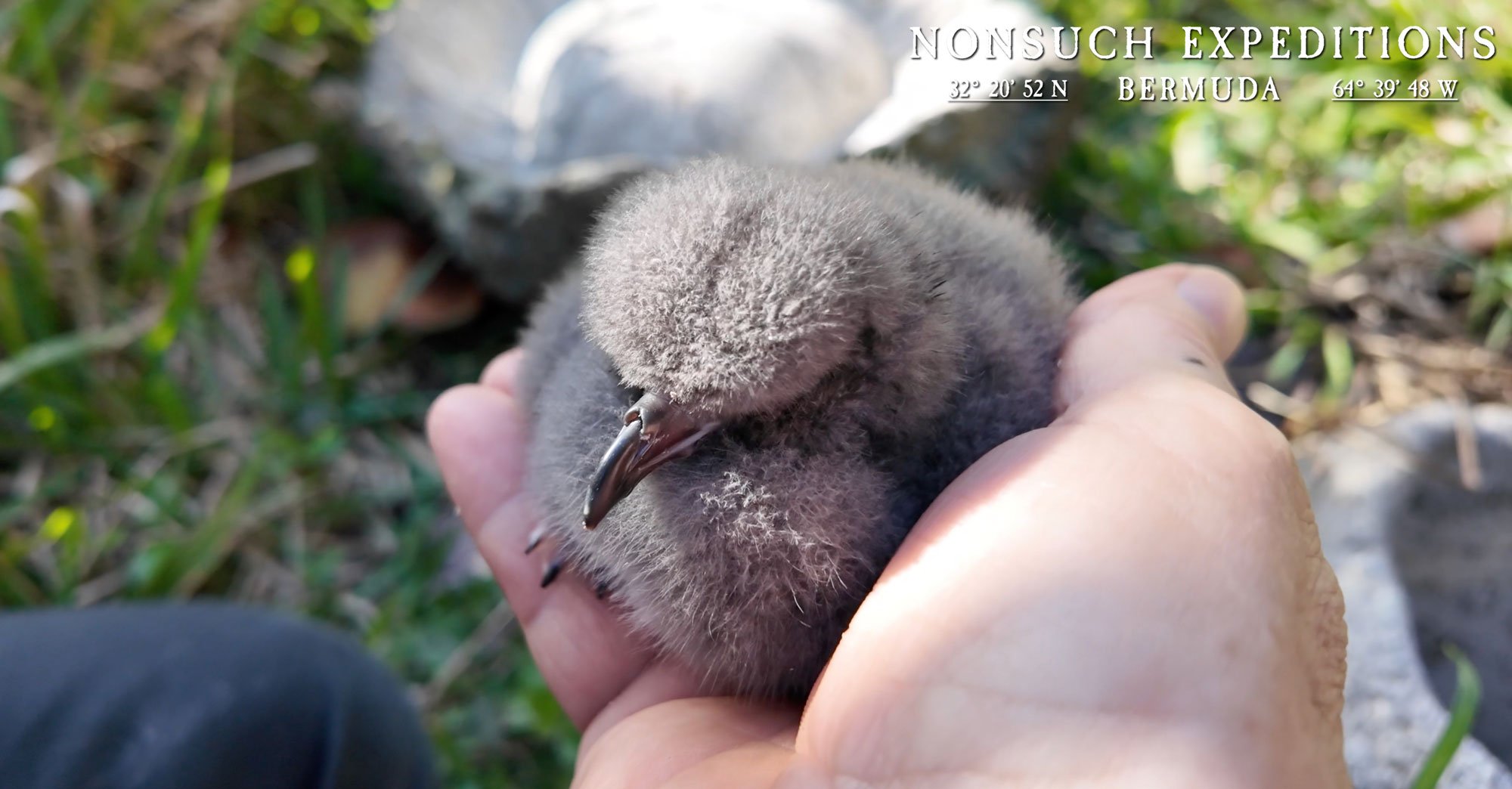
“The windy, stormy weather conditions now prevailing for the last several months have continued to severely curtail my monitoring visits to Nonsuch and the Cahow nesting islands, with rainfall in February already recorded at 8.38 " (213mm). So, when calmer, sunny conditions finally broke on Friday 23 February, it had already been 10 days since I had last been out on the islands. I was anxious to get back out, as any time after the 20th of February is when we can expect to see the first of the Cahow chicks hatch.
So, on the 23rd, I was finally able to get out in the boat with my assistant Conservation Officer Peter Drew, Nonsuch Expeditions founder and filmmaker JP Rouja, Overseas researcher Letizia Campioni, and Lynn Thorne as official photographer. Conditions were perfect, being calm and sunny, and I was anxious to make the best of the day, as heavy rain and strong winds were forecast for the following day.
We first went to one of the original small nesting islands, Long Rock, which has the smallest number of Cahows of any nesting island, at only 13 breeding pairs. It is also the lowest in elevation and as a result, has suffered more from flooding and erosion during increasingly frequent hurricanes than any other breeding site. Despite this, things looked good on Long Rock, with 10 nests still with fertile eggs being incubated by adult Cahows (the other 3 nests were confirmed as having failed). Most exciting, 3 of the fertile eggs were already pipping, or in the early stages of hatching, a process that can take up to 48 hours or more.
Once we had finished the check on Long Rock, we moved on to Nonsuch Island, where we had time to check most of the nests at the "A" nesting colony. On Nonsuch, we confirmed the first hatched Cahow chick, in the R819 nest burrow (where it was being brooded by the Female E0768 Cahow). The eyes of this chick were just opening, indicating that it was only 24 - 36 hours old, and already weighed 46 grams, indicating it had already been fed by the incubating adult. In addition, there were 3 other eggs that were beginning to hatch, or pipping, including the egg in the *CahowCam 1 (R831) nest. Hopefully, we will be able to get out again to the islands during the following week, when we hopefully will see several additional newly hatched chicks!”
Jeremy Madeiros | Senior Conservation Officer (Terrestrial Conservation)
You can watch the LiveStream here to see the process unfold in real time. *Please note that as we are still operating on a temporary low-bandwidth wireless internet connection (until our new hardware is in place) the video stream may be sporadic, however, we are recording and archiving the whole process on Nonsuch and will offer a full playback at a later date….
CahowCam1 & 2 have fertile eggs with Nonsuch colony on track to break record!
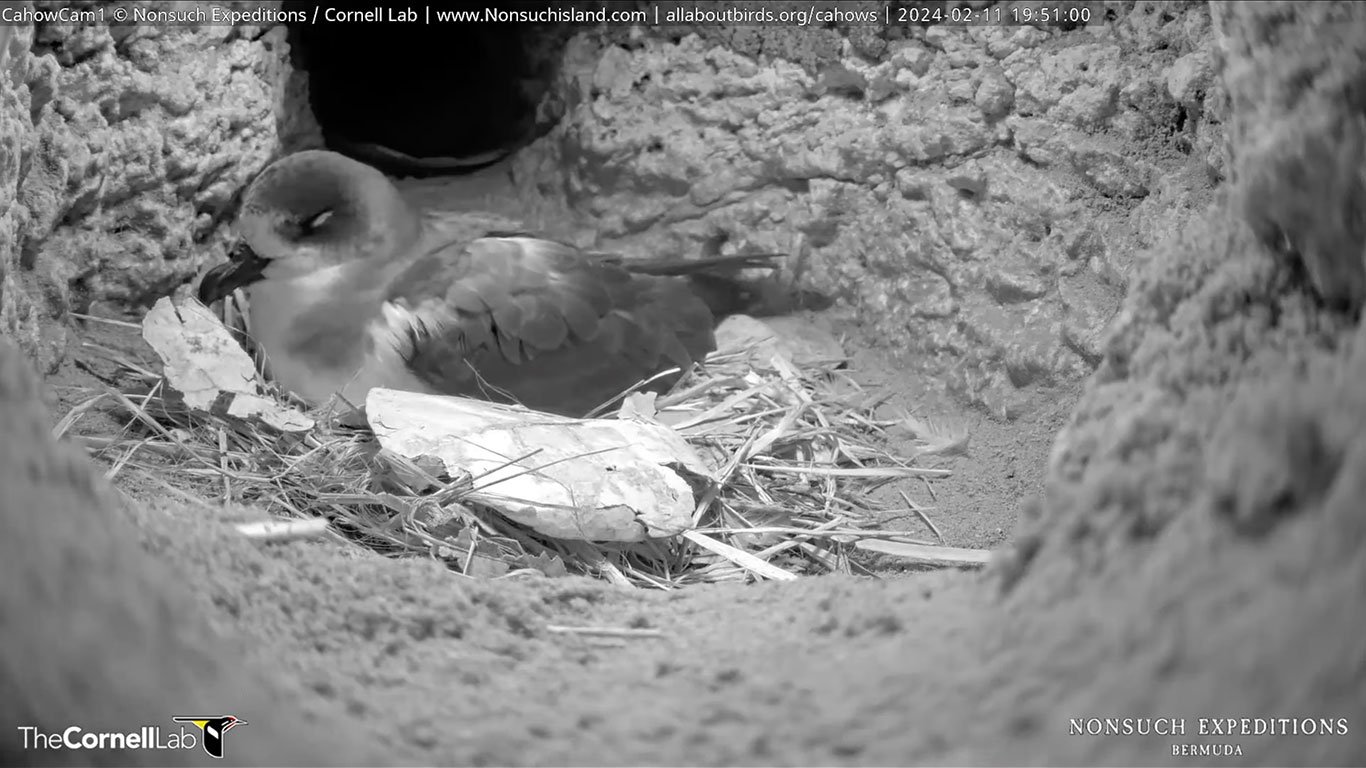

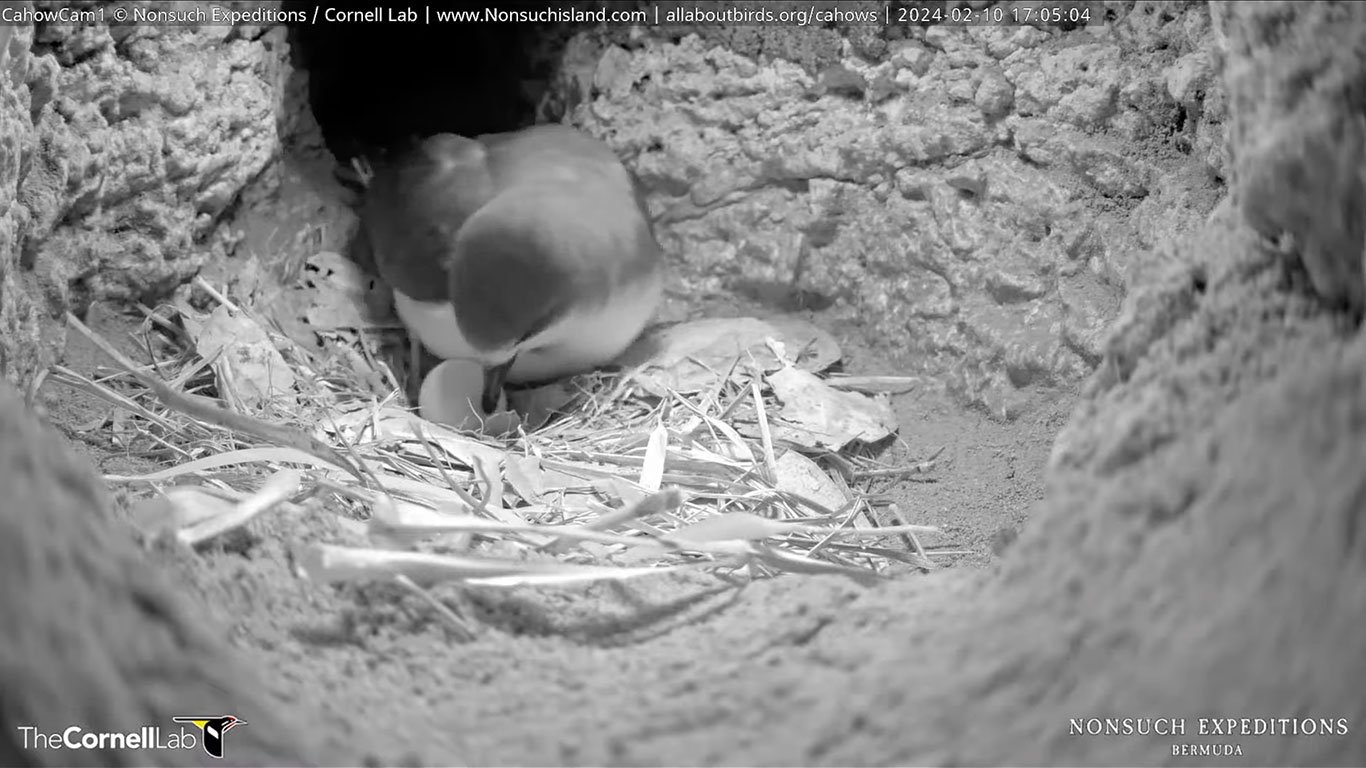
As of Saturday, 10th February, 2024, most Cahows have already been incubating their single eggs for a month or more, indicating that we are more than halfway through the normal egg incubation period of 53 - 55 days. The first eggs to be laid should be hatching in only about 12 to 15 days, while eggs that were laid later, such as in the CahowCam 2 nest, which was laid at the record late date of 26th - 27th January, if it hatches will not do so until the end of March.
During a check that I was able to carry out on the 10th of Feb, I was able to confirm that the egg in the CahowCam 1 (R831) nest was fertile and looked like it was developing normally and was at 53.5 grams weight. This egg was being incubated by the female bird (band no. E0212), who had evidently just taken over incubation duties from her mate, being at a very high weight (for a female bird) of 397 grams. If all continues to go well, this egg should hatch sometime around the very beginning of March.
In the CahowCam 2 (R832) nest burrow, both adult birds were present, with the new female bird (band no. E0621) incubating the egg. She looks like she is about ready to relinquish incubation duties to her mate and return to sea to feed, as she was measured at only 289 grams in weight, while the older male bird (band no. E0174) is ready to take over at 377 grams in weight. The most exciting news about this nest, where the male lost his long-time mate of 14 years, and now has a new mate, is that I was able to confirm that their first egg together was fertile, with a developing embryo observed when the egg was candled. This was a surprise, as the first egg produced by a first-time breeding female Cahow is often infertile. This egg was measured at 52 grams in weight and as mentioned will probably not hatch until near the end of March, if all goes well.
Although a couple of additional eggs were confirmed to have failed since the last checks, as of now the total number of fertile eggs still being incubated on Nonsuch Island stands at a minimum of 25-26 (the record number of fledged chicks from Nonsuch was 19 in 2023).
On the largest breeding colony on Horn Rock, at least 27-29 eggs were confirmed to still be fertile, stormy weather recently has made it difficult to determine total numbers at the other nesting islets, and stormy weather forecast for much of next week promises to continue to make landings at these small, rocky and exposed islets a hazardous occupation!
Jeremy Madeiros, Senior Terrestrial Conservation Officer, Dept. of Environment and Natural Resources, BERMUDA
Latest Green Island nest check shows record fertility rates > watch extended video
Nonsuch Expeditions founder J-P Rouja: “Watch a video of the latest Green Island nest check filmed on January 31st, where 8 out of the 11 nests that we checked that day were found to have fertile eggs!
This is well above average for this colony, and follows a similar trend for the larger Nonsuch and Horn Rock colonies, boding well for the 2023/24 nesting season!
The wetter and stormier than usual weather patterns in 2023 (which was the wettest on record for Bermuda) and into 2024 have limited our access to the islands, however, these same conditions seem to be beneficial to the Cahows, so we are not complaining :)”
Watch the extended Green Island nest check video above:
Never say never - if you are a Cahow - A Big surprise for CahowCam2

JP and I were able to get out on the Cahow breeding grounds on the Castle Harbour Islands yesterday, (31st January 2024), as conditions were perfect with easterly winds at just 6 to 9 knots, with the forecast for the next few days being strong winds gusting to gale-force. What a difference a day makes, as 24 hours later we have recorded winds at 51 to 64 knots (49 to 75 mph) at the west end of Bermuda, and I just lost my power about 30 minutes ago!
During yesterday's check, the calm conditions finally enabled us to land on Green Island, which has been imposible to land on for the whole month due to strong winds, rough seas and adverse tides. Expecting the worse, I was happily surprised by a high percentage of nests with Cahows incubating fertile eggs. Although I only had time to check about half the nests on the island, out of 12 nests checked, 8 of them contained fertile eggs that were being incubated by adult birds. This is the highest breeding success rates confirmed on this island at this stage in 16 years.
Over on Nonsuch, we had a real surprise with the CahowCam 2 (R832) nest. The longtime male Cahow claiming this nest recently lost his partner and mate of 14 years, who did not return for the courtship stage of the current nesting season in October & November 2023. However, in late November, a new young female Cahow started entering the nest, and the male, after initial hostility eventually accepted her, with the pair observed mating and resting together, before separately heading back out to sea for the month of December as is the norm for all Cahows.
As a result, we were waiting to see her back to lay her 1st egg in early January (eggs are usually laid between the 1st and 15th of January, (with the latest date recorded around the 22nd Jan). As of my last check on the 24th she still had not returned and as a result, we had given up hope of seeing the female lay her first egg this season. Imagine our surprise when i checked the CahowCam 2 nest on the 31st of January and found the male bird incubating a recently laid egg! When JP checked the camera logs (the CahowCam live-streaming network is still facing challenges, however, the system JP developed is still archiving recordings on Nonsuch), we were able to determine that the female had returned on the night of the 26th/27th of January to lay her first egg (see replay video), the latest egg-laying date that I have ever recorded. This was probably due to the pair not getting together until the latter half of November.
As we are grounded for the next few days as this strong storm system moves through the Bermuda area, I am left once again with a deep respect for the natural toughness of the Cahow and it's ability to survive the most adverse weather conditions. And while I have been writing this update, my power has come back on, although the gale continúes to rage outside. I also checked my rain gauge and found that we have recorded 3.92 inches of rainfall in a 14-hour period between 1.00am this morning and 3.00pm this afternoon. I am very glad that I am not out at sea or on those tiny nesting islands in these conditions!
Jeremy Madeiros Senior Terrestrial Conservation Officer
Good and bad news for the CahowCam pairs, whilst Nonsuch colonies are on track for record year.

5 day old Cahow embryo seen in egg being candled in Nonsuch Translocation Colony B
“As of Jan 23rd, essentially all Cahows have returned from their pre-egg laying exodus and have laid their eggs in their underground nest burrows on the half-dozen small islands in the Castle Harbour area, with the exception of a couple of nests where the male birds have returned but are still waiting for the return of their mates.
For the two "CahowCam" nest burrows on Nonsuch, which are fitted with infrared live-stream video cameras, there is mixed news:
In "CahowCam 1" (the R832 nest burrow), the Female returned at 11.05pm on the night of the 6th of January 2024, laying its egg an hour later at 12.05am on the 7th of January. The male bird in this highly synchronized pair returned less than 2 hours later by 1.49 am. This pair laid an unusually large egg, weighing 62 grams and measuring 62.7mm by 42.54mm. It first showed signs of fertility on 12th January, which was confirmed by the 15th of January. At the last check on 23rd January, the embryo appeared to be developing normally. This Cahow pair, consisting of the male (band no. E0197) and female (band no. E0212), started nesting together in 2010, and in 14 years have produced 7 successfully fledging chicks.
In the "CahowCam 2 (R832 nest burrow), it has been a sadder story as the male bird (band no. E0174) appears to have lost his long-term partner and mate (band no. E0172). This pair, which also started nesting together in 2010, has been one of the more successful nesting pairs that I have monitored over an extended period of time, produced an amazing 12 successfully fledged chicks in 14 years of nesting together (several of which have been confirmed as already returning and establishing new nests on Nonsuch and Long Rock). The female had already shown herself to be a resilient bird, suffering a severe foot injury in 2019 which healed enough for her to raise another 3 chicks, but it appears that something happened to her at sea between June and October 2023.
It is always sad to lose a member of a successful pair. I had translocated all 4 of the birds that ended up settling in the 2 CahowCam nests in 2005 and 2006, from the 4 tiny original nesting islets as near-fledged chicks to artificial nests on Nonsuch (included in the 100+ chicks from the 1st Translocation Program that I initiated after taking over as Warden). As part of the Program, I then hand-fed them for 2 to 3 weeks, and allowed them to imprint on and fledge from their new "adopted" home on Nonsuch, to which 51 eventually returned and paired up 4 to 5 years later (including these 4) in artificial nests usually right next to the ones they originally fledged from.
Despite the ongoing Live-Streaming connectivity challenges that are out of our control (ISP and shore-based receiver issues which are being addressed by Nonsuch Expeditions founder and CahowCam developer Jean-Pierre Rouja), the cameras are still archivaly recording on the island which allowed us this past November to observe as the Cam2 male waited in vain for his mate to return. As it became obvious that she was not returning, another young female Cahow (band no. E0643), which had fledged as a chick from the C19 nest on nearby Horn Rock and was obviously looking for an eligible bachelor male, started visiting the male in his burrow on the 9th November. Despite originally aggressively spurning her advances, he eventually accepted her and they were seen to be mating and resting together in the nest. The male returned in mid-January, and as of the writing of this update was still waiting for the return of his (hopefully) new mate.
Overall, at the Nonsuch nesting colonies, Cahows have returned to all 39 of the active nest burrows on Nonsuch Island, up from the first pair of returned translocated birds in 2009. This was the first time that Cahows had nested on Nonsuch since they were wiped out there in the 1620s through hunting by the early colonists and introduced mammal predators, now eliminated on Nonsuch. With the help of Carla Marquardt, who has experience with the candling of eggs to determine fertility and the rate of development of the embryos, we have been able to determine that out of these 39 nests, as of the 23rd January 2 had males still waiting for the return of their mates, 2 had confirmed failed eggs/nesting, 25 had confirmed fertile eggs being incubated with developing embryos, and 10 had eggs that were either too recently laid to detect a viable embryo yet (it takes 4 to 5 days after laying before the embryo can be detected), or were probably infertile.
In between a near-continual barrage of strong winds and rough sea conditions since the beginning of the year, I have also been able to visit two of the other nesting islands in the last couple of weeks to determine which nests there also contain fertile eggs and which have failed. Once I have had a chance to visit all nesting islands, I will have a good idea of just how many fertile eggs there are in the whole breeding population, and we will be duly reporting these numbers in a future update.”
Jeremy Madeiros | Senior Terrestrial Conservation Officer
Jan 7 2024 Nonsuch Cahow Colony Update

Jeremy Madeiros, Senior Terrestrial Conservation Officer: "The 2024 breeding season of the Bermuda petrel or Cahow, which is critically endangered, one of the rarest seabirds on Earth, and nests only on Bermuda, has entered what is arguably it's most exciting phase, with the return of the breeding pairs to lay and begin incubation of their single eggs.
This breeding season actually began in late October and November, 2023, with the birds returning to their nest burrows on 6 small islands totaling only 22.4 acres in area at the east end of Bermuda, to re-unite after 6 months apart at sea, carry out courtship and nest-building activity and mate, and then fly out to sea for 4 to 6 weeks on what is called a "pre-egg laying exodus". They then return at the beginning of January, often arriving within hours of each other back at their nest burrows.
The weather conditions so far this winter has been unusually wet and windy, only enabling visits to the Castle Harbour Islands possible on 1 or 2 days of each week in between weather systems and the strong to gale-force winds that they often bring. Luckily, brief gaps between storm systems allowed us to visit the nesting islands twice in the last few days. On Thursday 4th January, I was able to visit Nonsuch Island with J.P. Rouja to check the Cahow nests at the "A" Cahow colony, where we confirmed that Cahows had returned to 4 nest burrows. In two burrows (R819 and R821) single adult Cahows were incubating the first confirmed eggs of the season, while in two other nests (R833 and R834) pairs of adult Cahows were together in the nests but had not produced eggs as of yet.
On Saturday 6th January, we were joined by Lynne Thorne, who assisted us in taking notes and photographs. We were able to confirm that Cahows had returned to two more nest burrows at the A colony, the R822 nest where the female adult was incubating a newly laid egg, and at the R829 nest, where the male bird was also incubating an egg, which is the first one produced by this new nesting pair, which only got together in early 2023. In addition, returned Cahows were also found in two nests at the second, "B" Cahow nesting colony on Nonsuch, a single recently returned young Cahow in the B8 nest, and the other a male adult incubating an egg (also the first egg produced by this new pair), that when it was candled with a flashlight, revealed a developing embryo that appeared to be about 7 to 8 days old (see attached photos).
Finally, on the night of the 6th-7th January, the female Cahow using the CahowCam 1 (R831) nest burrow returned from the open sea to the nest, captured by the livestream video camera installed there. After arriving at 11.05pm and spending the next hour re-arranging the nest material, the female laid her large, single egg at 12.05am, and promptly begin incubating the egg. Then, as to emphasize how well-synchronized these birds are after being separated by hundreds of miles at sea for the last 5 weeks, the male bird arrived at the nest at about 1,49am, with the birds mutually preening each other (known as allopreening) and the male trying to convince the female to relinquish the egg so he could begin his incubation "shift".
For the moment, he has been unable to convince her as of yet and the female was still incubating the egg!
This brings to 9 the number of Cahow nests on Nonsuch Island with returned Cahow as of the 7th January, out of a total of 40 on the island. We will be reporting on the progress of the 2024 Cahow breeding season as we are able to get out in the continuing stormy weather pattern.
The egg has been laid in the CahowCam1 Burrow!

January 7th 2024 @12:05 am We have an egg in the CahowCam1 burrow!
On the night of the 6th-th January, the female Cahow using the CahowCam 1 (R831) nest burrow returned from the open sea to the nest, captured by the livestream video camera installed there. After arriving at 11.05pm and spending the next hour re-arranging the nest material, the female laid her large, single egg at 12.05am, and promptly begin incubating the egg. Then, as to emphasize how well-synchronized these birds are after being separated by hundreds of miles at sea for the last 5 weeks, the male bird arrived at the nest at about 1,49am, with the birds mutually preening each other (known as allopreening) and the male trying to convince the female to relinquish the egg so he could begin his incubation "shift".
Jeremy Madeiros, Senior Terrestrial Conservation Officer: