

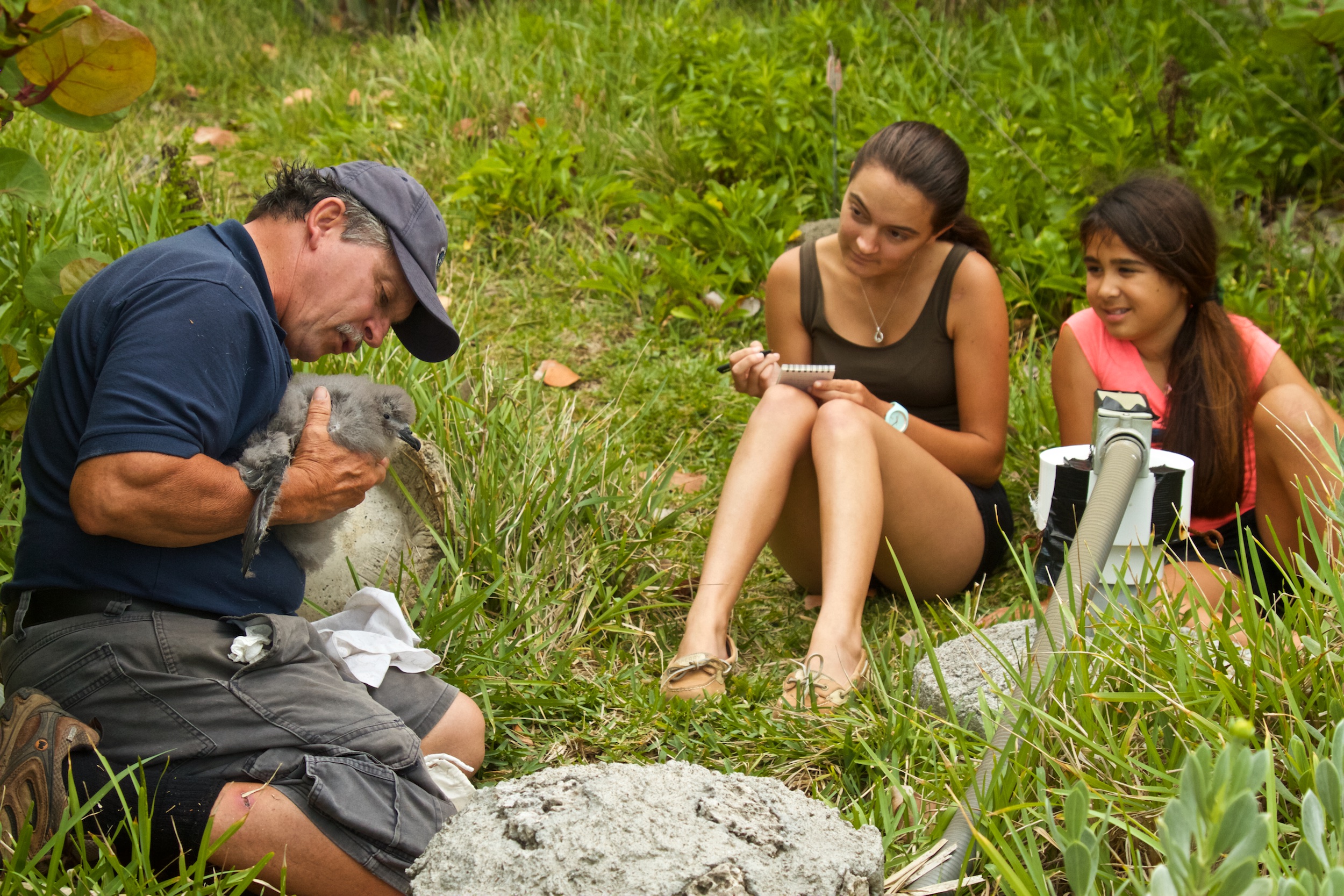
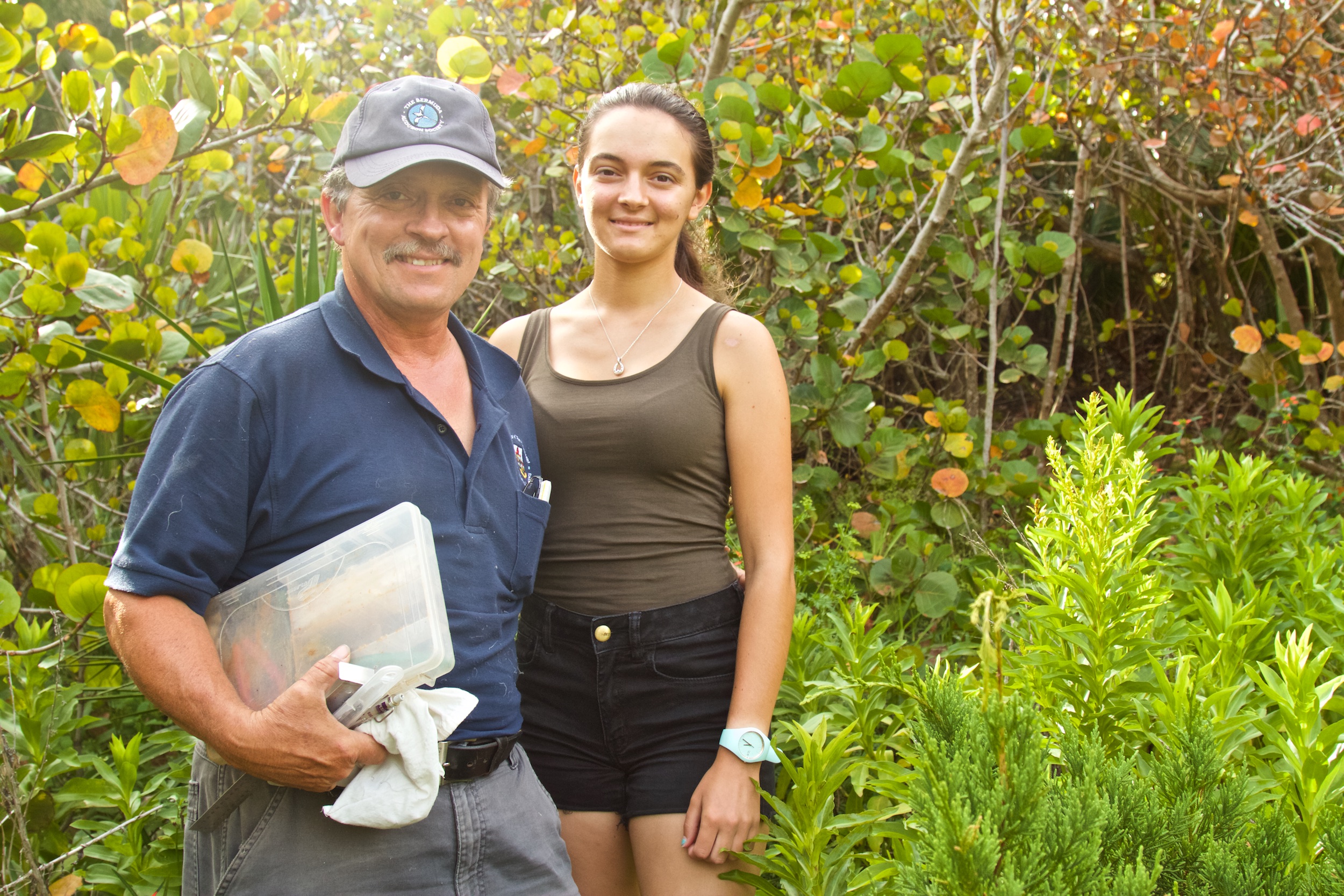
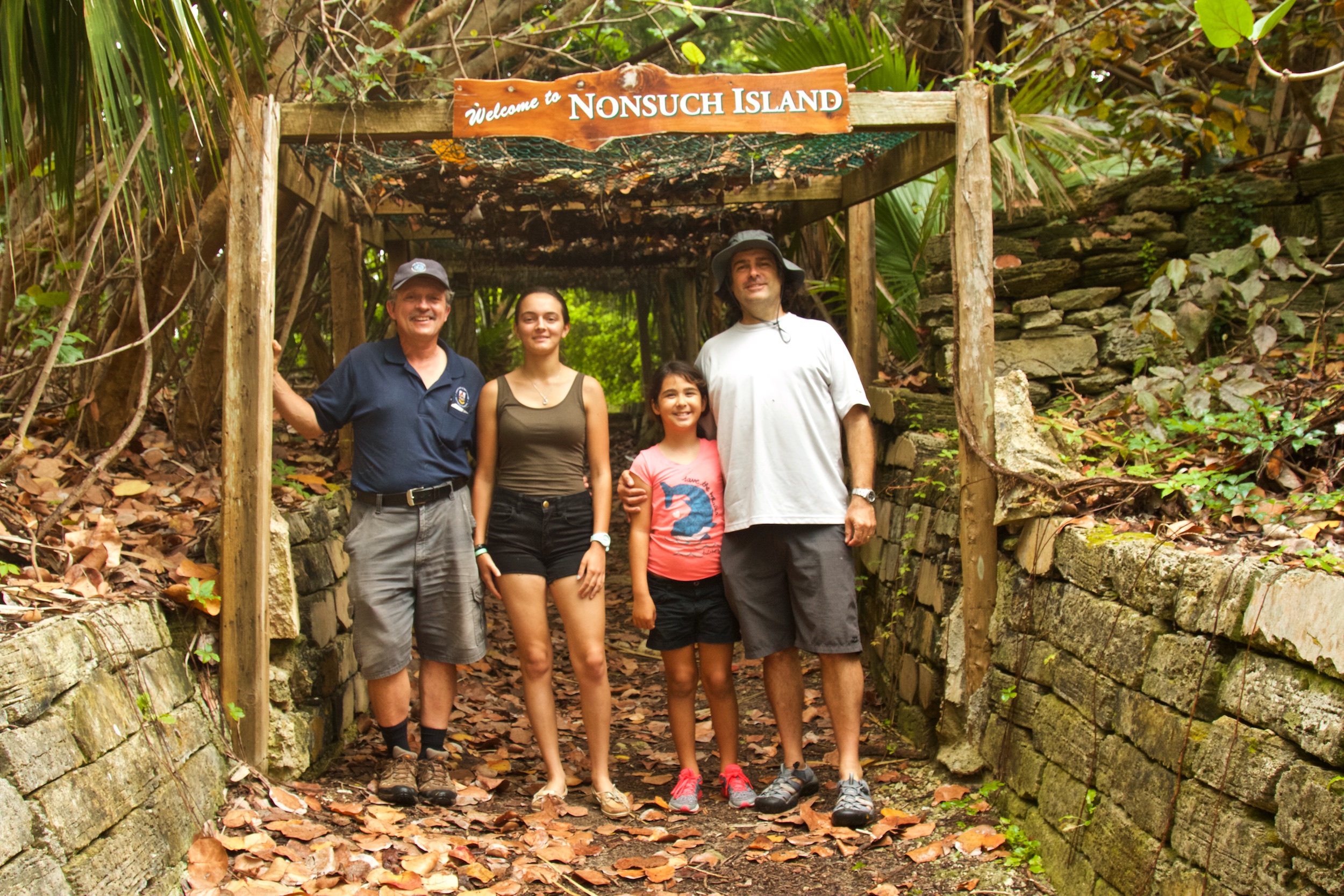
For their 2016 STEAM Week, a group of BHS IB students are participating in a pilot Experiential STEAM program collecting and photographing biodiversity samples at Hungry Bay alongside National Geographic photographer David Liittschwager who is on island as part of the ongoing Nonsuch Expeditions.


2016 CahowCam star named Tempest

The Cahow chick, star of the 2016 CahowCam livestream has officially been named "Tempest" by Elizabeth Madeiros, daughter of Chief Terrestrial Conservation Officer Jeremy Madeiros. He was named after William Shakespeare's Tempest play which was in turn based upon Bermuda's founding wreck the Sea Venture, a most fitting name, especially during the 400th year anniversary celebrations. Tempest hatched live on camera on March 6th and has since been watched by 10's of thousands of viewers via the award winning CahowCam and is expected to fledge out to sea in the beginning of June.
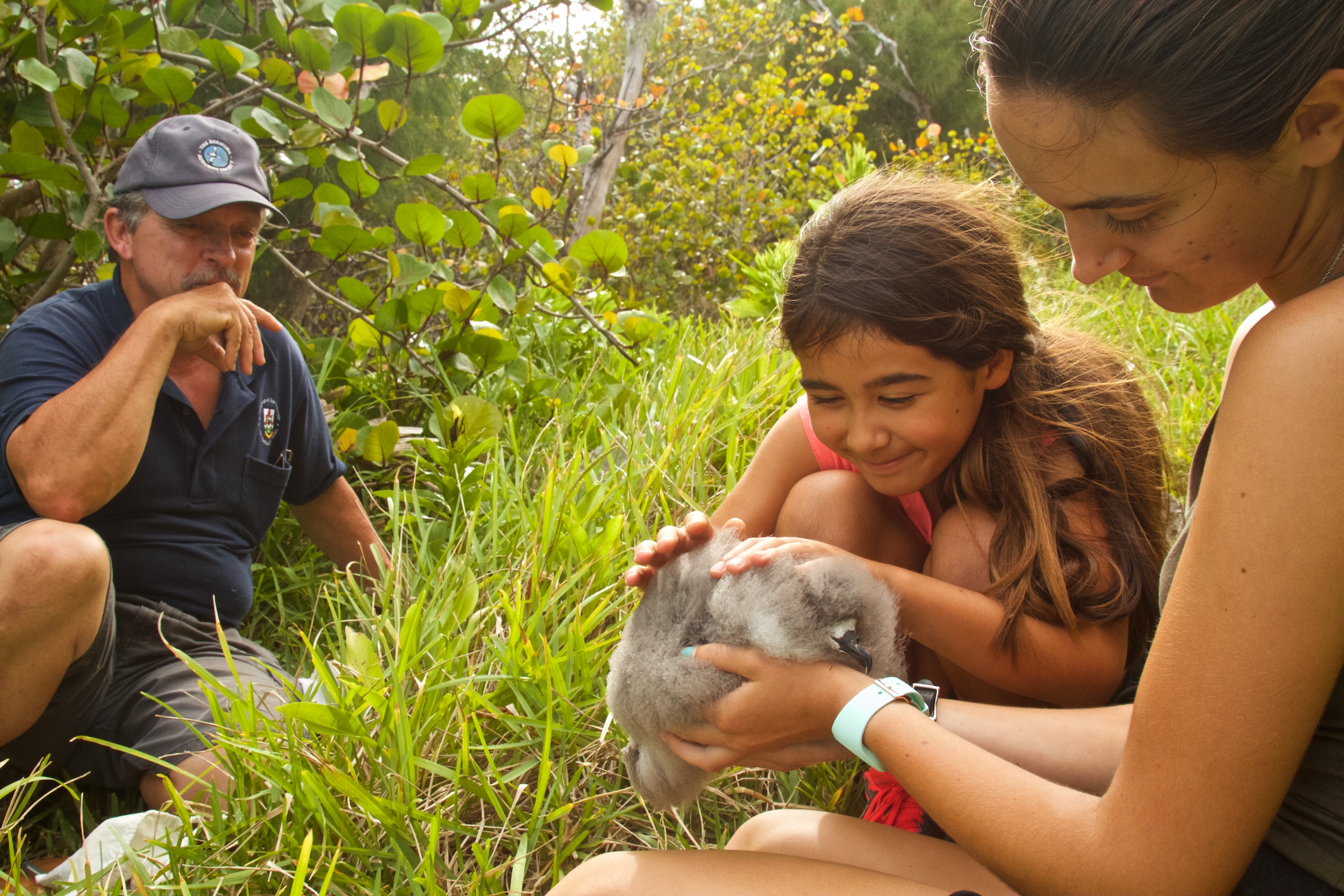
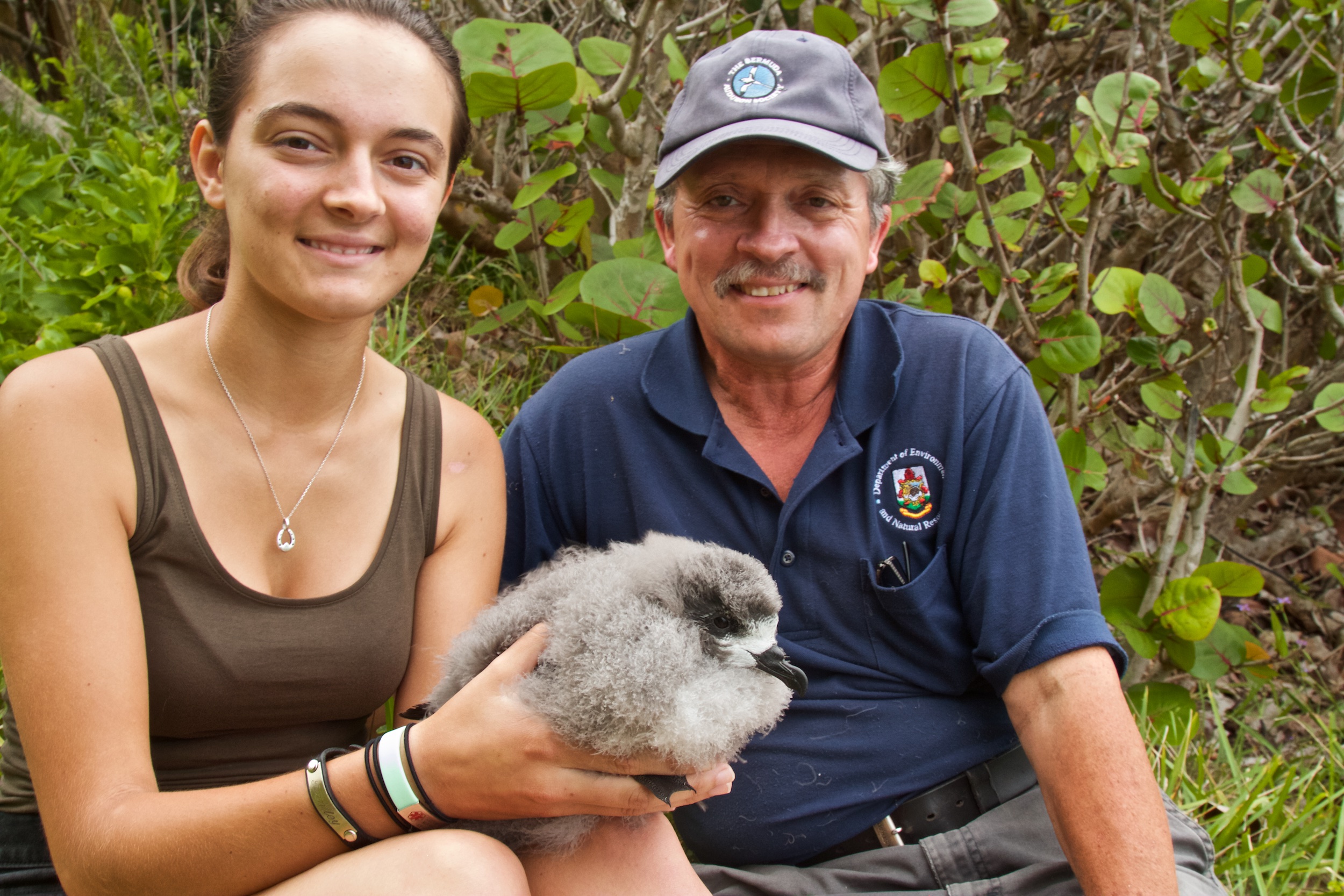
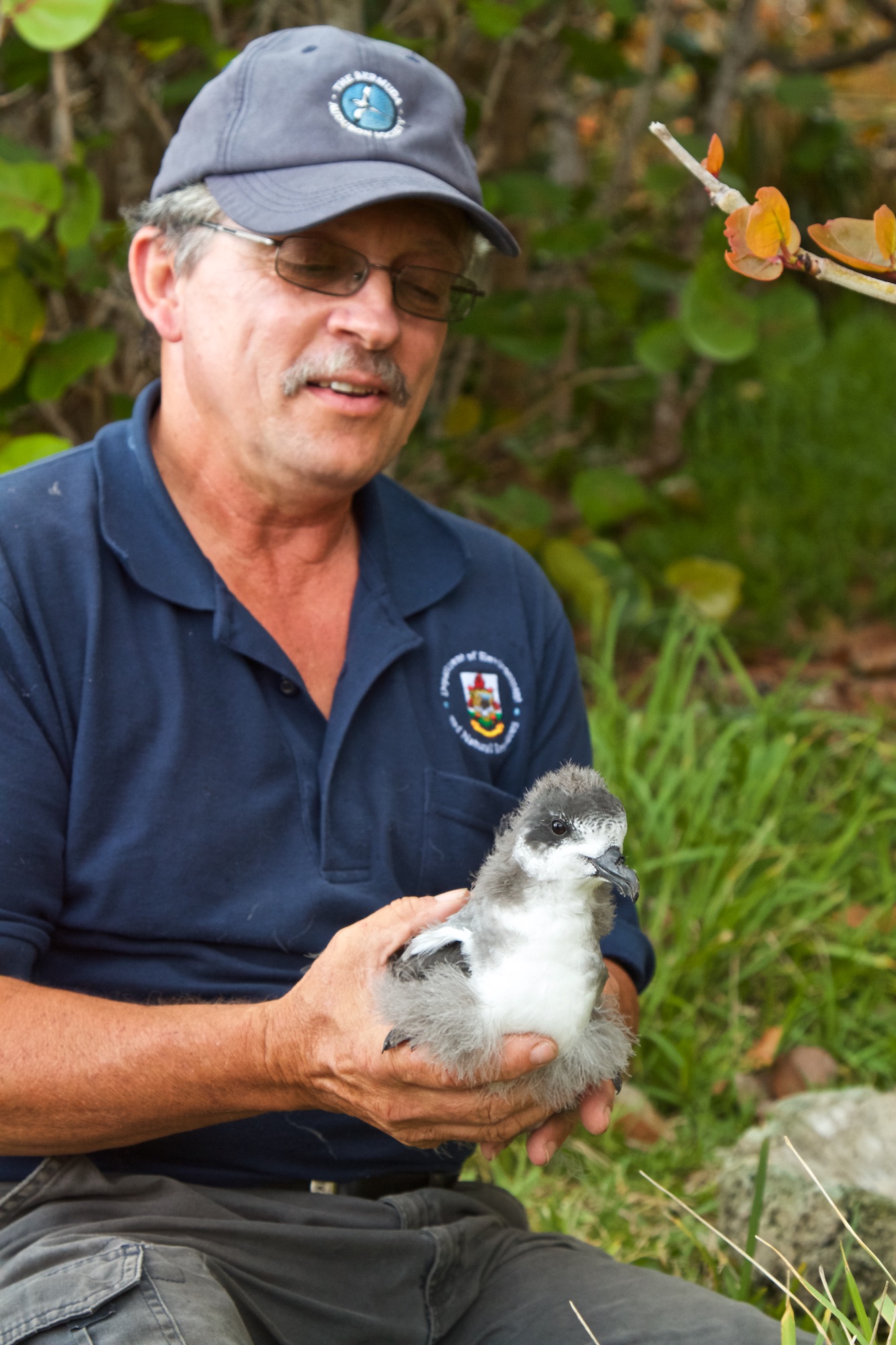
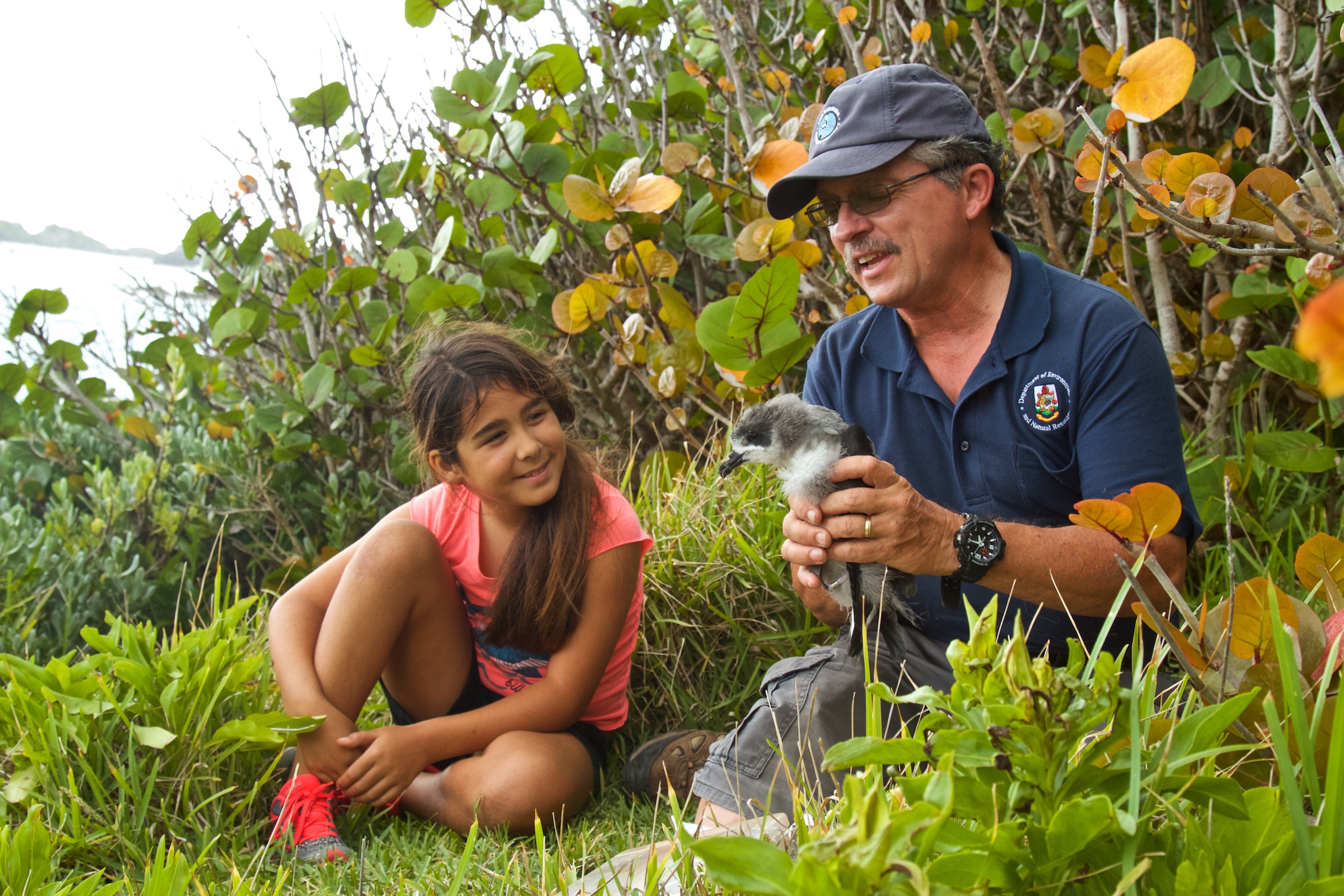
Historic Cahow Discovery

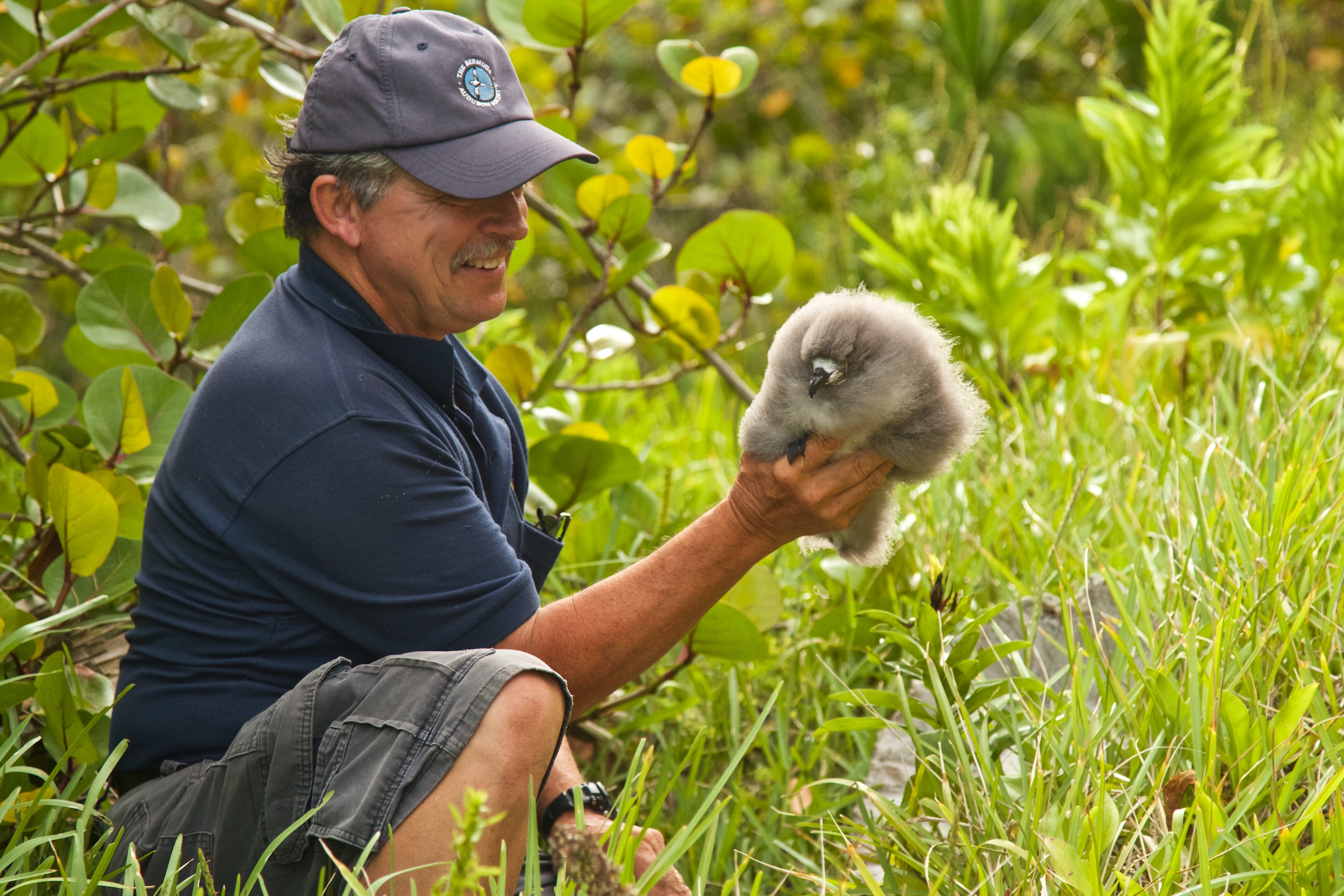
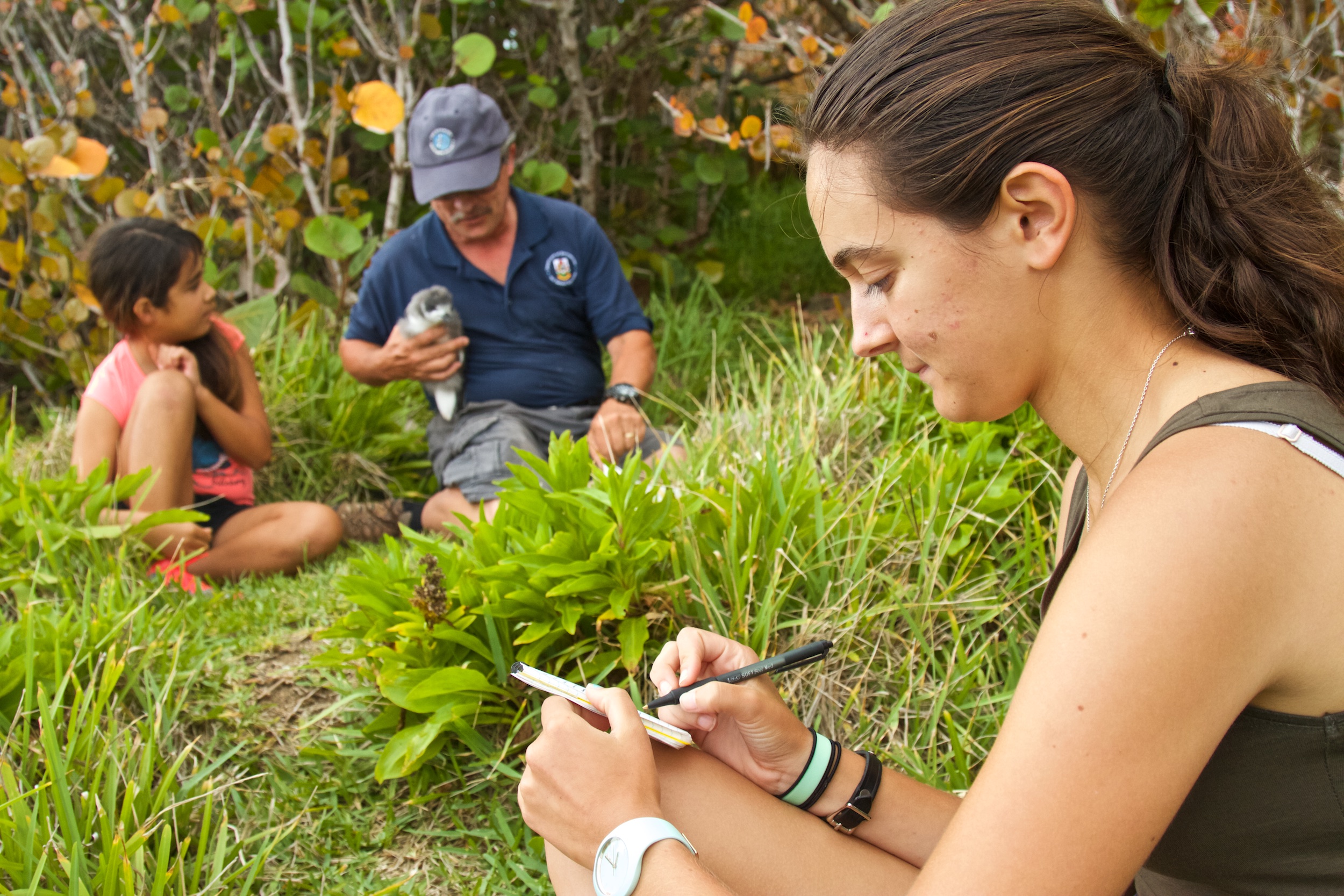
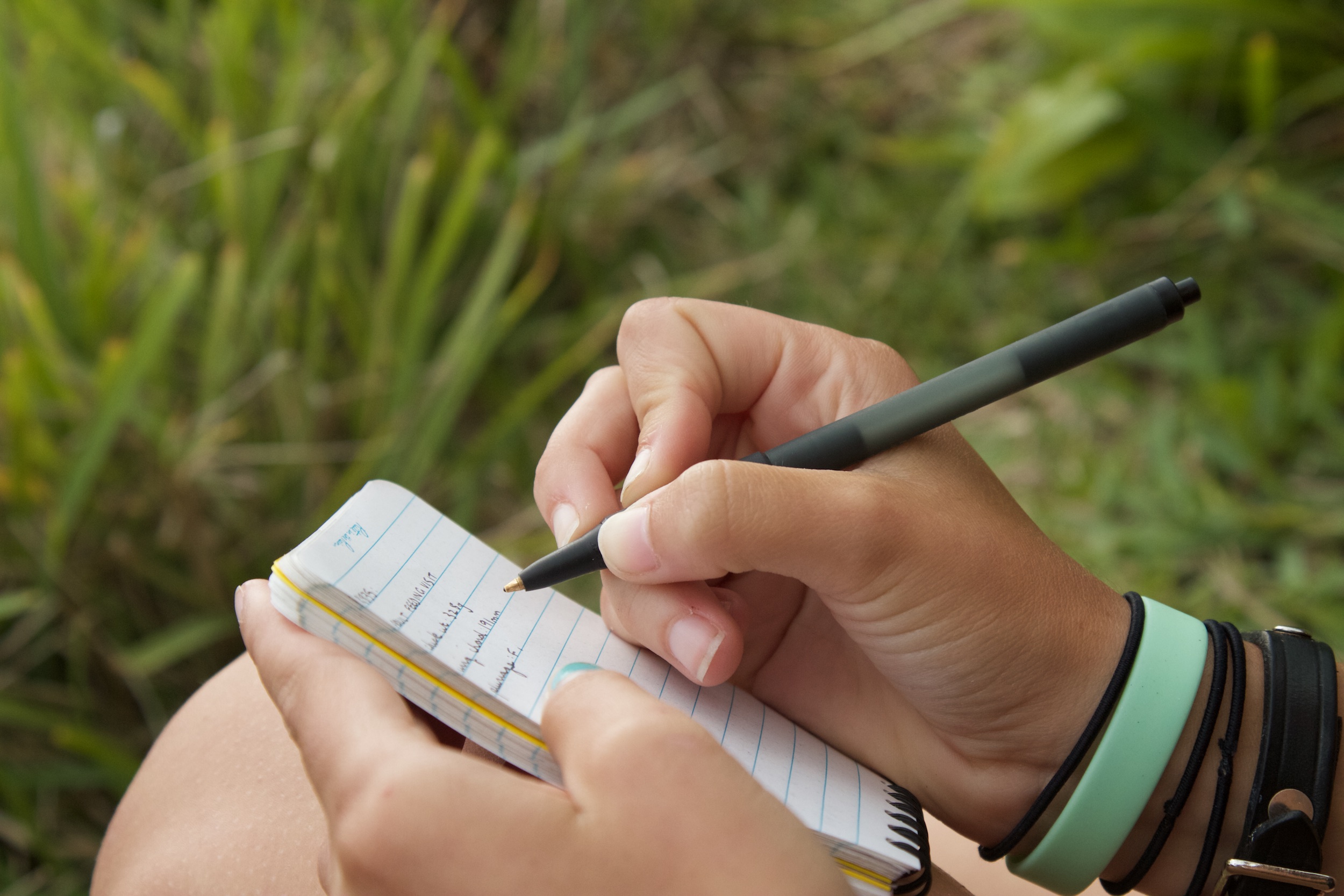
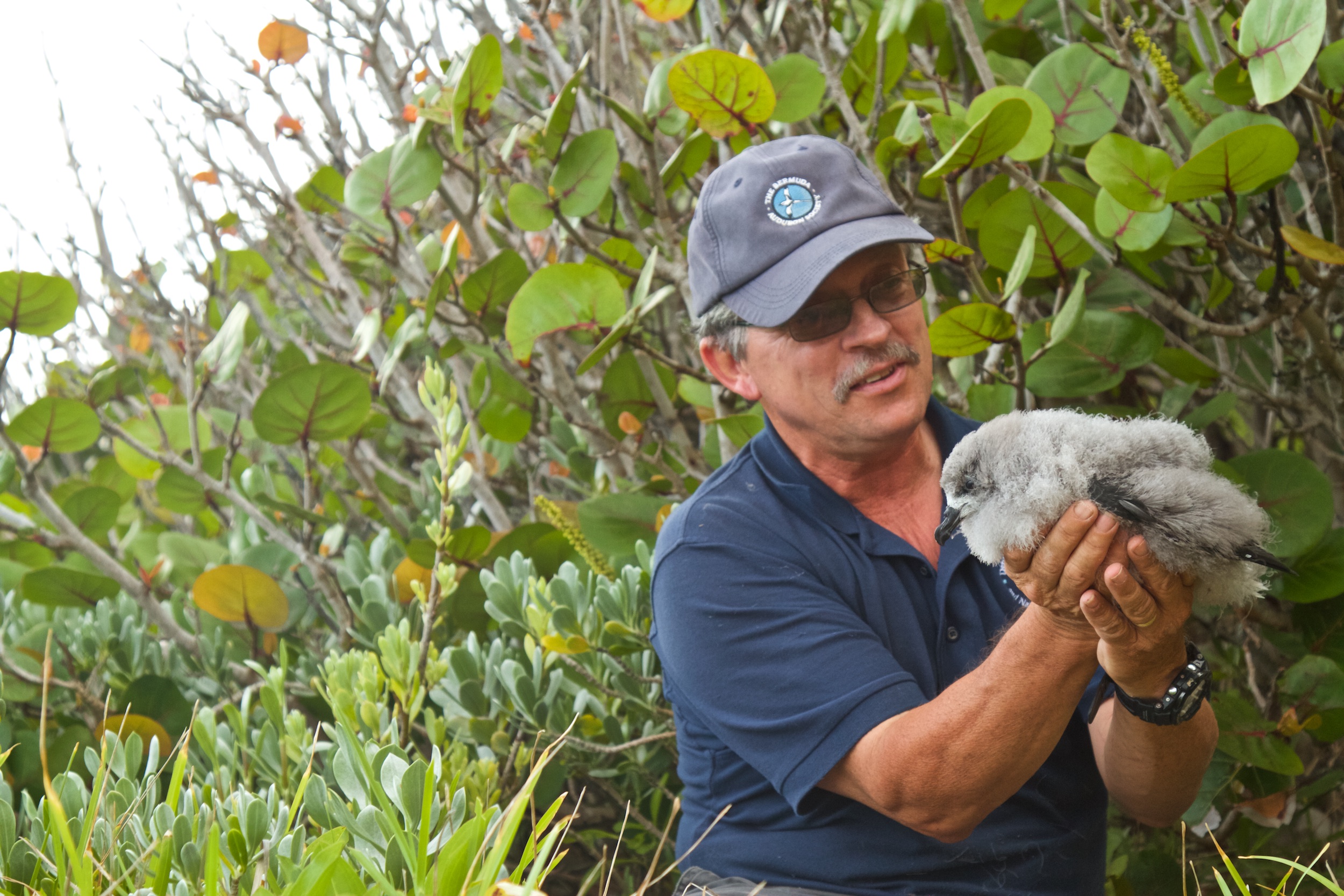
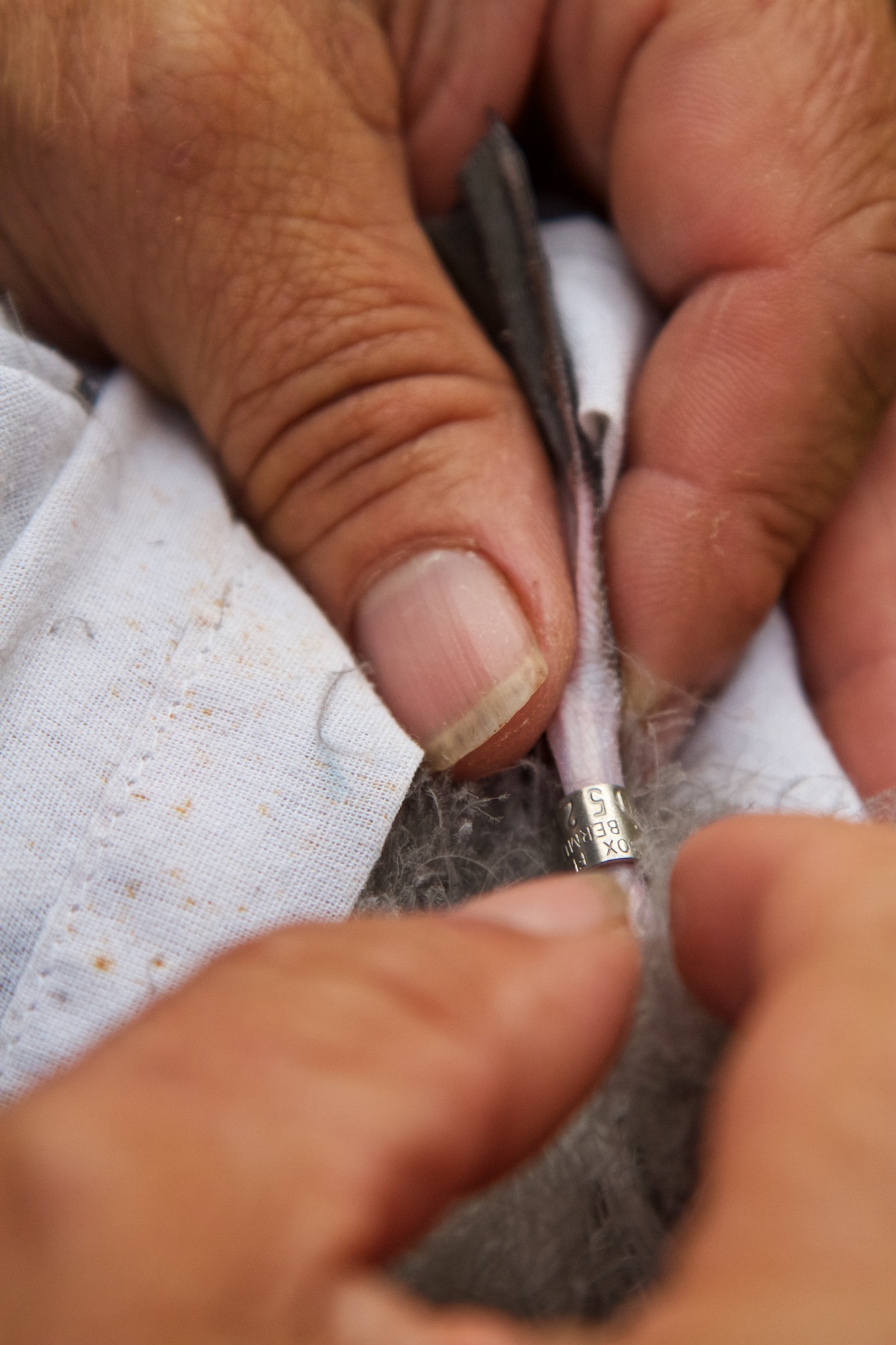
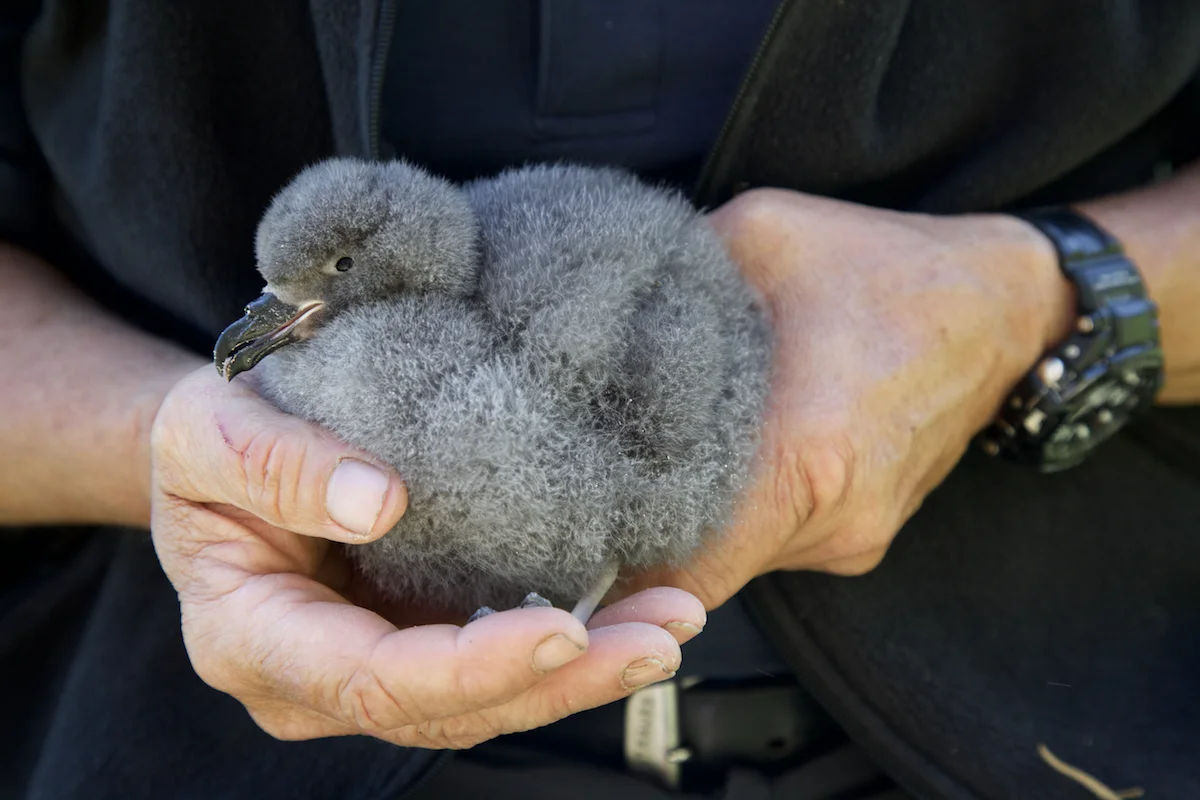
The 58th confirmed hatchling of the 2016 Cahow nesting season was discovered by Jeremy Madeiros in nest chamber #A1 on one of the original nesting islands.
The A1 nest was one of the first 5 nests discovered in 1951 by Bermudian naturalist Louis L. Mowbray, American Ornithologist Robert Cushman Murphy and 15 year old school boy David Wingate and has been under almost continuous use ever since.
This 58th chick is just one off of the record of 59 chicks confirmed in 2014. That record might still be broken once the team has had a chance to survey some of the inaccessible underground nests with remote cameras some time in the next few weeks.
Translocation Colony A on Nonsuch Island however does have a record 10 confirmed hatchlings this season. These ongoing Translocation efforts are all the more important due to the fact the original small nesting islands (including the one where A1 is located) have been progressively falling apart over the past few years.

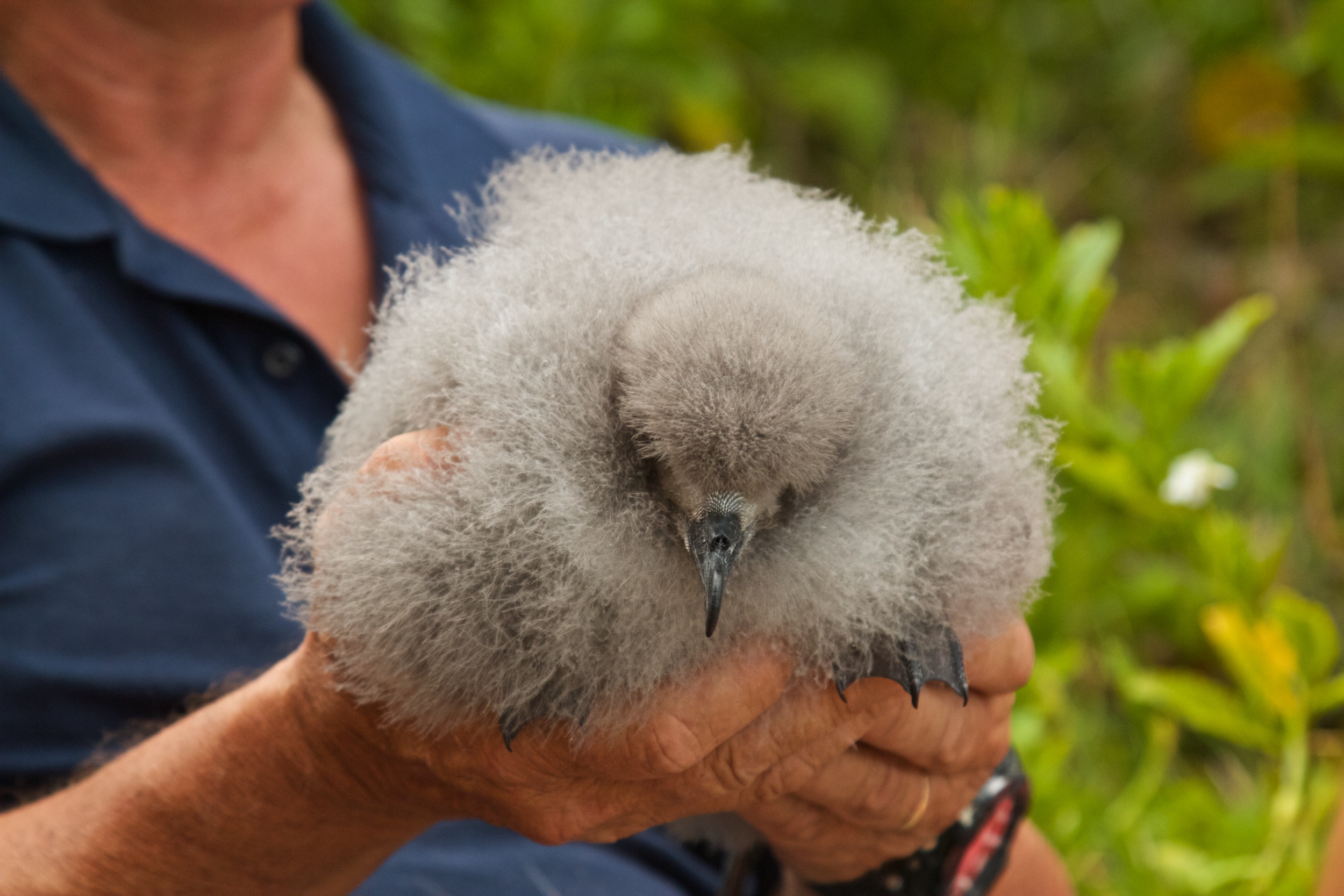
Easter Cahow Chicks
Easter Cahow chicks, the result of a record breaking nesting season from Translocation Colony A on Nonsuch Island in Bermuda. This season 10 chicks have hatched on Nonsuch out of a total of 58 confirmed hatchings throughout the colony.



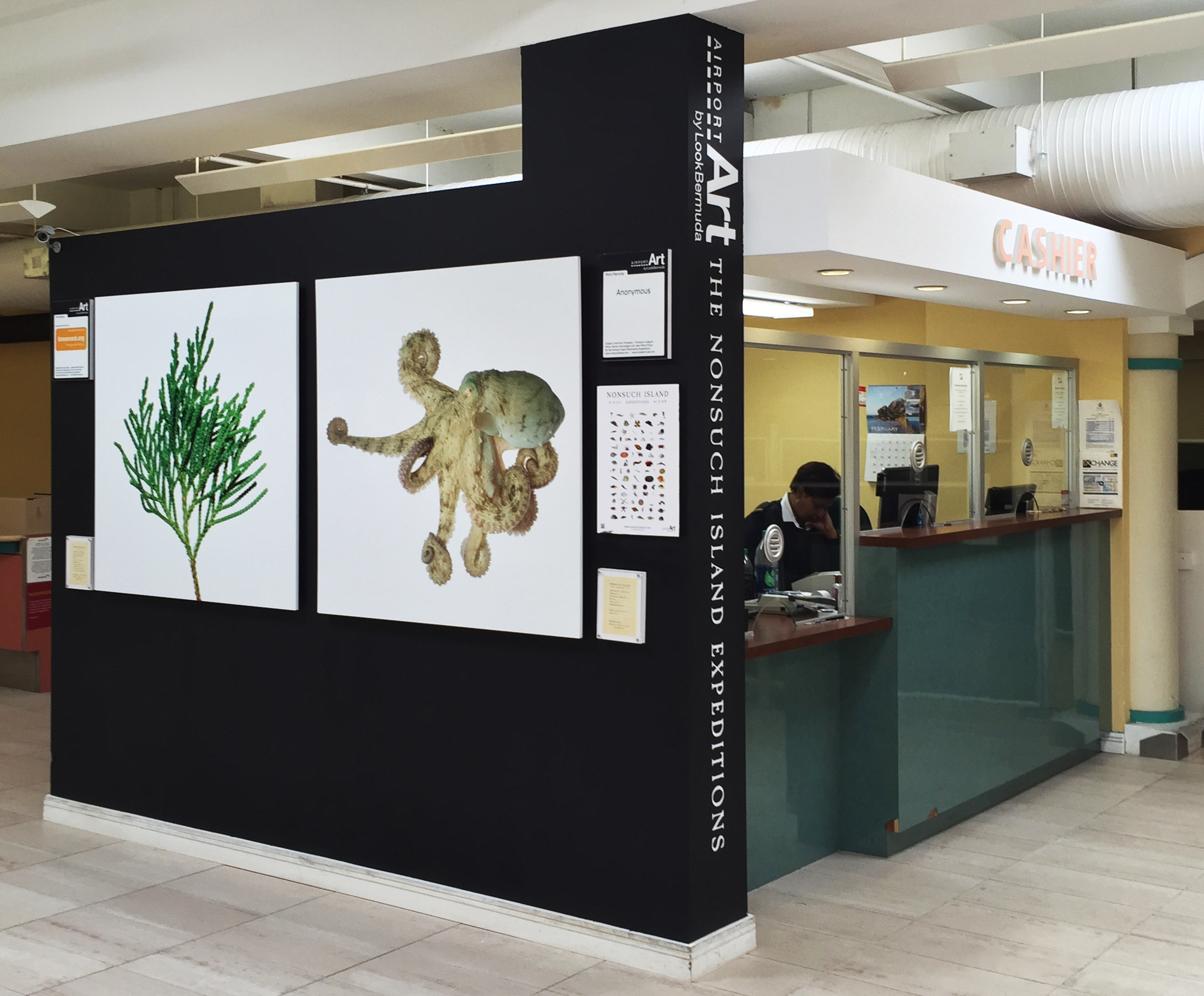
Nonsuch Expeditions Airport Art Theme extended into Private Air Terminal


LookBermuda's highly popular Nonsuch Expeditions AirportArt theme produced on collaboration with National Geographic photographer David Liittschwager has been extended into the new Cedar Aviation private air terminal.
This initiative supports an educational outreach campaign for the Public and Private schools and the ongoing conservation focused Expeditions. Each print has a Patron who in turn receive a "1 of 1 Patron copy" for personal or corporate use. Please contact the Nonsuch Expeditions Team for more information.
Cahow Colony Update - Spring 2016

The 2016 Cahow nesting Season is shaping up to potentially break records, here are the current statistics in relation to the 2014 and 2015 seasons as provided by Jeremy Madeiros:
Total number of breeding pairs in the entire Colony (Pairs that produced an egg, whether it hatched or not):
- 2014: 108 of which 59 were confirmed as successfully fledged giving a breeding success rate of 54.6%
- 2015: 111 of which 53 were confirmed as successfully fledged giving a breeding success rate of 47.7%
- 2016: 114 of which as of March 9th, 35 are confirmed as having hatched thus far.
Total number of breeding pairs in the Nonsuch Translocation Colony (Pairs that produced an egg, whether it hatched or not):
- 2014: 13 of which 9 were confirmed as successfully fledged giving a Nonsuch breeding success rate of 69.2%
- 2015: 14 of which 9 were confirmed as successfully fledged giving a Nonsuch breeding success rate of 64.2%
- 2016: 15 of which as March 9th, 6 have hatched thus far.
Hello World! Cahow chick hatches with several hundred CahowCam viewers watching.
Hello, World!
March 6th 2016 1:08 am
Its a .............chick!
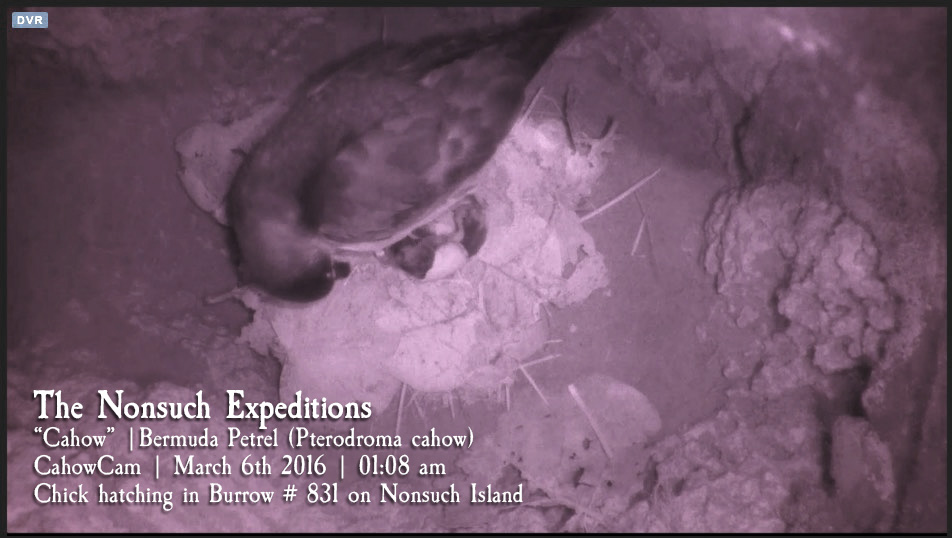
After a very long hatching period, (The first stage of hatching, "dimpling" cracks of the eggshell as the chick started to crack its way out, was first noted at 9.00am on Thursday March 3rd), another Cahow, one of the world's rarest seabirds, entered the world at 1.08am Sunday morning march 6th.
The chick, still wet at this point from having just emerged from within the eggshell, will be brooded and occasionally preened gently by the female bird, and in about 4 hours should have dried out and assumed its familiar "grey puffball" appearance.
It is still not completely safe, as a very small percentage of chicks become so exhausted by the hatching process that they succumb within the first hours after entering the world. However, this chick appears to have plenty of energy and so things look very good at this point.
Incidentally, this chick makes the 23rd that I have confirmed having hatched so far in total on all 5 of the tiny nesting colonies by Saturday evening, including the 4th on Nonsuch.
Thanks to everyone that has shown interest and checked in during this long, long process!
All the best, Jeremy
Jeremy Madeiros, Senior Conservation Officer (Terrestrial) , Dept. Of Conservation Services, BERMUDA
A big Thank You to Jeremy from the Nonsuch Expeditions Team!
This year the hatching event was streamed in real time to the world* and recorded in HD! This was all made possible by the Department of Conservations Services, Solar Power from Ascendant and Internet Access from Logic with Wireless support from Compass Networks. The CahowCam cameras and infrared lighting were custom built by LookBermuda | LookFilms for The Nonsuch Expeditions and will be made available to similar conservation projects around the world.
*Over the past 7 days there have been 6,000 unique views totaling 100,000 minutes of streaming video.
To follow the growth of the chick until it fledges in June, please visit and bookmark the CahowCam page: http://www.nonsuchisland.com/live-cahow-cam/
If you are an Educator please contact us for special materials and broadcast schedule for upcoming weekly LiveStream events.
Cahow Chick Hatching ! Watch Live Now on CahowCam
UPDATE: March 6th 1:08 AM Chick has hatched!!!

The Cahow egg in the CahowCam burrow Is hatching, tune in now to see it live on the CahowCam
See: http://www.nonsuchisland.com/live-cahow-cam/
The egg is in burrow #831 on Nonsuch Island in Bermuda, from which the CahowCam has been broadcasting LIVE for the past 3 nesting seasons.
When Senior Conservation Officer Jeremy Madeiros conducted a health check at 10 am this morning the egg had dimples facing outwards which usually indicates a chick starting to push its way out (as opposed to inward facing dimples indicating a damaged / failed egg). Although this is a few days earlier than initially projected it is hoped that this is the beginning of the hatching process that can take up to 48 hrs.
UPDATE: As of 8:30 pm Atlantic time on the evening of March 3rd, increased activity from the female seems to indicate that the hatching is imminent.
UPDATE: As of 3:30 AM on March 4th the egg is still intact and event is still in progress.
UPDATE: March 5th at 9:20 AM Jeremey has conformed the egg is hatching.
UPDATE: March 6th 1:08 AM Chick hatched!
Witness this rarely seen occurrence on the CahowCam: http://www.nonsuchisland.com/live-cahow-cam/:
The LiveStream and replays can be seen here.
2016 Nonsuch Island Expeditions Airport Art Installations
UPDATE July 2016: The stunning photography produced during the recent round of Biodiversity Photography is now available for Patron Sponsorship and subsequent installation throughout the Airport.
These installations will greatly enhance the Terminal in the lead up to the Americas Cup and will expand upon existing installations that have recently been added to the Bermuda Immigration Hall featuring stunning aluminum prints and flat black wall backgrounds. This exhibit has also been extended into the Cedar Aviation private air terminal: Read More
This program would not be possible without the support of our Print Patrons.
Please Contact Us regarding our Print Patron Program that supports our ongoing Educational Outreach and Research / Conservation focused Expeditions.
The Patron also receives a "1 of 1 Patron copy" of their selected image and their name alongside a second copy in the Airport.
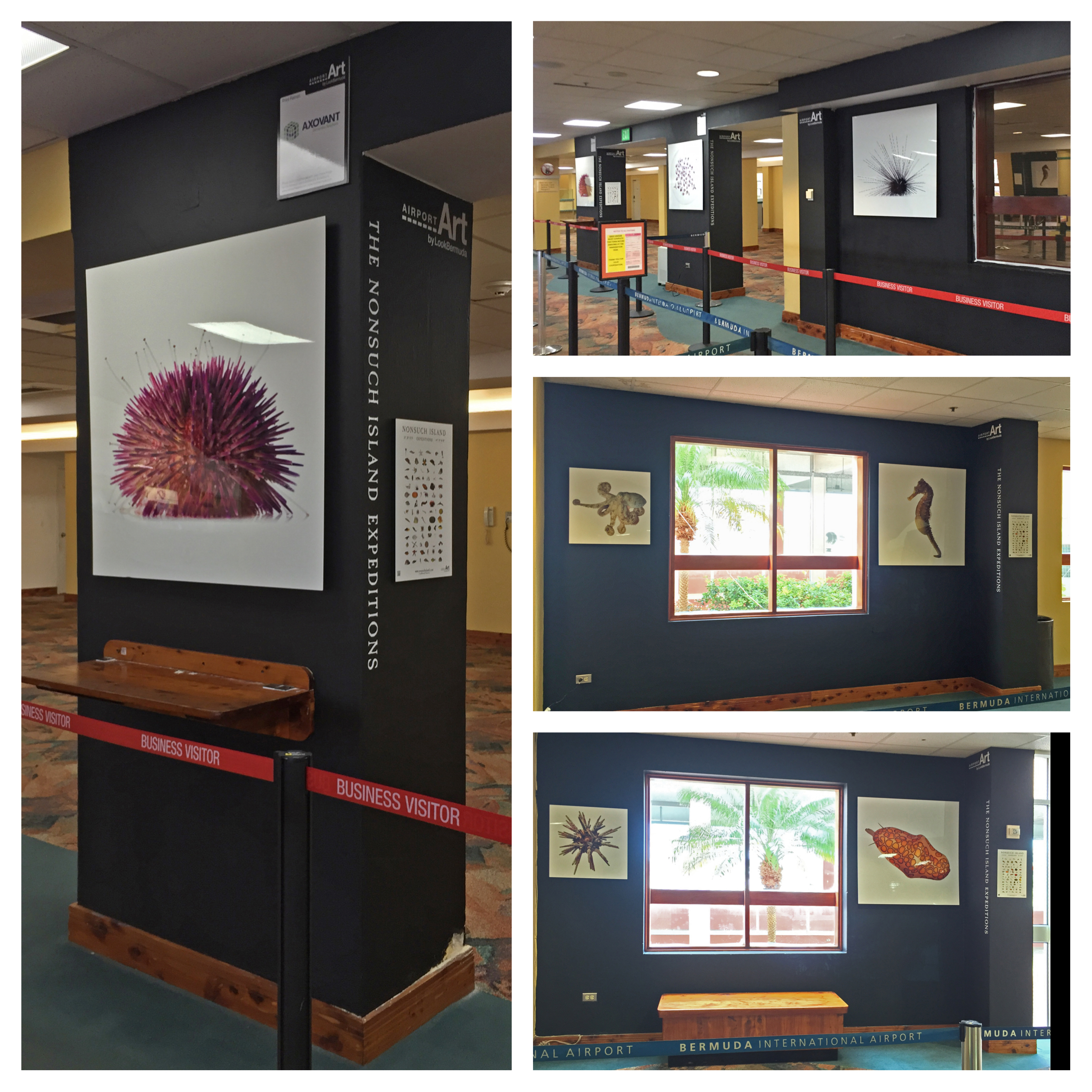
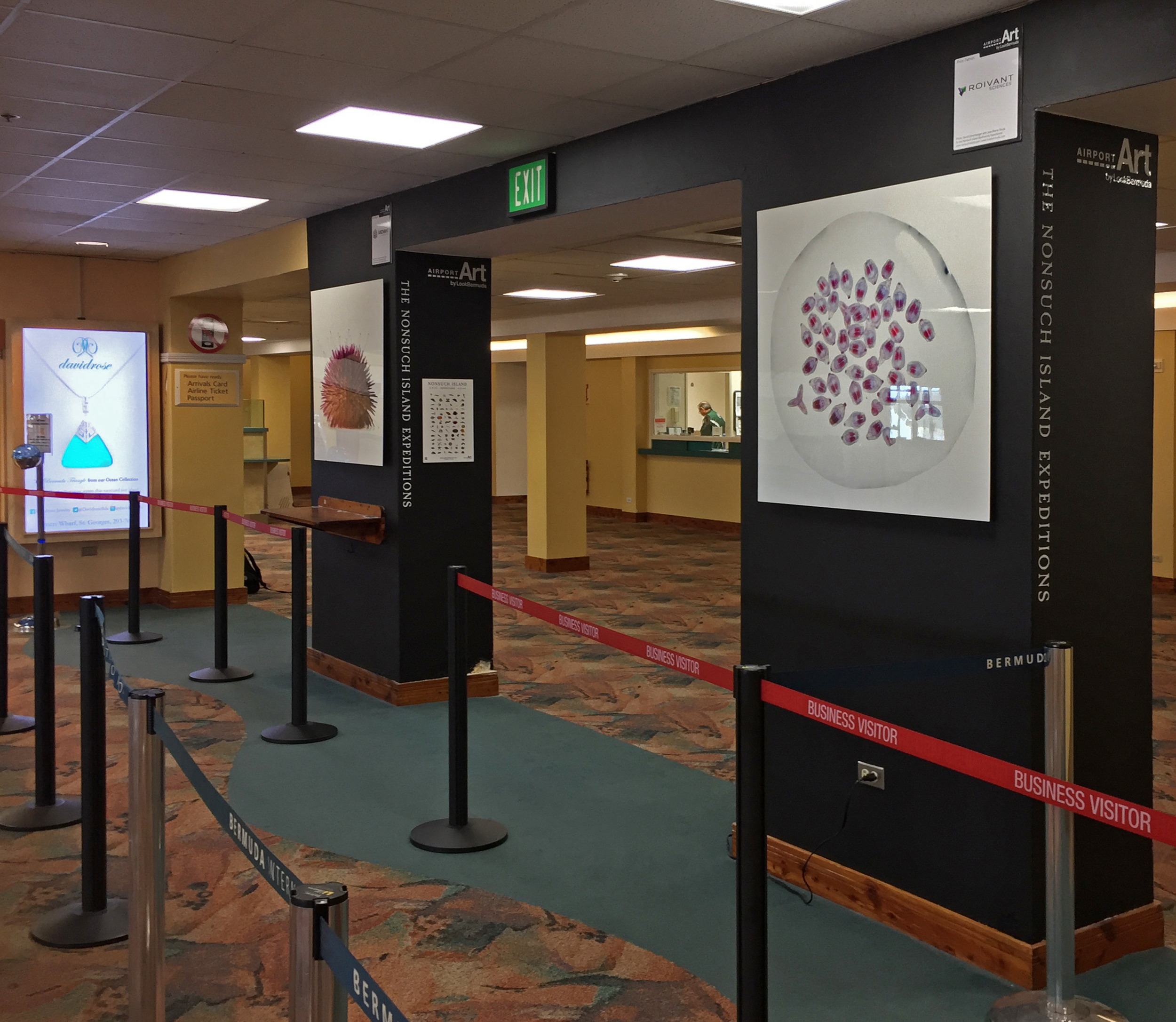
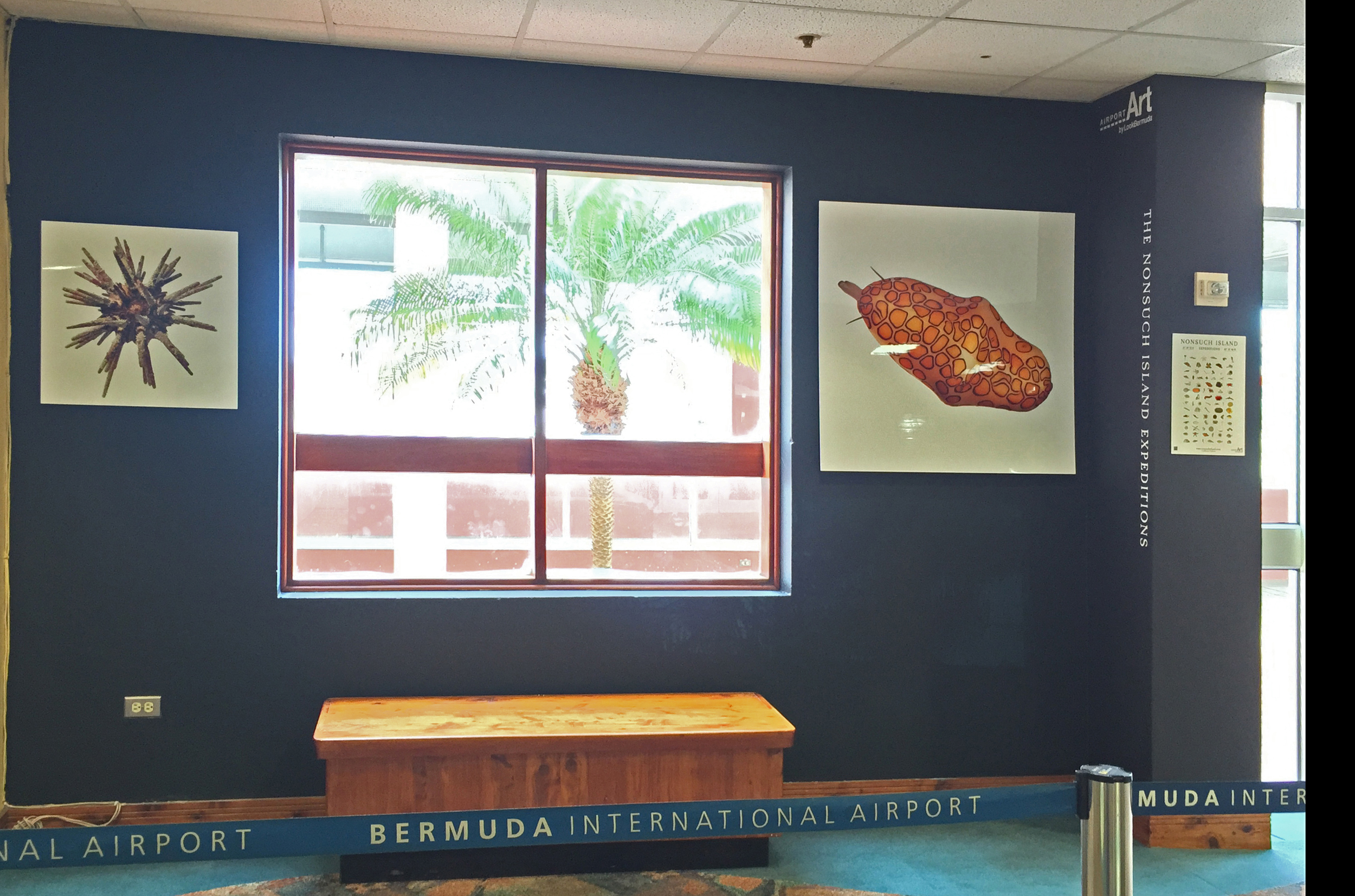
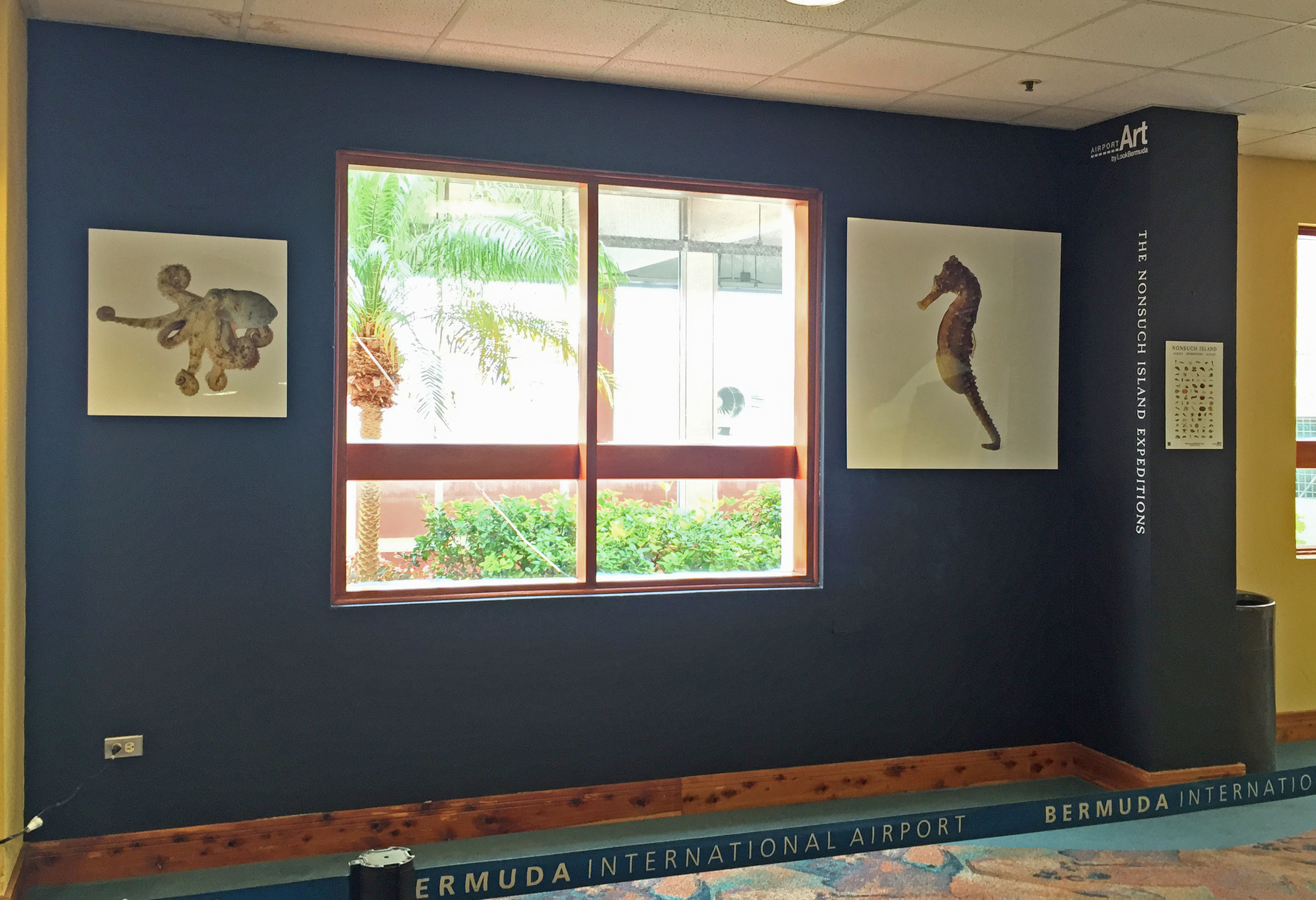
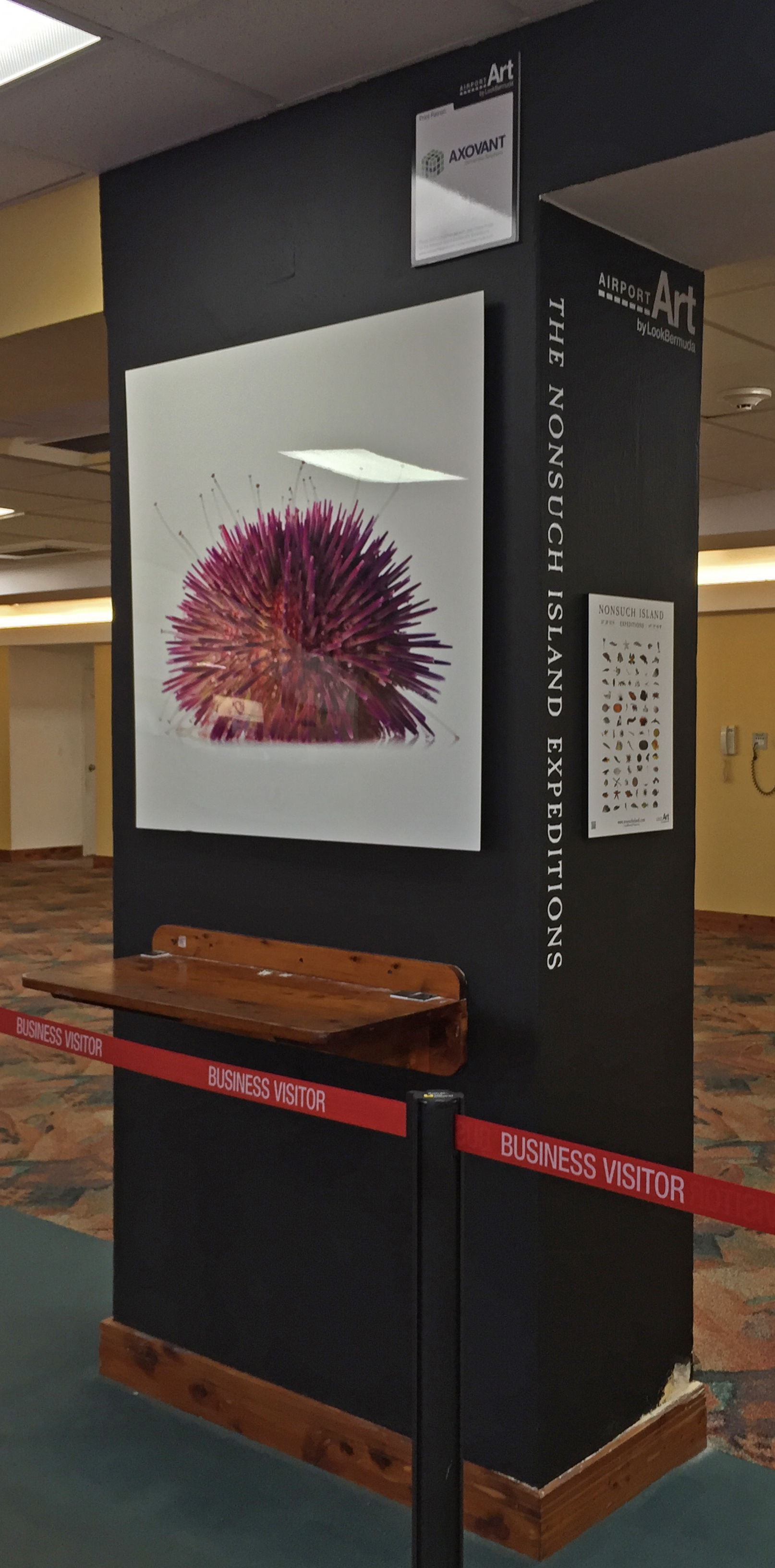
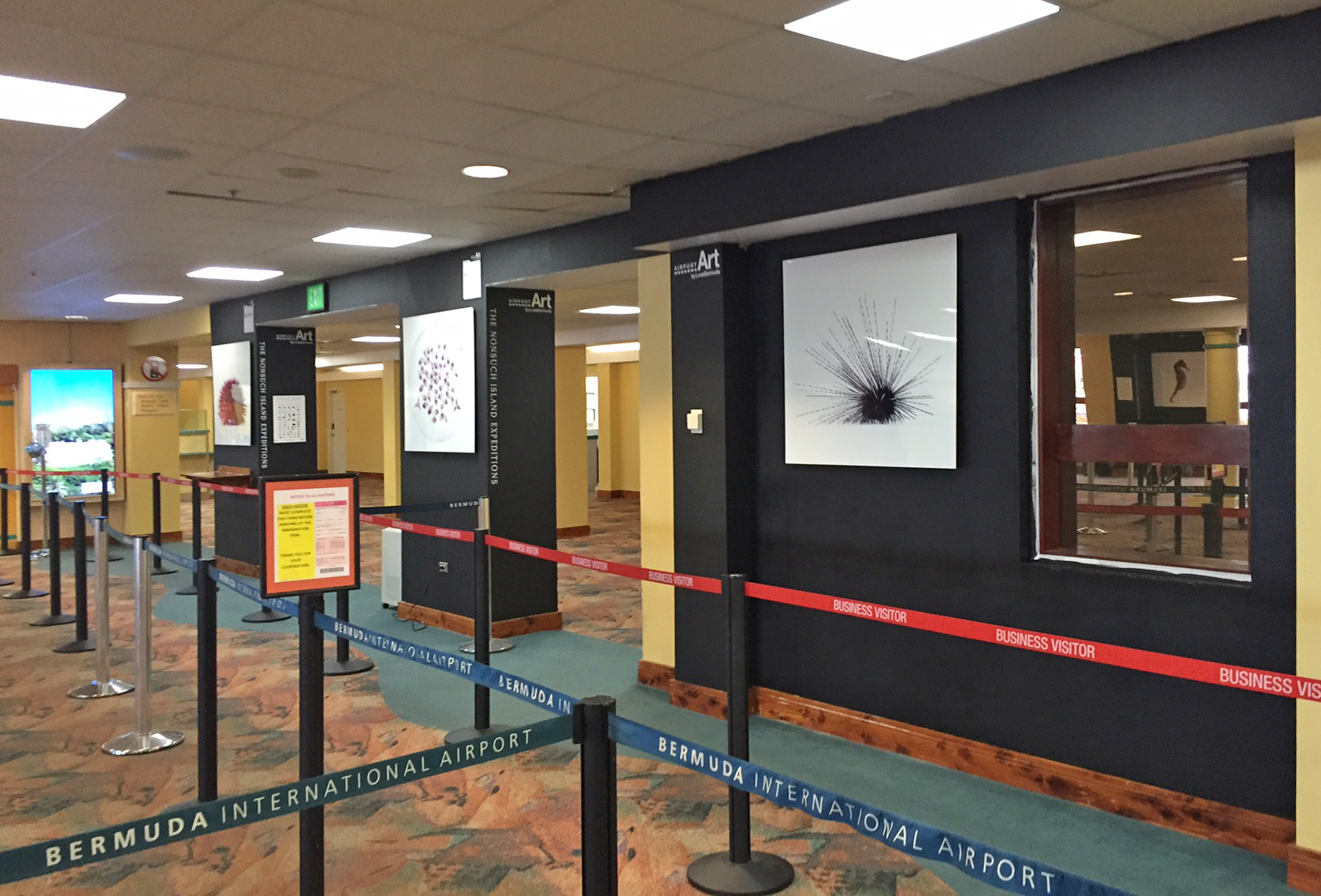
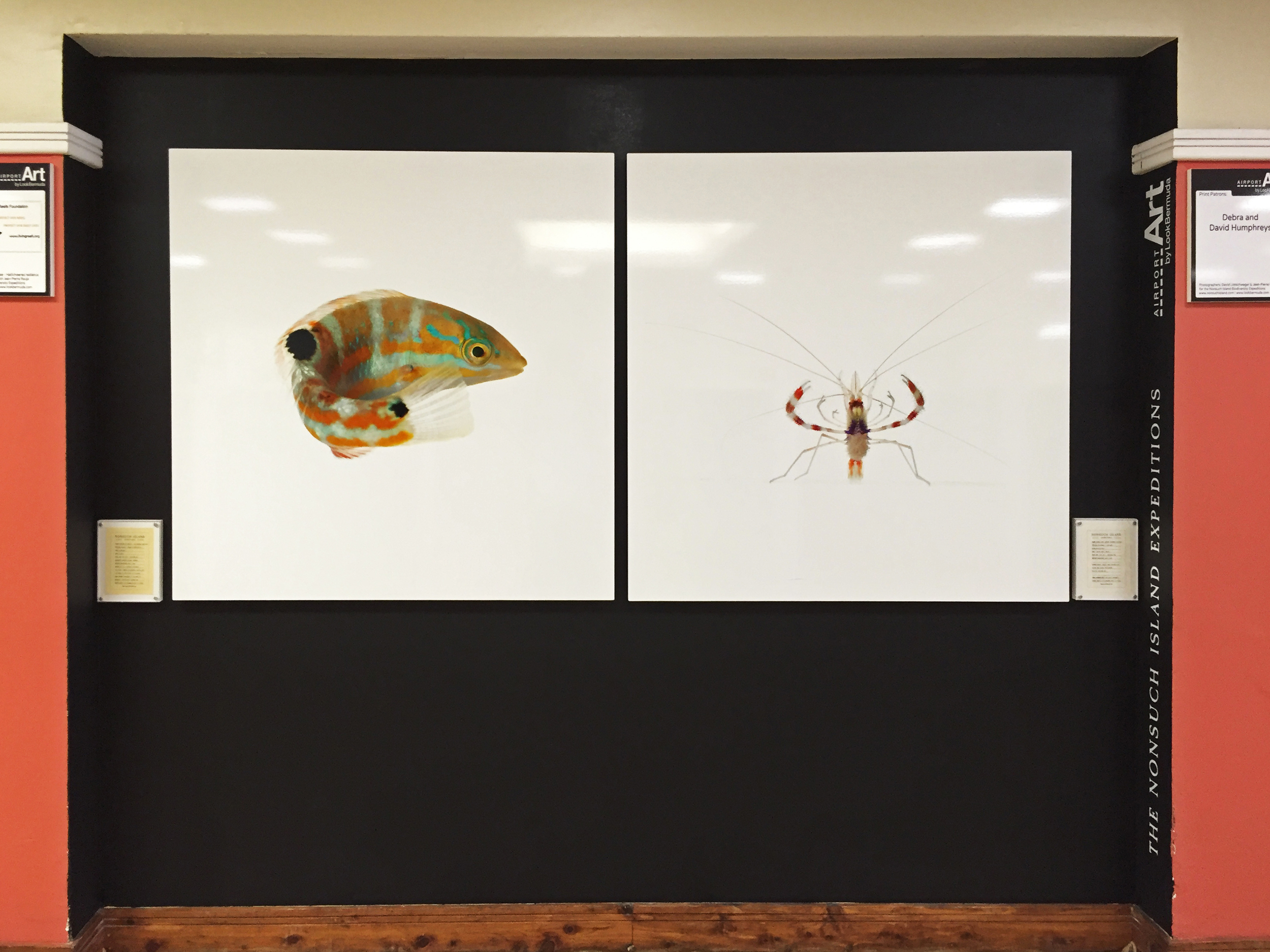
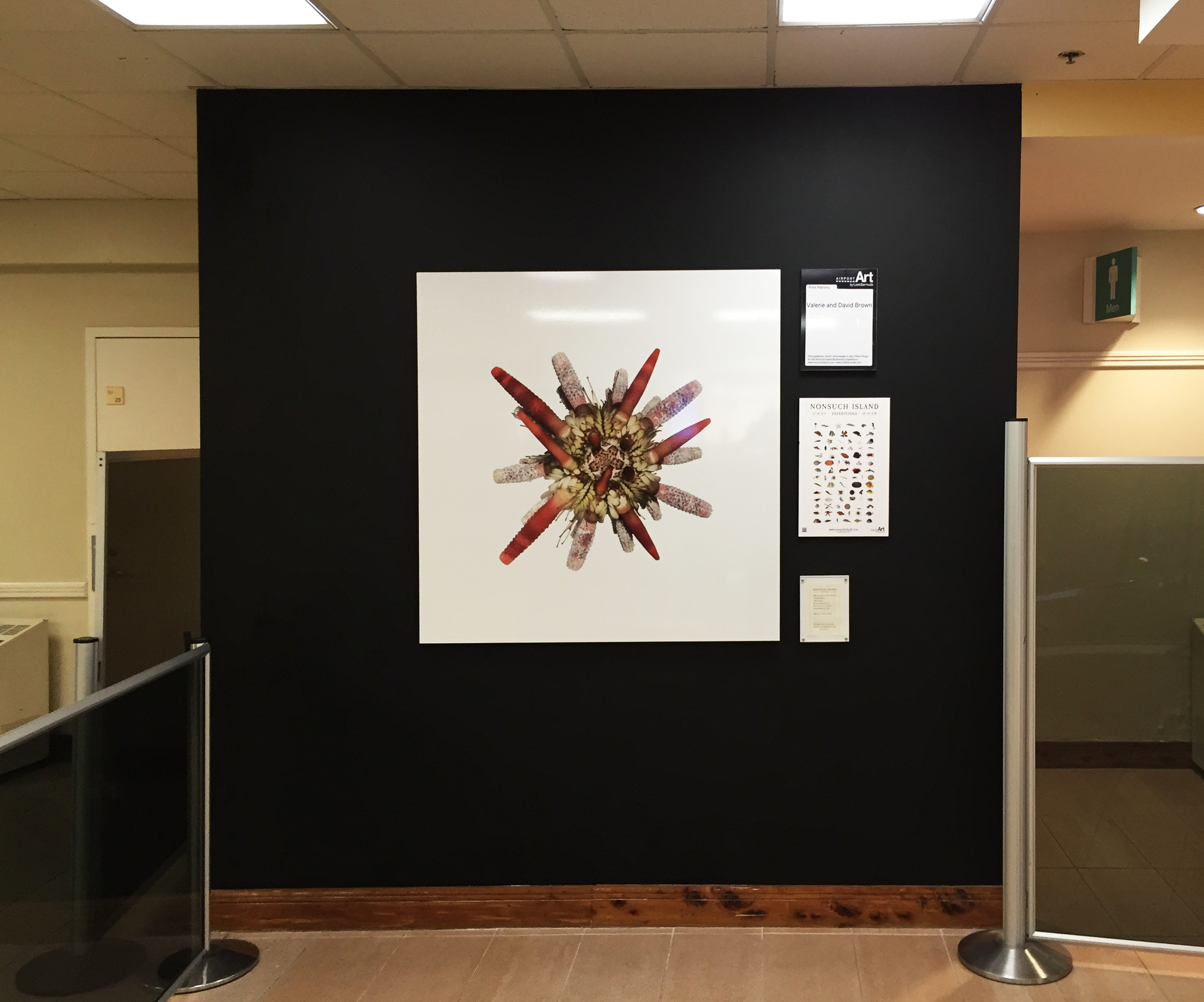
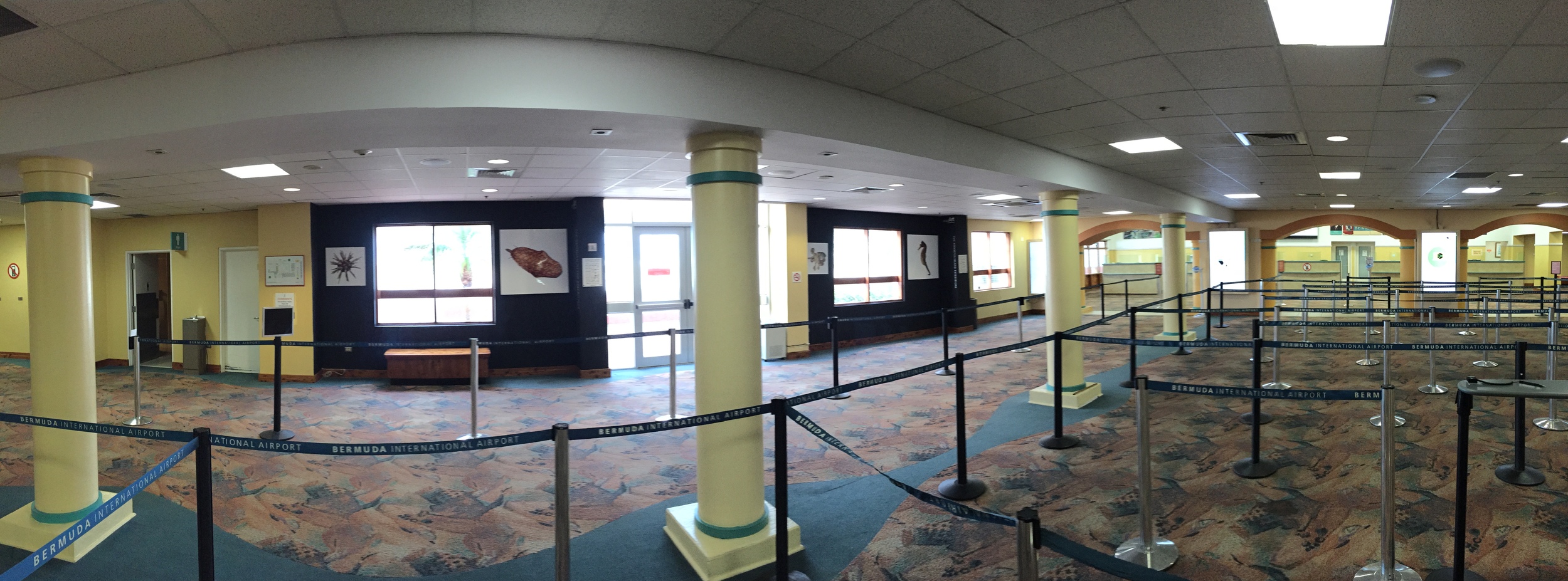
January 2016: The cancellation of most flights over this past weekend due to the blizzard on the east coast gave us the time to do a large AirportArt installation in the Bermuda Immigration arrivals hall. We created a flat black backdrop for the stunning new Aluminum prints which looks amazing!
The new black backgrounds have proven so popular that we have now extended them to all of our installations on the arrivals side of the terminal.
LIVE from Nonsuch Island: Cahow Reveals New egg!
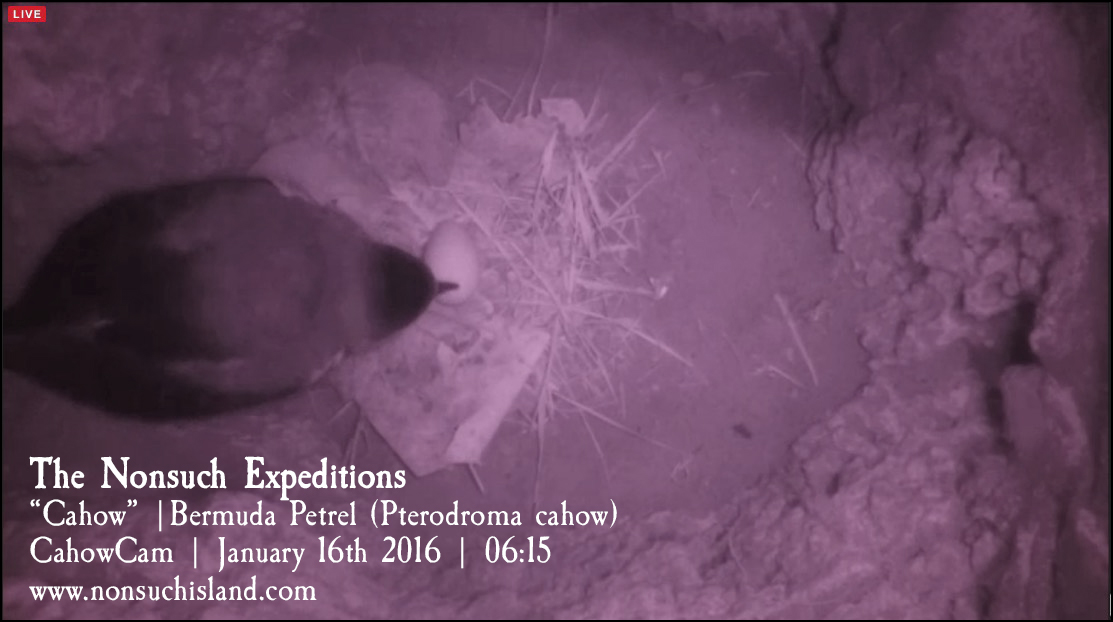
UPDATE: January 19th 6am: The female Cahow remained in the nest longer then expected and did not depart until just before sunrise. The pair spent the 2 days in the nest together taking turns incubating the egg.
UPDATE: January 17th 7am: The male Cahow has just returned during the last minutes of darkness and is expected to take over incubating the egg from the female who will go back out to sea. As of noon on the 17th they are both still in the nest where she should remain until dark this evening. Watch their never before seen interactions LIVE here:
January 16th 2016 6:15am. The Cahow from burrow #831 on Nonsuch Island in Bermuda, from which the CahowCam has been broadcasting LIVE for the past 3 nesting seasons, revealed her new egg live on camera after having returned to the nest under stormy conditions the night before at 8:55pm. LiveStream and replays can be seen here.
The female Band# E0197, was translocated to Nonsuch Island Colony A by Senior Conservation Officer Jeremy Madeiros from her nest on Green Rock in 2006. After first returning in 2009, she started nesting in Burrow #831 in 2010 with her mate Band# E0212 who was translocated from Horn Rock also in 2006.
The first 4 seasons they produced infertile eggs, however starting in 2014 they have successfully reared their chick each year seen LIVE via the CahowCam camera, producing "Lightning" in 2014 and "Rainbow" in 2015.
The Nonsuch Expeditions Team looks forward to a very eventful 2016 Season as we continuously upgrade our custom built equipment.
This Season we are launching interactive curriculum content, educators should CONTACT US directly for details.
Please subscribe to our NEWSLETTER Including the "Cahow Event Alert" updates.
Here is a film of 2015 CahowCam star "Rainbow" being named last nesting season:
Visit to Nonsuch Island to name the latest Cahow chick from burrow #831 from the Nonsuch Island Project - Bermuda, the star of the 2015 CahowCam LiveStream for LookFilms. | www.nonsuchisland.com
Posted by Nonsuch Expeditions - Bermuda on Monday, March 30, 2015
2016 Cahow Nesting Season
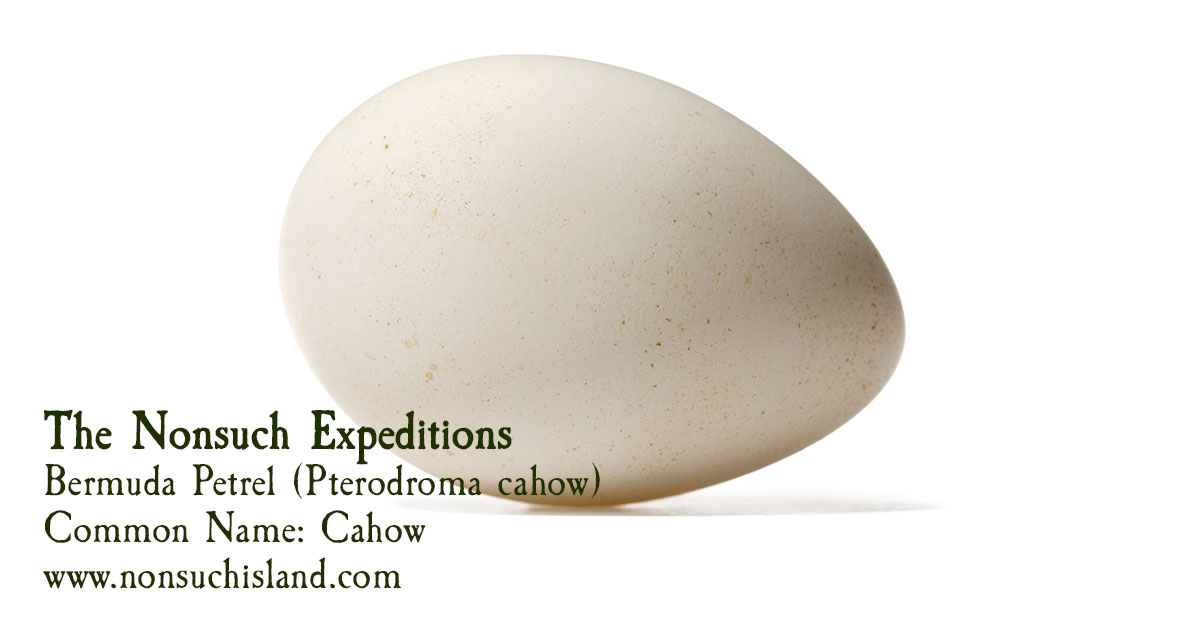
The 2016 Cahow Nesting Season has commenced with some of the females returning to lay their single egg which is up to one quarter of their body weight. The award winning CahowCam is live once again in burrow #831 and we are awaiting the females' return. Sign up for our Newsletter if you would like to receive alerts throughout the season for significant events. http://www.nonsuchisland.com/newsletter-signup/
After a very eventful 2015 Season during which we filmed for the first time ever the courtship behaviors and an egg hatching, the Nonsuch Team is looking forward to an even more eventful 2016 as we rollout new and improved technologies.
UPDATE January 5th: First 2 eggs observed of the season in separate nests in Colony A on Nonsuch Island.
UPDATE January 6th: 12 birds are back throughout the colonies including 3 first time returns, which are birds that fledged 3 to 5 years prior and this is the first time that they have returned to nest.
UPDATE January 8th: Colony A on Nonsuch Island, 6 nests have birds in them, 4 of them are females on new eggs and 2 of them are males that are back early and still awaiting the return of their mates.
UPDATE January 10th: Burrow# 183 where the CahowCam iOS currently installed, has not yet see then return of its pair, however this is expected to happen imminently so please stay tuned and watch the stream live:
Happy Holidays from the Nonsuch Expeditions Team

Photo: 3 day old Longtail Chick
After a record breaking 2015 nesting season on Nonsuch Island, which included for the first time ever the filming of a Cahow chick hatching and the underground mating rituals of the adults, we have much more planned for 2016.
For a full update please download and/or signup for our Newsletter here.
2016 CahowCam Broadcast begins with never before seen courtship Rituals
The 2016 Cahow Nesting Season is about to begin and is once again being broadcast Live by the award winning CahowCam!
For the first time ever, over the past few weeks, viewers around the world had the opportunity to watch the never before seen underground courtship behaviors of the Cahows, which if all goes well, will culminate in the laying of a single egg in the beginning of January for the official start of the Season, when the stream will go live once again.
The following report was written by: Jeremy Madeiros, Senior Terrestrial Conservation Officer, Cahow Recovery Project Manager, Department of Conservation Services

The "CahowCam" installed in an active Bermuda petrel, or Cahow, nest burrow on Nonsuch Island over the last three years has been very successful so far on two counts:
a) allowing researchers to document previously unknown, or unproven, aspects of behavior and breeding biology; this includes incubation of the egg by the adult Cahows, the hatching of a Cahow chick (the first time that this has ever been captured on video or camera), feeding of the chick by the adults, and behavior of the chick as it grows in the burrow.
b) increasing public outreach and knowledge by live-streaming infra-red video of the behavior and growth of the chick on a website that anyone can connect to over the internet.
So far, though, there is one important part of the breeding calendar of the Cahow that has not been seen from the unique vantage point of the Cahow-cam,and that is the return and courtship phase of the adult Cahows, when they first arrive back at the nesting colony after spending more than 5 months living on the open ocean.
The Cahow is a pelagic seabird, meaning that it spends its entire adult life living on the open ocean, usually well out of sight of land, feeding on squid, fish and shrimp-like organisms. Pelagic seabirds, in fact, do notreally need land for anything except as a place to lay their eggs and raise their chicks, usually on isolated, predator-free islands. Geolocator tags fitted to the legs of a number of adult Cahows from 2009 to 2011 revealed that they usually spend the non-breeding months (June to October) either 2500 miles northeast of Bermuda, near the Azores Islands, or in the area between North Carolina and Nova Scotia. It also revealed that the male and female birds are usually separated by thousands of miles during this time, and probably never see each other except at the breeding colony. Since it is virtually impossible to see normally what is happening inside the deep, pitch-dark nest burrows that the Cahow nests in, the Cahow-cam affords a unique opportunity to unravel this chapter in the life of Bermuda's unique, and critically endangered,National Bird.
For 2015,the CahowCam has been set up in a Cahow burrow on the Nonsuch Island Nature Reserve at the very beginning of the nesting season,and we hope to observe, for the first time, some of the following activity:
- The first return of the adult Cahows; how do they react after not seeing each other for five months?
- Courtship,bonding and mating behavior between the adults;
- Nest-building activity and behavior, and whether it is carried out by one or both birds;
- Any new,or previously undocumented behavior.
This period will last up to early December,when both adults usually start the "exodus" period, returning to sea for 4 to 5 weeks to feed intensively, for the female to develop the egg growing in her,and the male to pack on fat deposits so that he can take on the majority of the egg incubation duties, sometimes going for two weeks or more without food during the lengthy 53-day incubation period until the chick hatches.
The next time we will see the adults is in the New Year, when they return in early January to lay their single large egg and begin the incubation period.
For highlights of the most recent 2015 Nesting Season visit this page.
BBC series features Sargassum Fish filmed in Bermuda


LookBermuda and the Nonsuch Expeditions Team spent over a month working with Silverback Films / BBC Natural History Blue Planet Team on the Sargassum Fish sequence for the BBC "The Hunt" series with David Attenborough.
The Fixer / On Island Producer (and fish wrangler) was Nonsuch Expeditions Team Leader J-P Rouja to whom this project was a key part in helping showcase the Sargasso Sea.
Big thanks to our skippers: Harold Conyers, Chris Burville and Peter Flook!
It will air for the first time on November 22nd, for more information visit this page: http://www.bbc.co.uk/programmes/b06qqt3m
Here is the direct link to the BBC iPlayer for the entire program: http://www.bbc.co.uk/…/b06q…/the-hunt-4-hunger-at-sea-oceans
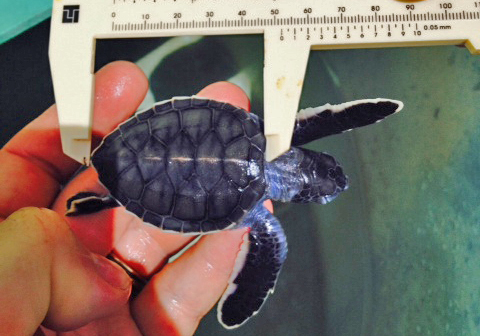
Diamondback Terrapin Hatchlings
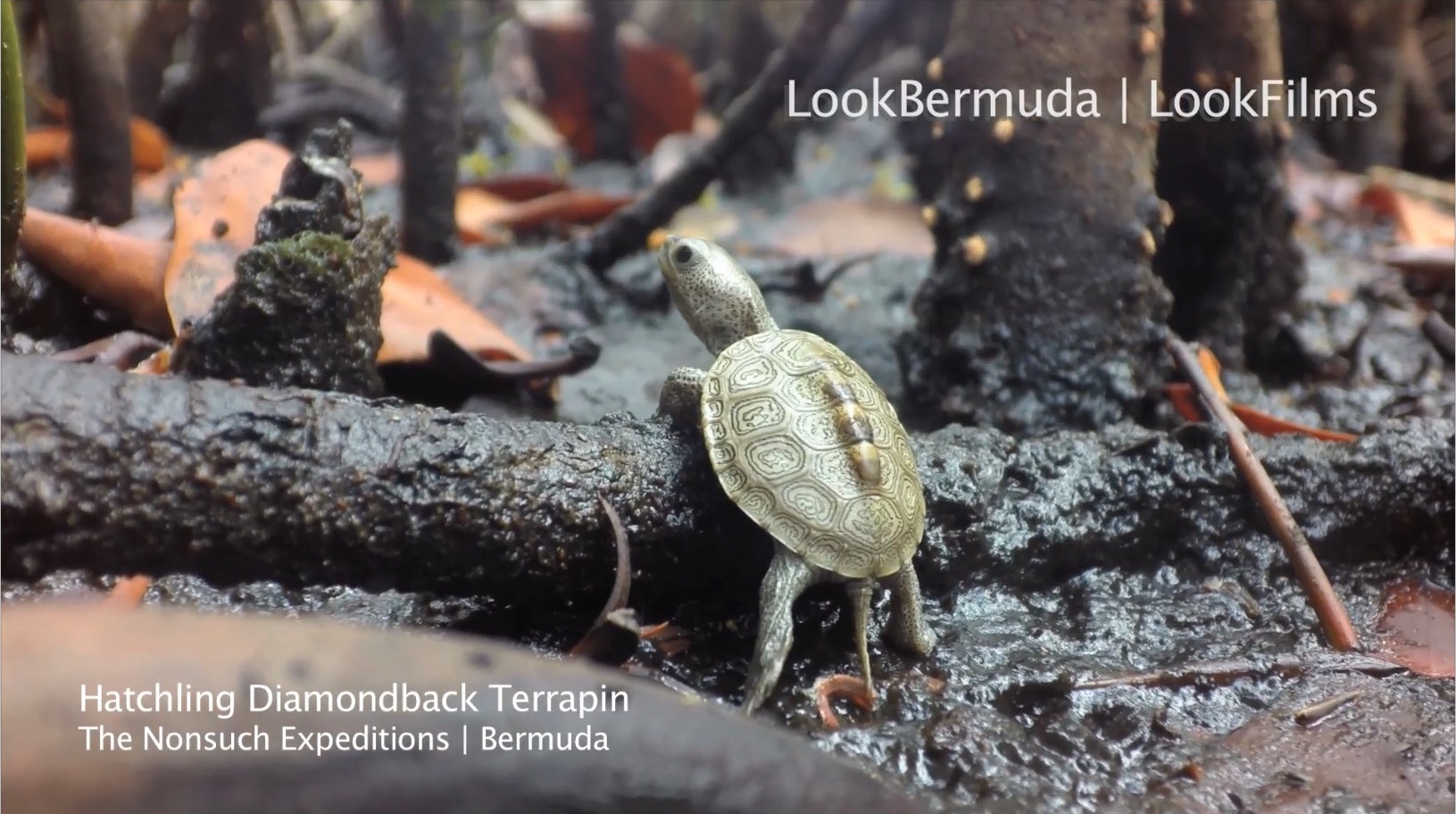
Common name: Diamondback terrapin - Scientific name: Malaclemys terrapin centrata
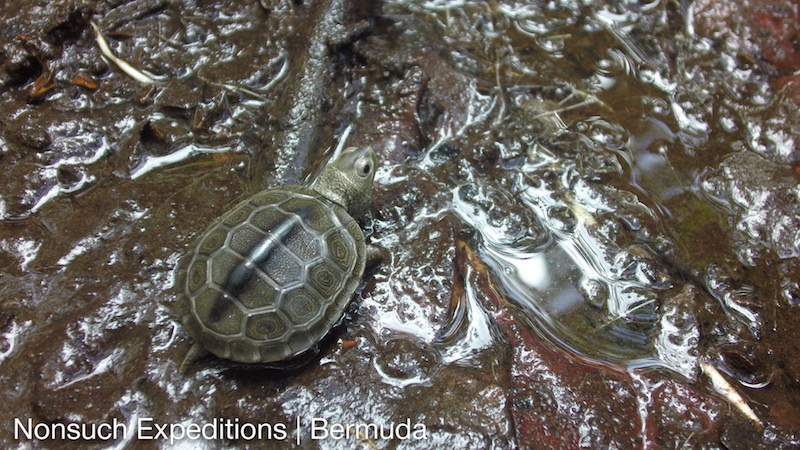
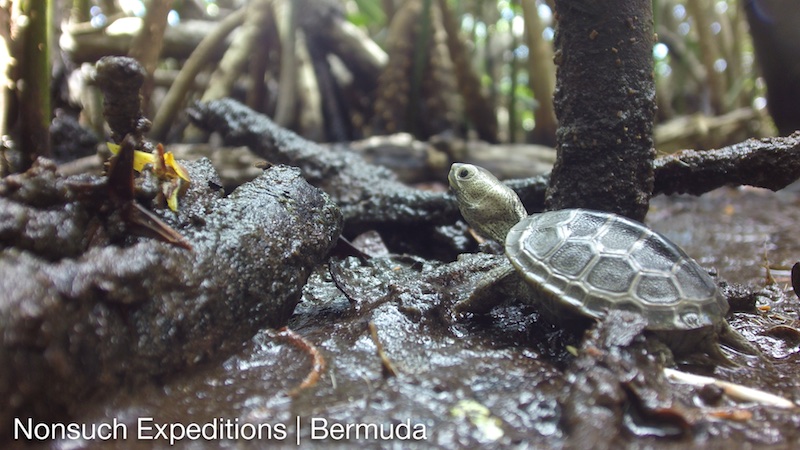
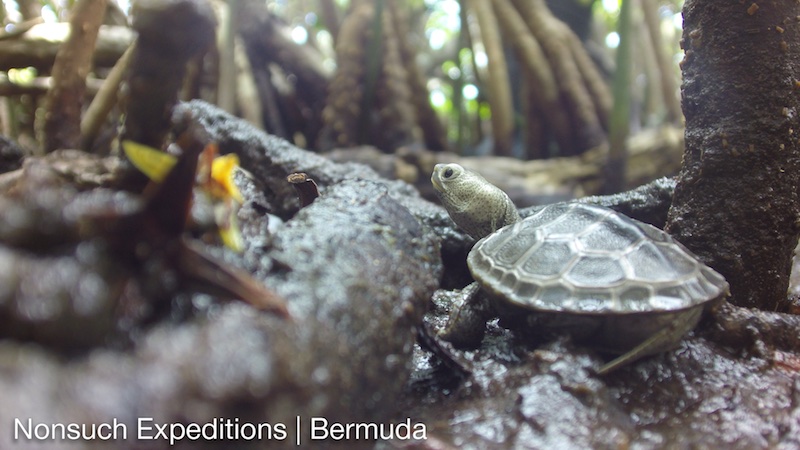
The rare, native, Diamondback Terrapins are only found in a few land-locked, brackish water ponds on Bermuda. Not to be confused with the invasive pet store variety red-eared sliders, research has shown that the population is small and vulnerable to local extinction and that the Mangrove communities are especially important habitats for young Terrapins. Whilst they are not currently found on Nonsuch Island, they are an important part of Bermuda's biodiversity which we are documenting through our ongoing Expeditions.
Hatchling Diamond Back Terrapin - First StepsHatchling Diamond Back Terrapin - First Stepshttp://www.nonsuchisland.com/blog/diamondback-terrapin-hatchlings
Posted by Nonsuch Expeditions - Bermuda on Friday, October 30, 2015
This individual hatched in captivity at the Department of Conservation Services in Bermuda and subsequently released back into its local mangrove habitat, is one of many that have been produced over the years from a conservation-oriented egg incubation program for this rare native species.
The following images are screen grabs from the video we shot during one of our recent Expeditions, using our new custom built micro, macro rig which allows us to film in 4k and follow the subjects at their level, in this case hatchlings the size of a quarter, in a mangrove swamp, literally millimeters above the water and mud. Please subscribe to our Newsletter or follow our Facebook Page to be notified of the soon to be released video.
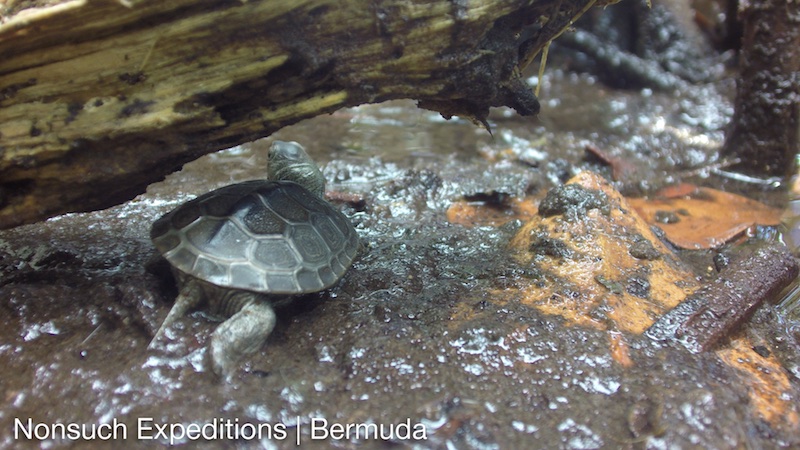
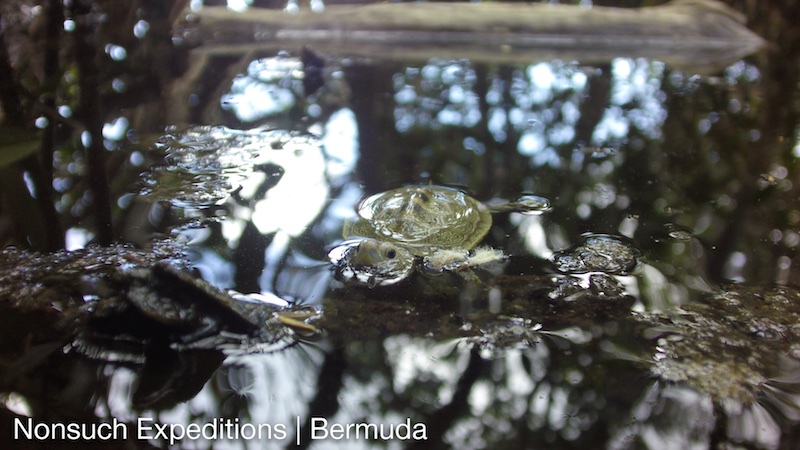
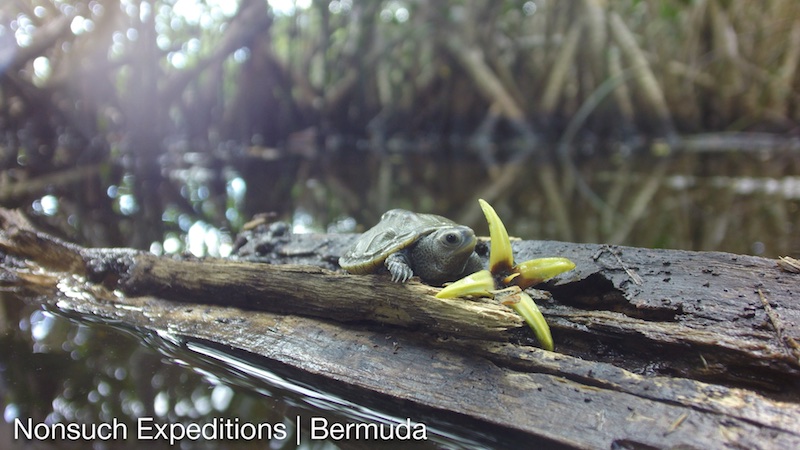
Note: These endangered Terrapins and protected and are not to be collected or kept as pets.
Big thanks to Mark Outerbridge, MSc, PhD, Wildlife Ecologist, Department of Conservation Services.
For more information please visit the Department of Conservation Services website.
Juvenile Loggerhead Turtle with companion Pilot Fish
One year old Loggerhead Turtle filmed with companion Pilot Fish in perfect Bermuda waters. Most likely hatched on the east coast of the US it is had spent the past year in the Sargasso Sea and on this day was passing Bermuda.
Filmed by J-P Rouja for LookBermuda | LookFilms, original footage is in 3D.
Possible new baby turtle tracks found on Bermuda beach

Mystery tracks on Bermuda beach.
The above tracks were found recently at Kent Avenue Beach by neighborhood beach walker Jennifer Simmons who alerted authorities due to the recent publicity of the 1st confirmed Green Turtle nest in 100 years that was discovered at Building Bay in St. Georges on August 17, 2015
Beach walkers are being asked to keep an eye out for and report any potential new sightings, with the most likely signs being tracks from the female coming and going to lay here eggs (which looks like a kayak or small boat being dragged to and from the water), or the small flipper prints from the baby turtles scrambling over the beach after they hatch.
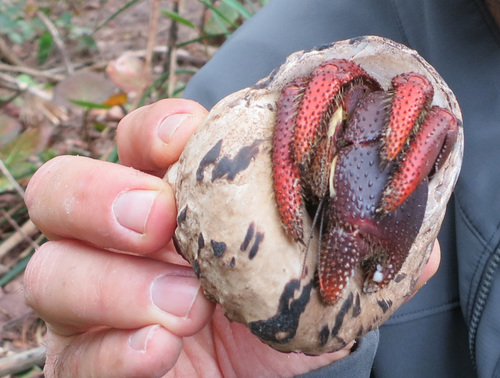
Bermuda Land Hermit Crab found on Nonsuch Island
*UPDATE: Whilst it was ultimately determined that the tracks were most likely from a large Land Hermit Crab scavenging on the beach, they are in fact quite similar to what one would expect from baby turtles.
Should anyone find suspected tracks they are being asked to call the aquarium at 293-2727 and in the short term they can email this website until a notification system is put in place.


Sea Turtle Nest Found on Bermuda Beach
The Department of Parks wishes to inform the public that the beach at Alexandra Battery, located in St. George's, is currently closed to public use as a turtle nest was discovered yesterday in the middle of the beach.
The beach will be closed until at least Wednesday 19th August 2015.
Staff from the Bermuda Aquarium, Museum and Zoo are currently stationed at the beach to monitor the hatchlings and, along with Parks rangers, will advise anyone who visits the site of the closure. Maintenance staff from the Department of Parks have been instructed not to rake the beach until receiving clearance from the Department of Conservation Services. The public will be informed when the beach is reopened for use.
In total 15 hatchlings have been found - 12 of which have been released to sea.
Stay tuned for further updates and photos.
Bermuda Green Turtle HatchlingVideo of Green Turtle hatchling making its way out to sea, from the first nest documented in Bermuda in 100 years. This was the last of 90+ that are believed to have successfully hatched from this nest around August 16th 2015, at Buildings Bay in St George’s.Nonsuch Expeditions - Bermuda on Wednesday, August 19, 2015
For updates LIKE this page or visit: https://www.facebook.com/NonsuchIsland
$3,000 reward for catching Parrotfish Poacher!
As a follow-up to the illegal poaching of 41 Parrotfish: (and a reminder that there is also a $5,000 fine for landing on Nonsuch Island without authorization): Nonsuch Expeditions supporters added $1000 to the Bermuda National Trust reward increasing it to $3000, for information leading to the arrest and successful prosecution of the person who killed the 41 parrotfish on 1 July 2015 in the vicinity of Cooper’s Island:

Parrotfish poaching near Nonsuch Island Nature Reserve

Staff from the Department of Environmental Protection are troubled to report a serious poaching incident which took place on the morning of Wednesday, July 1st when Fisheries wardens on patrol observed a person snorkeling in the vicinity of Cooper’s Island (adjacent to Nonsuch Island) and acting in a suspicious manner.
The snorkeler refused to respond to enquiries and would not show his face, but simply showed his empty hands and then swam off. The wardens retraced his path and found a spear and a string with 42 recently speared fish on the seabed in shallow water, plus another recently speared fish floating on the surface.
As members of the public are likely to be aware, anyone wishing to spear fish in Bermuda requires a licence from the Department of Environmental Protection, and spear fishing is not allowed within 1 nautical mile of the shore. Further, of the dead fish recovered, 41 were parrotfish, a family of fishes that have been protected under Bermuda law since 1993 and which may not be taken or harmed.
Parrotfish are protected because they play an important role in coral reef habitats, keeping seaweed under control and also contributing to the formation of sand. The Fisheries Act, 1972, provides for a fine of up to $50,000 for violations involving species included under the Fisheries (Protected Species) Order 1978.
The fisheries wardens said, “Given the quantity of fish involved, it seems likely that these fish were intended for sale. The public and restauranteurs are reminded that purchasing fish, particularly speared fish, from anyone who is not a registered fisherman is an offence under the Fisheries Act, and that simply being in possession of dead parrotfish puts them in violation of the Fisheries (Protected Species) Order as well.”
Anyone who might have any information regarding this incident is asked to contact the fisheries wardens on 7053474 or 2935600, or send an email to fisheries@gov.bm. Likewise, anyone witnessing a fisheries offence should call the FISHTIPS hotline (7053474) or the police immediately.
Please share for our collective disgust, and those who know who it is, name and shame...
One of the problems is that parrotfish are very social and territorial so this whole section of coastline has now been wiped out.