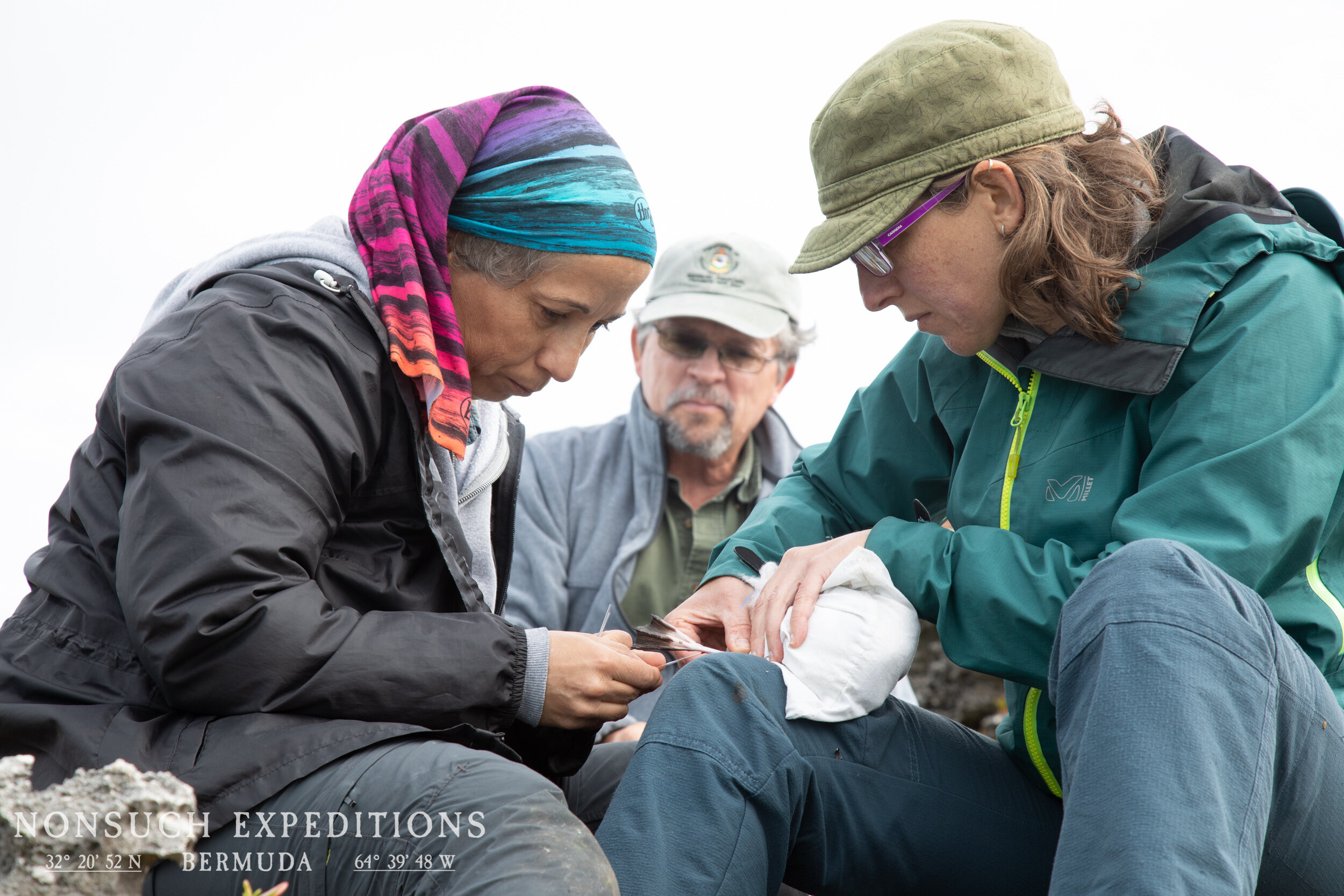
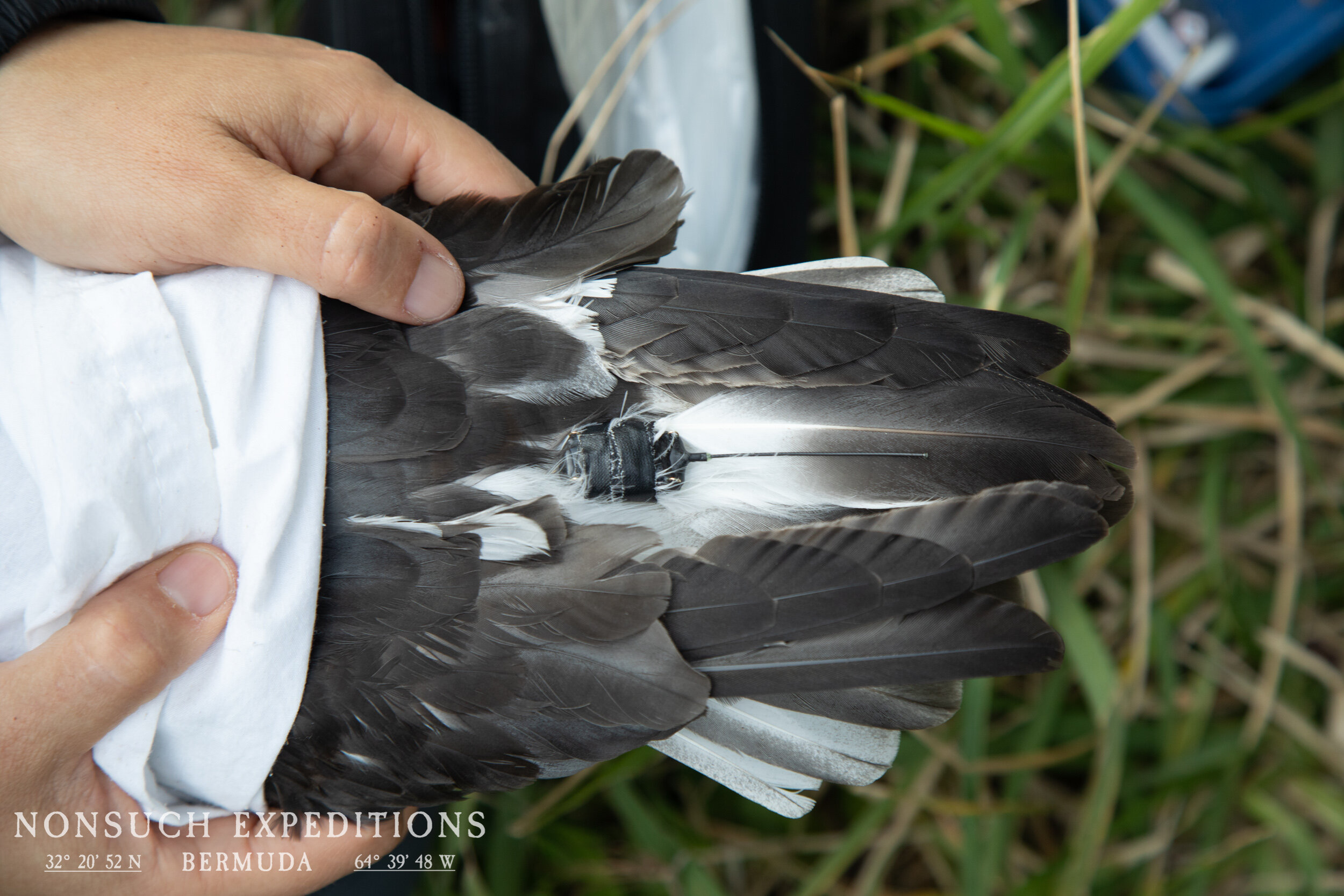
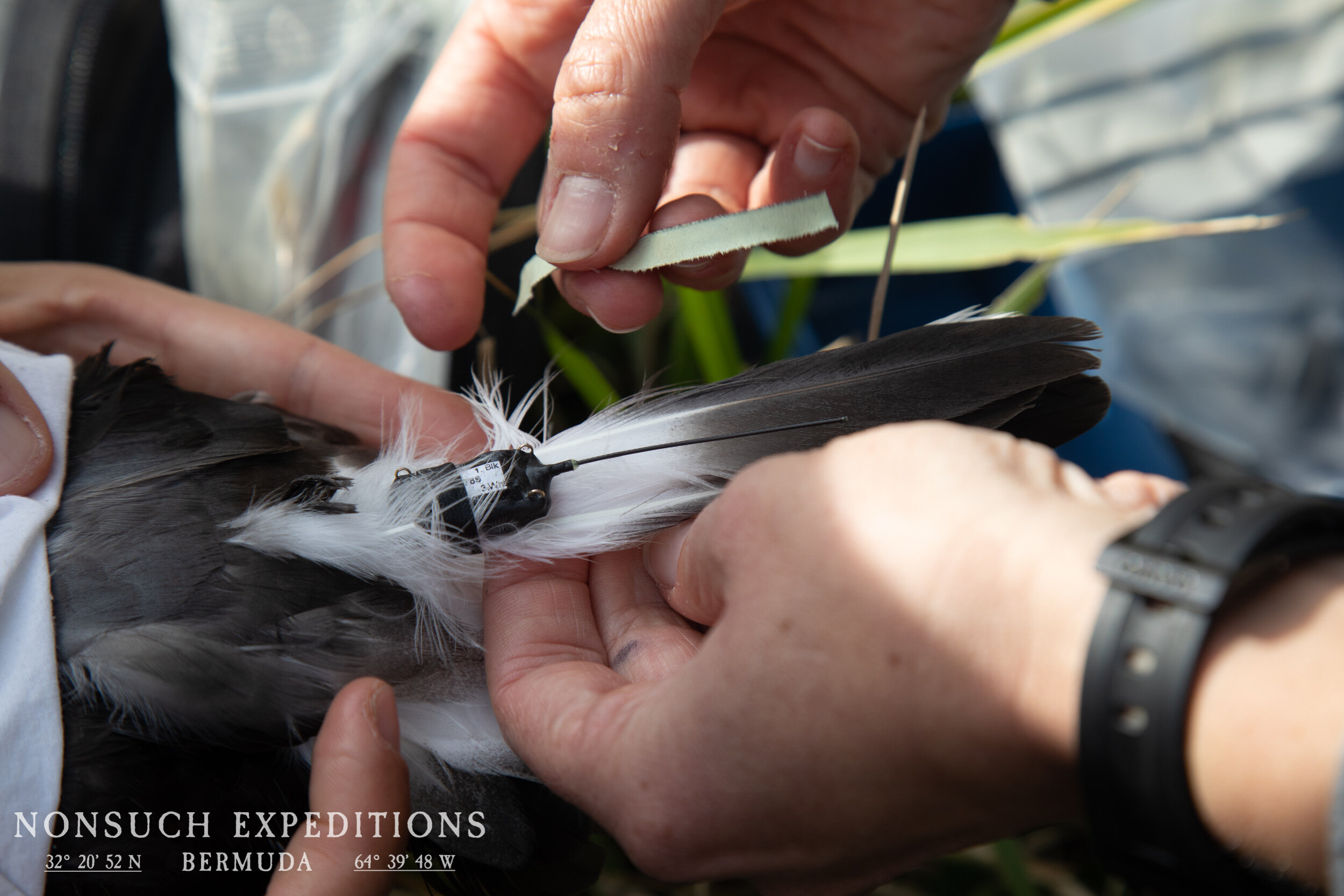
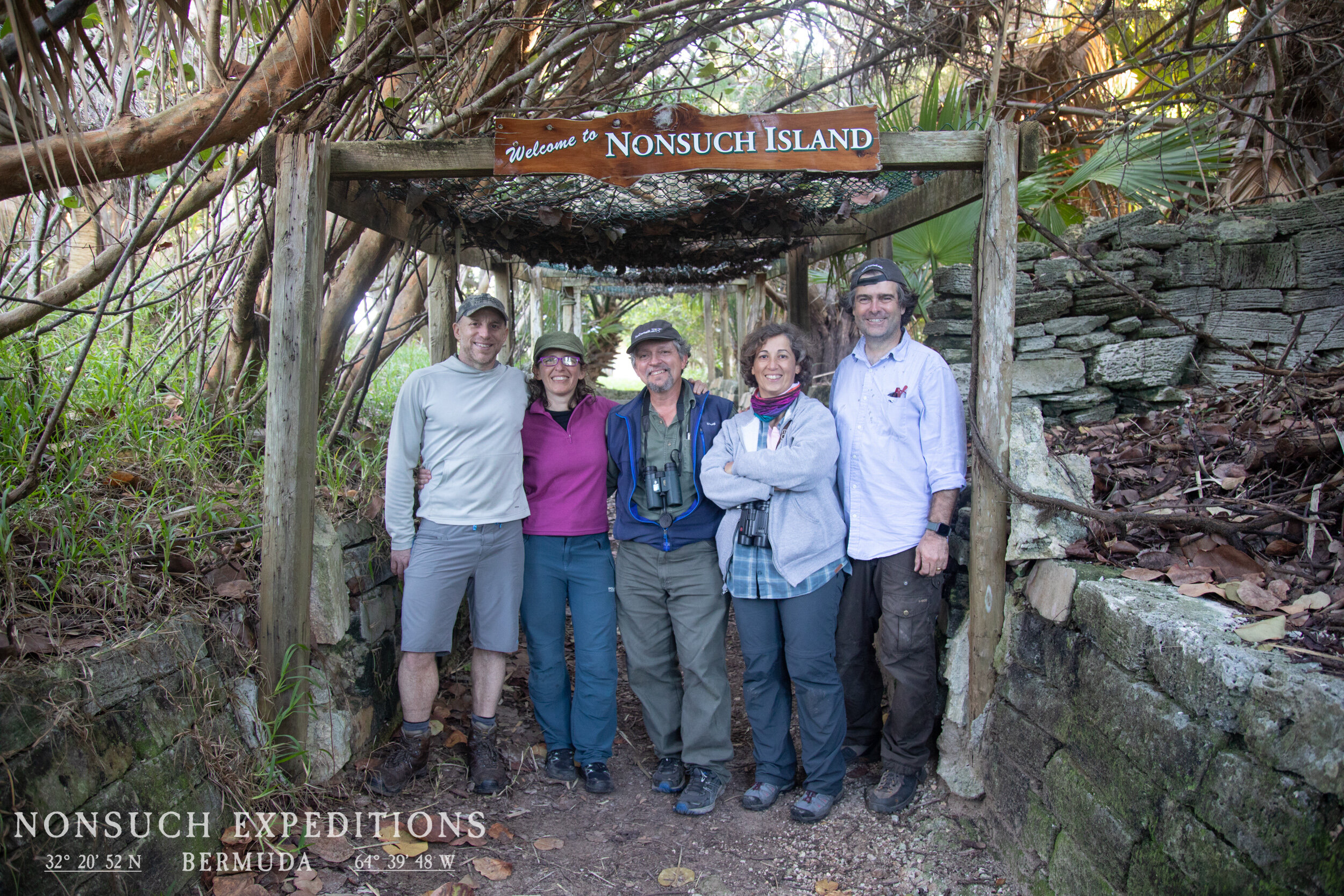
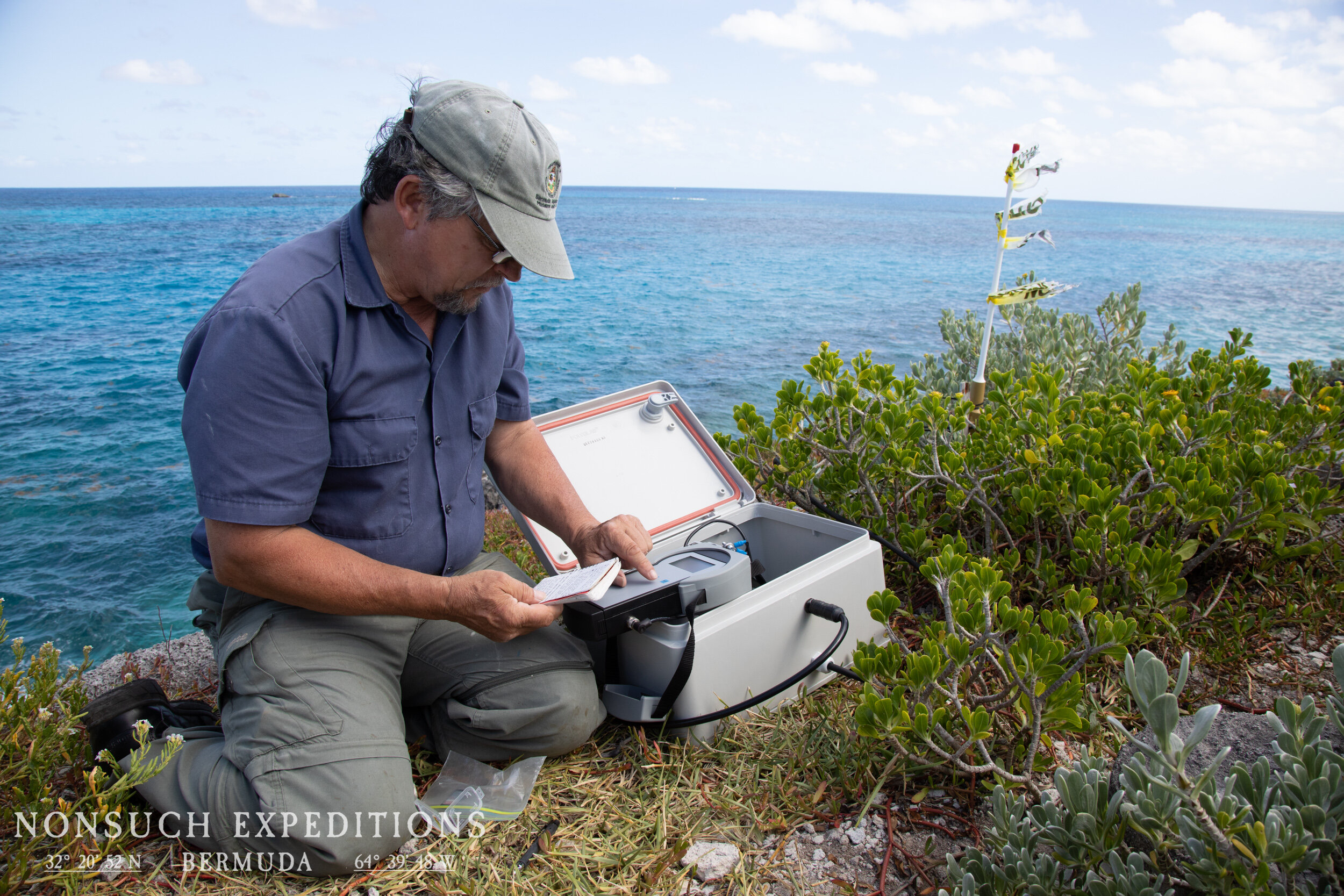
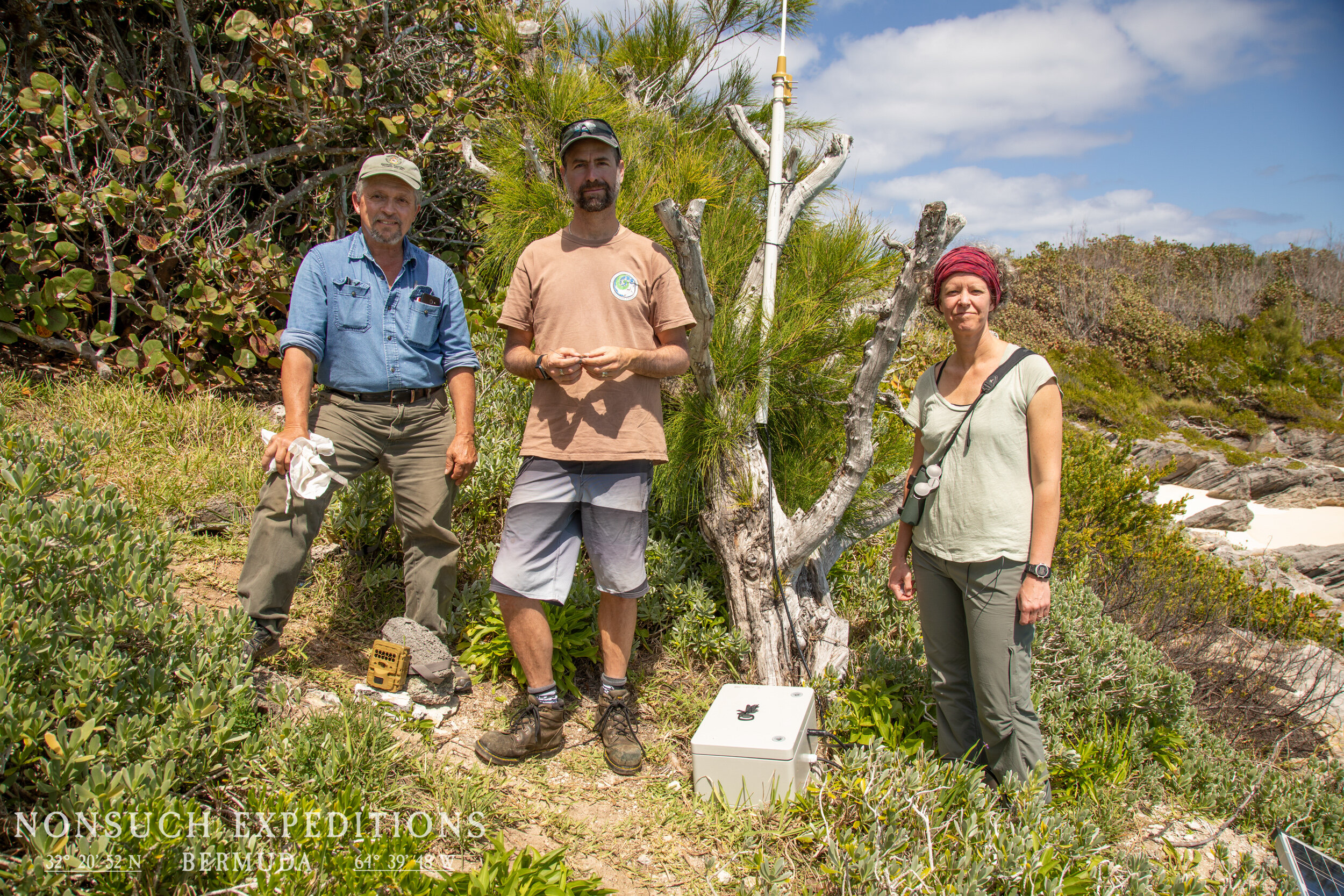
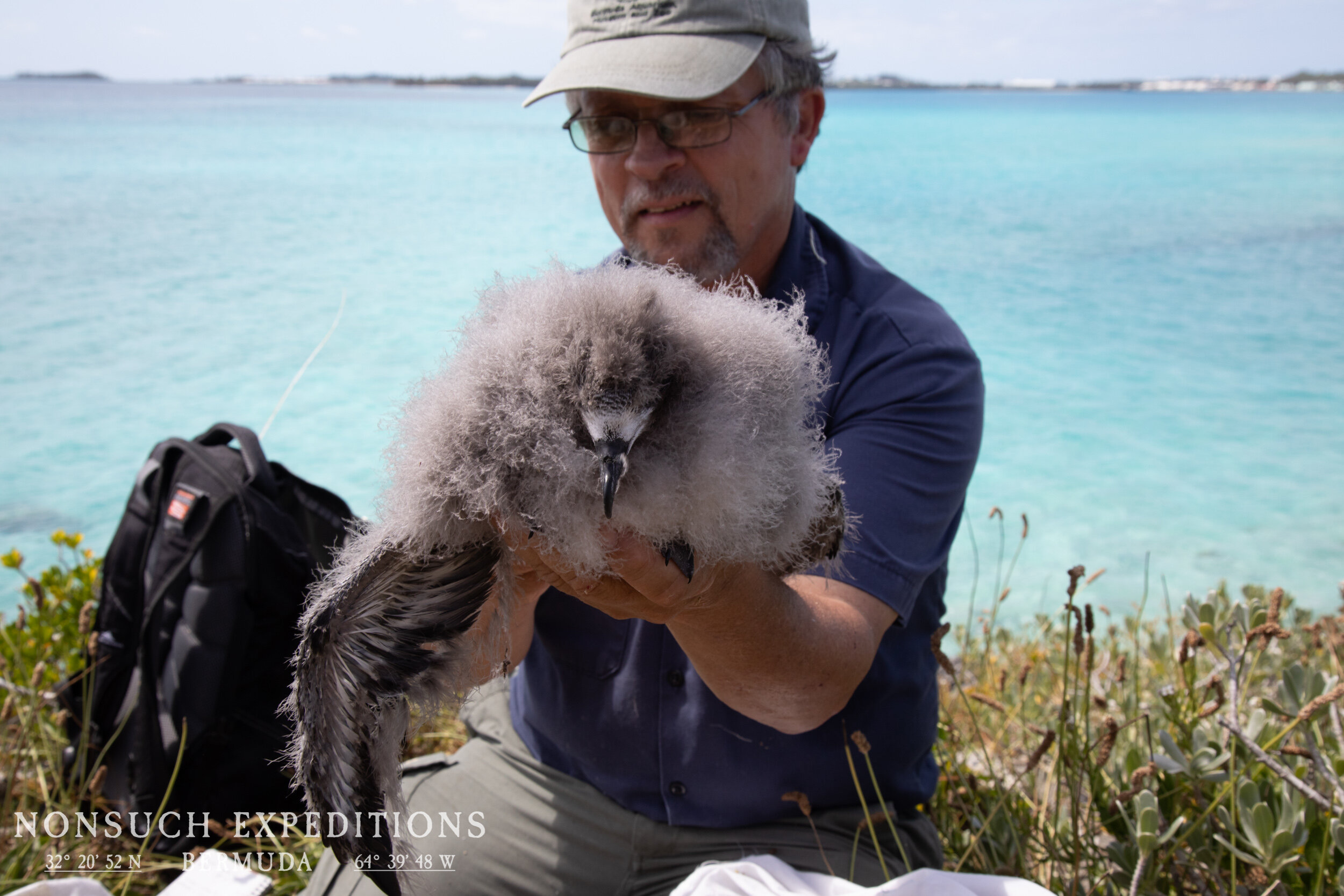
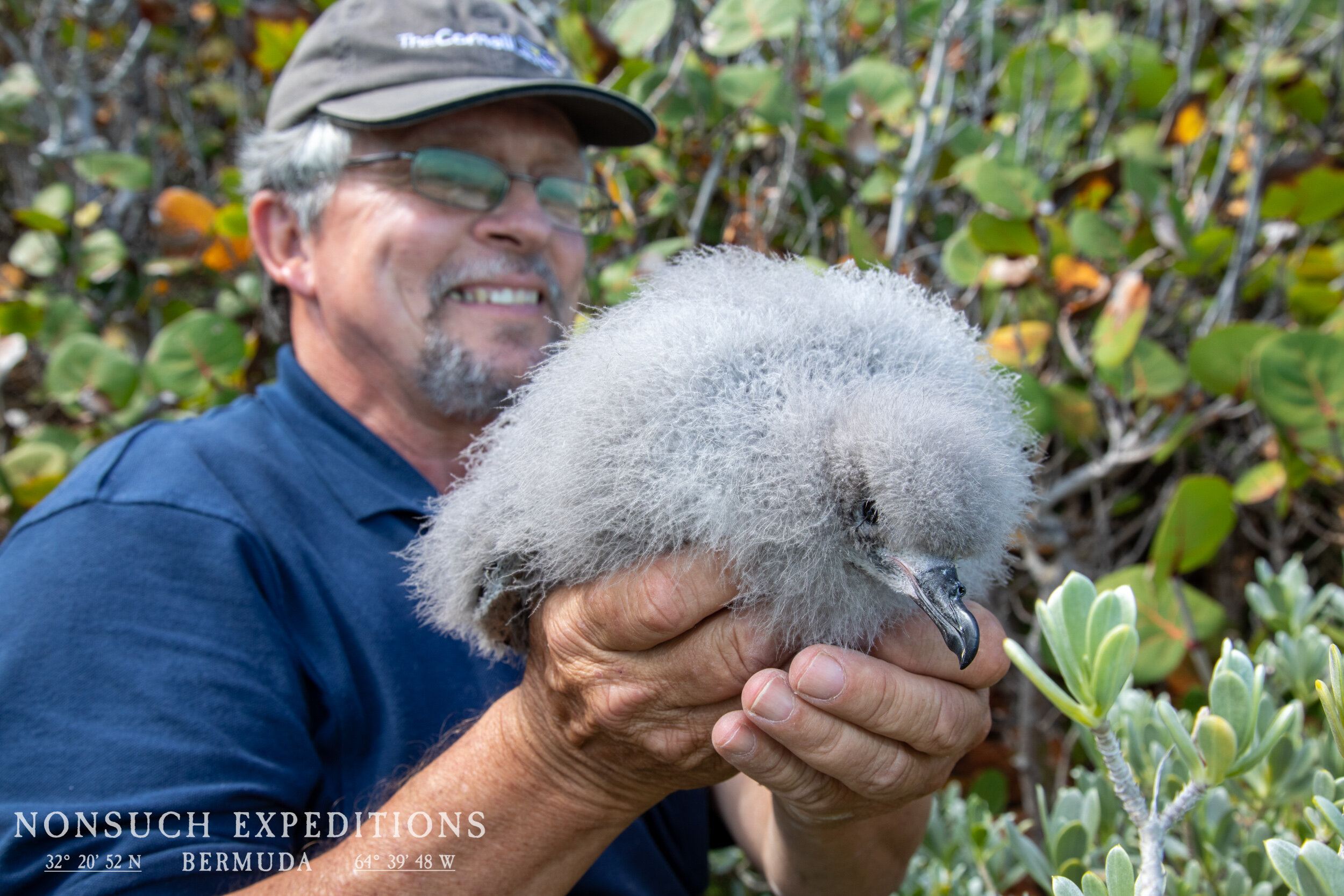
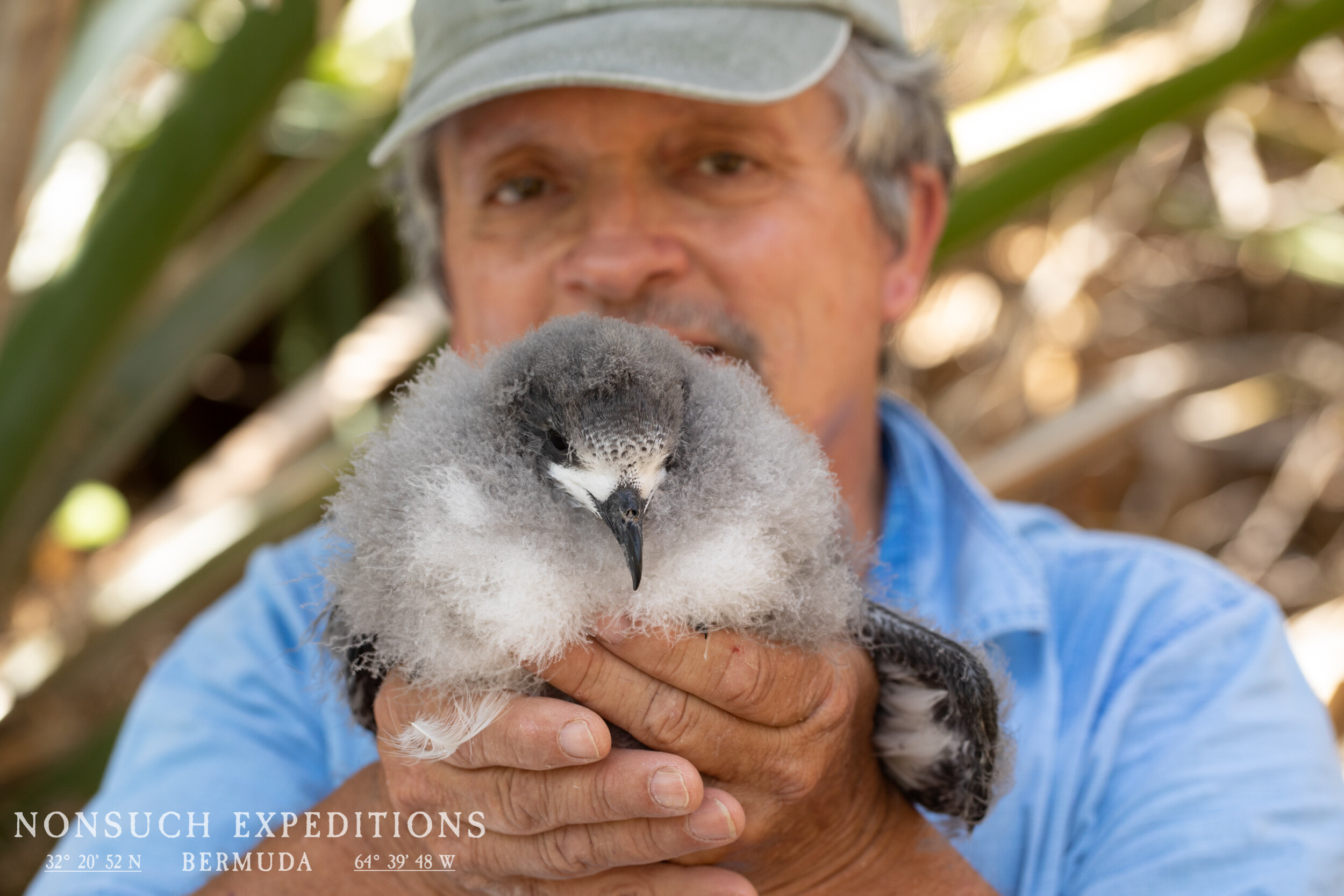
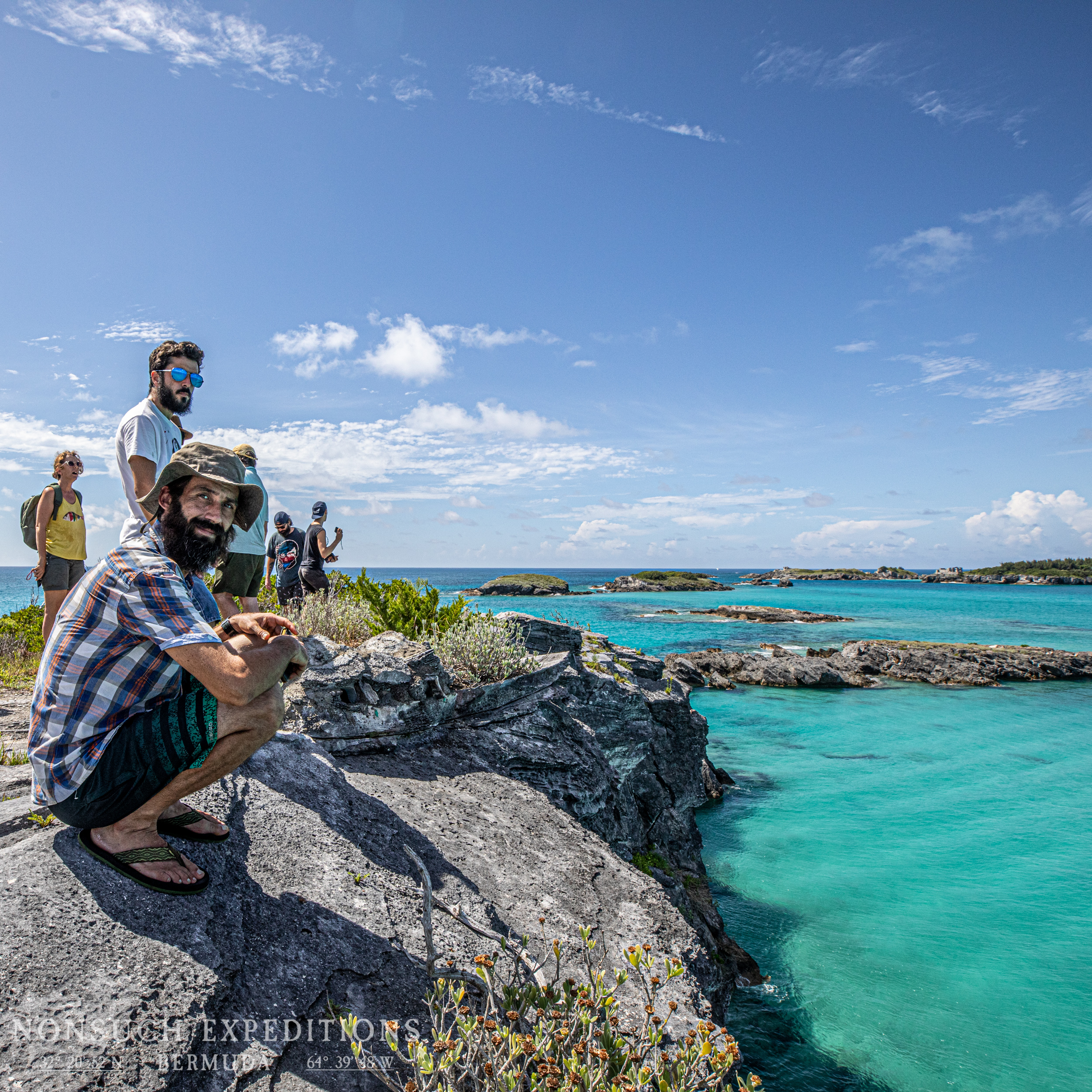
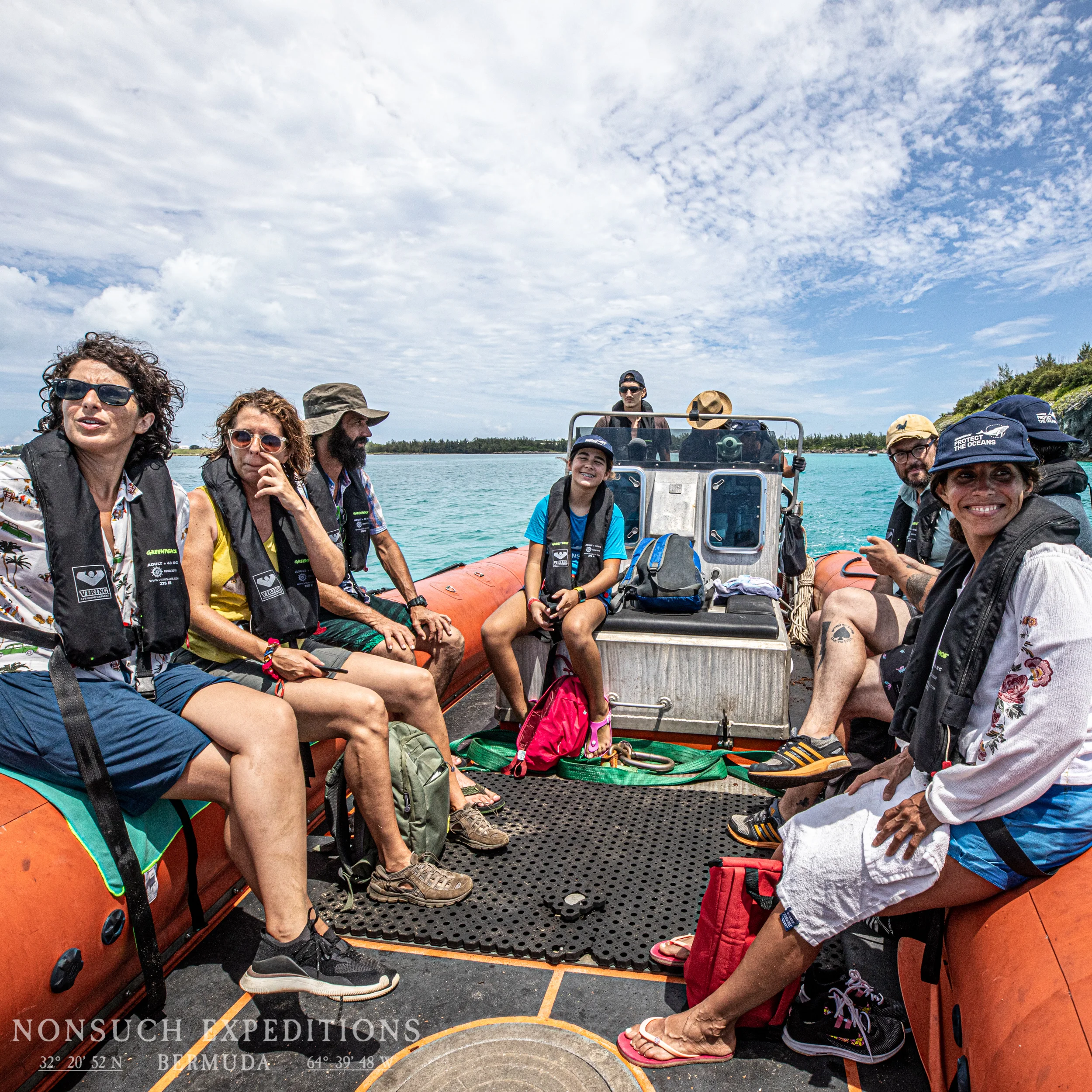
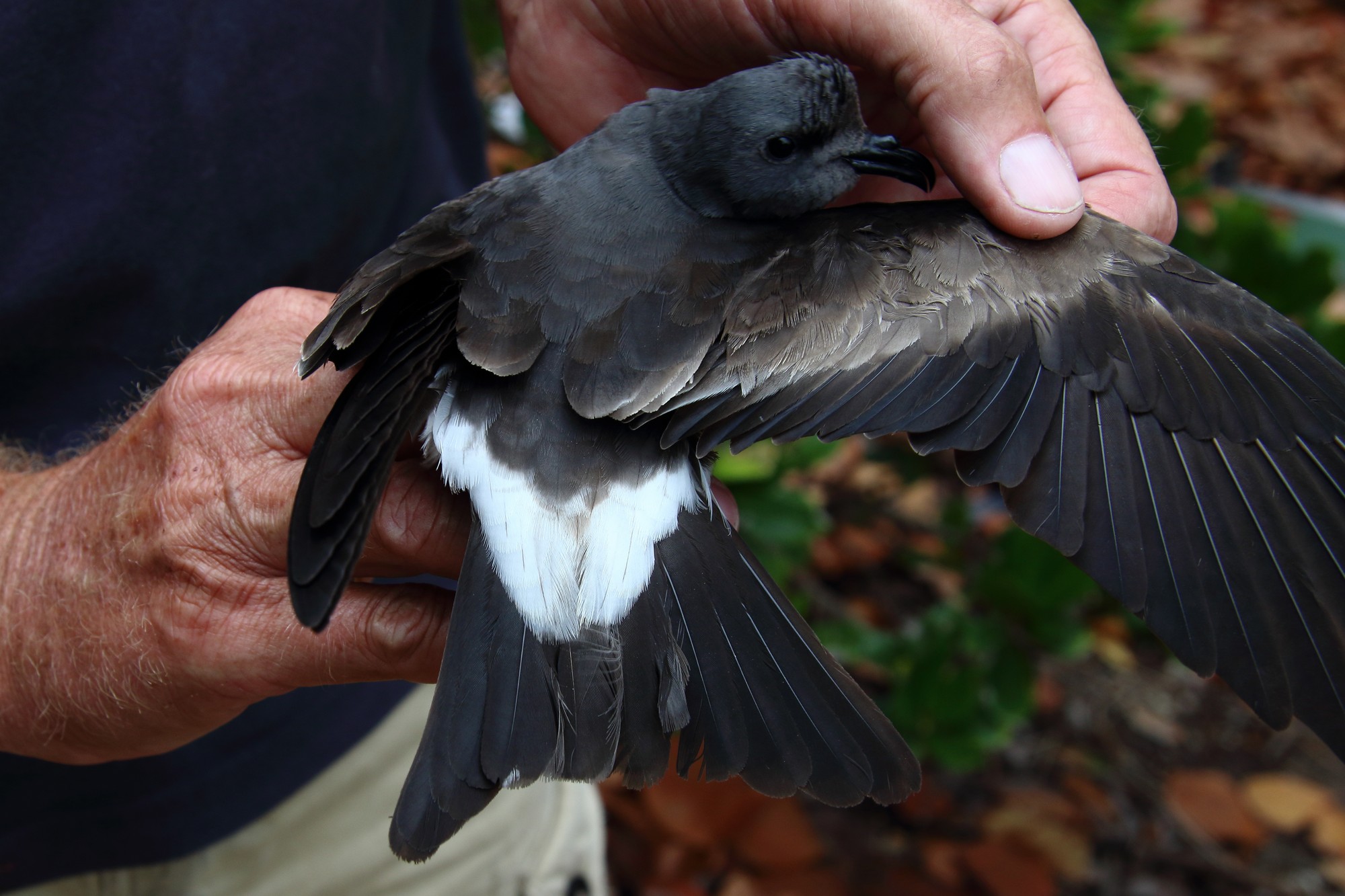
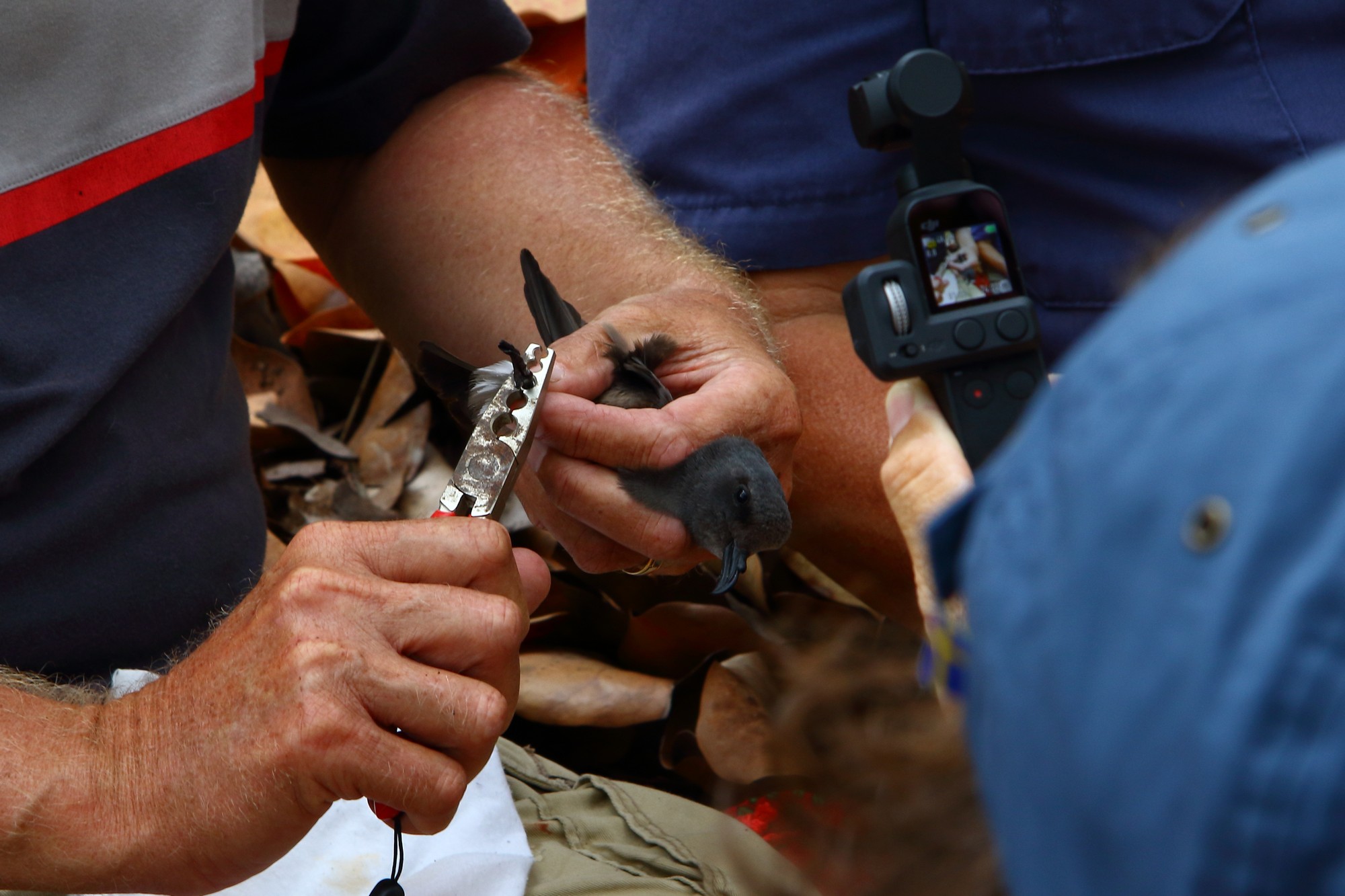
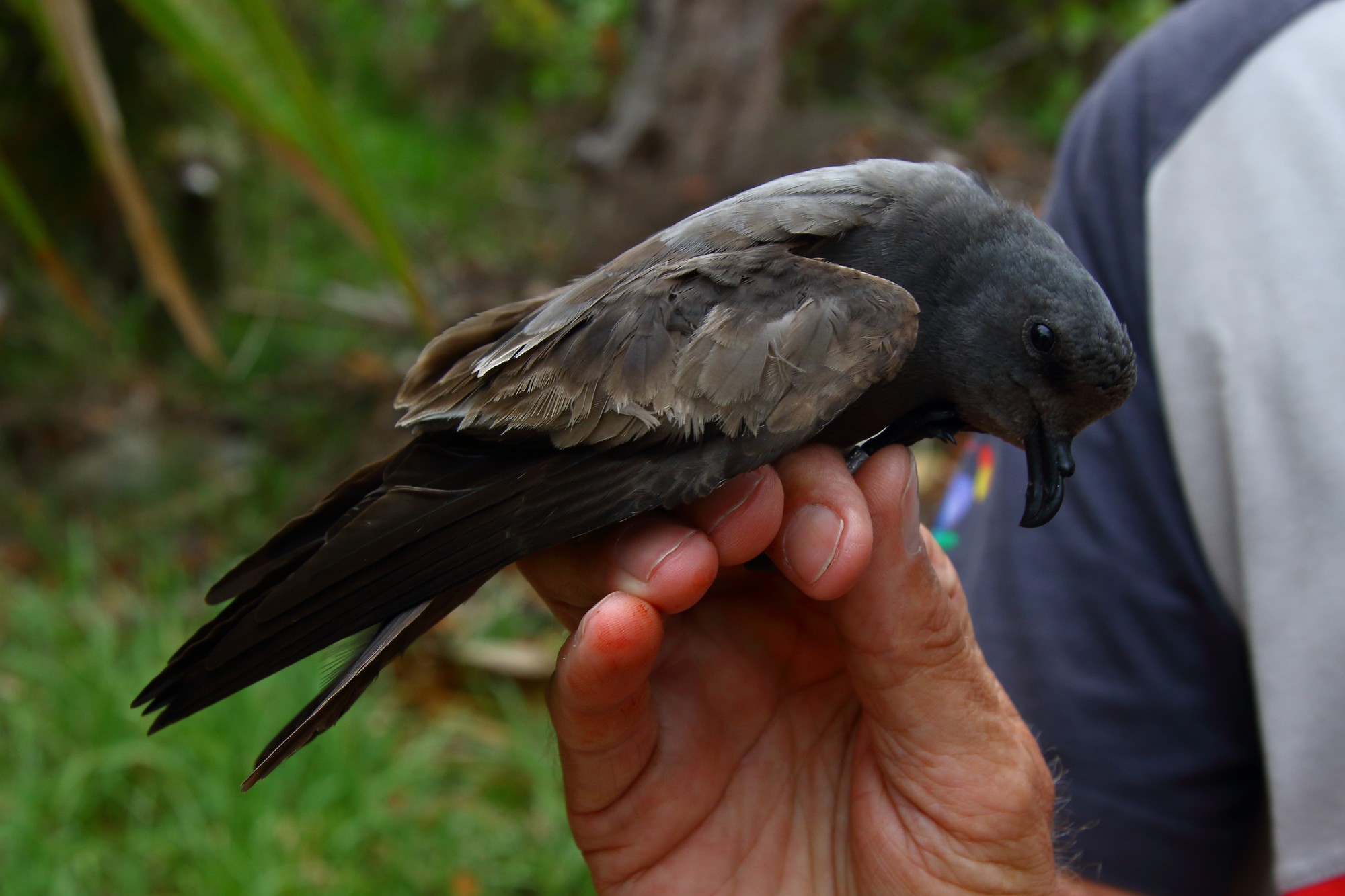
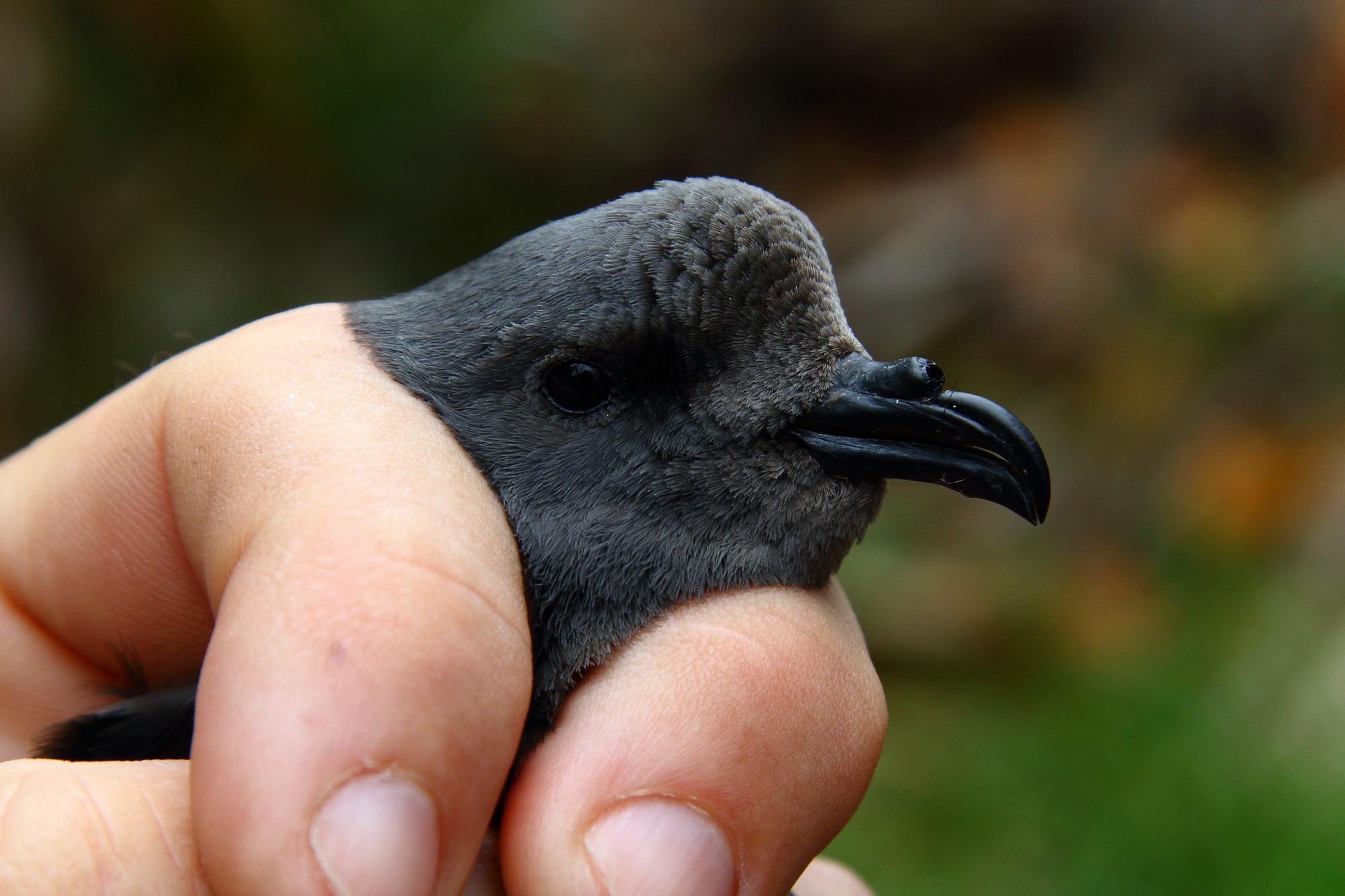
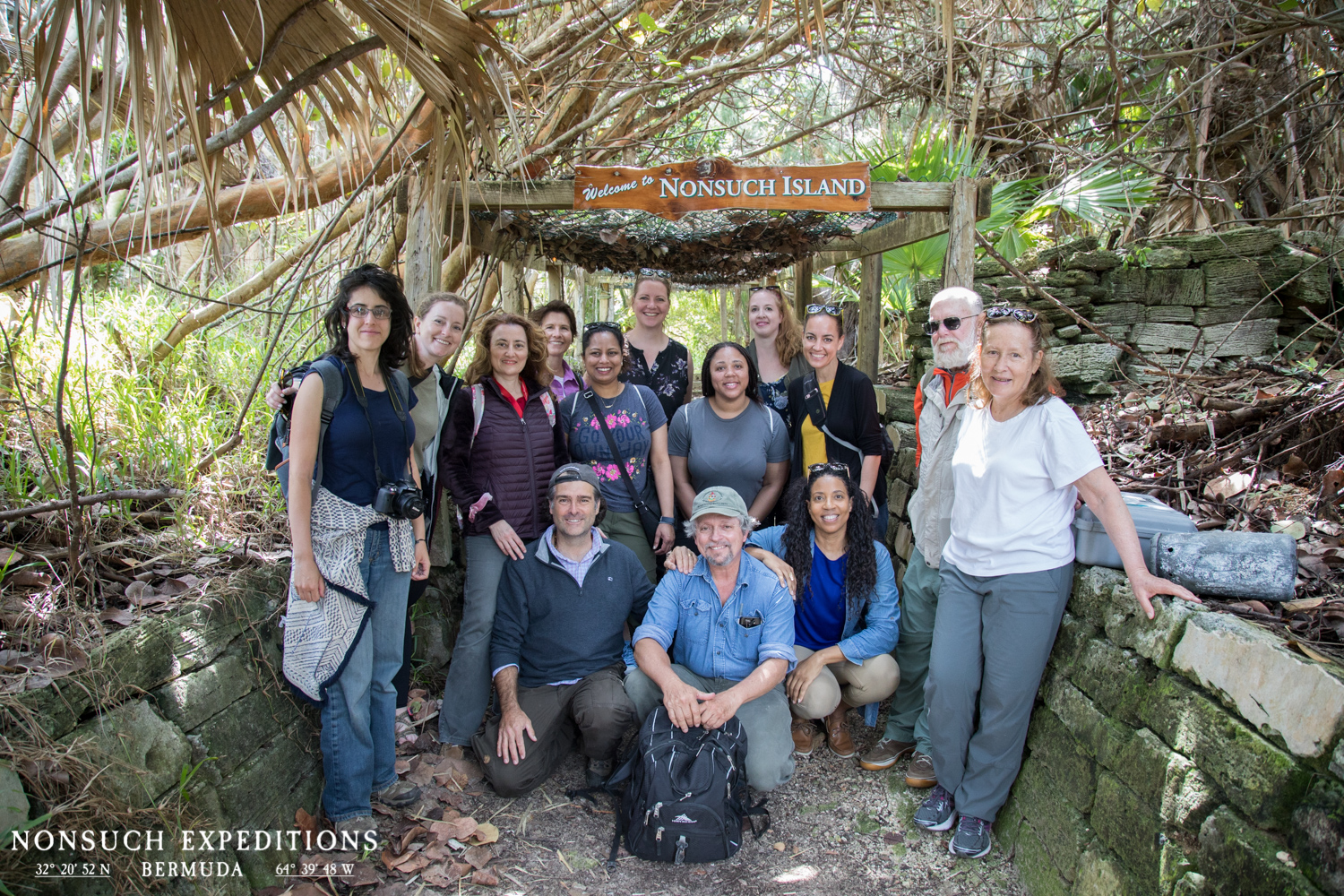
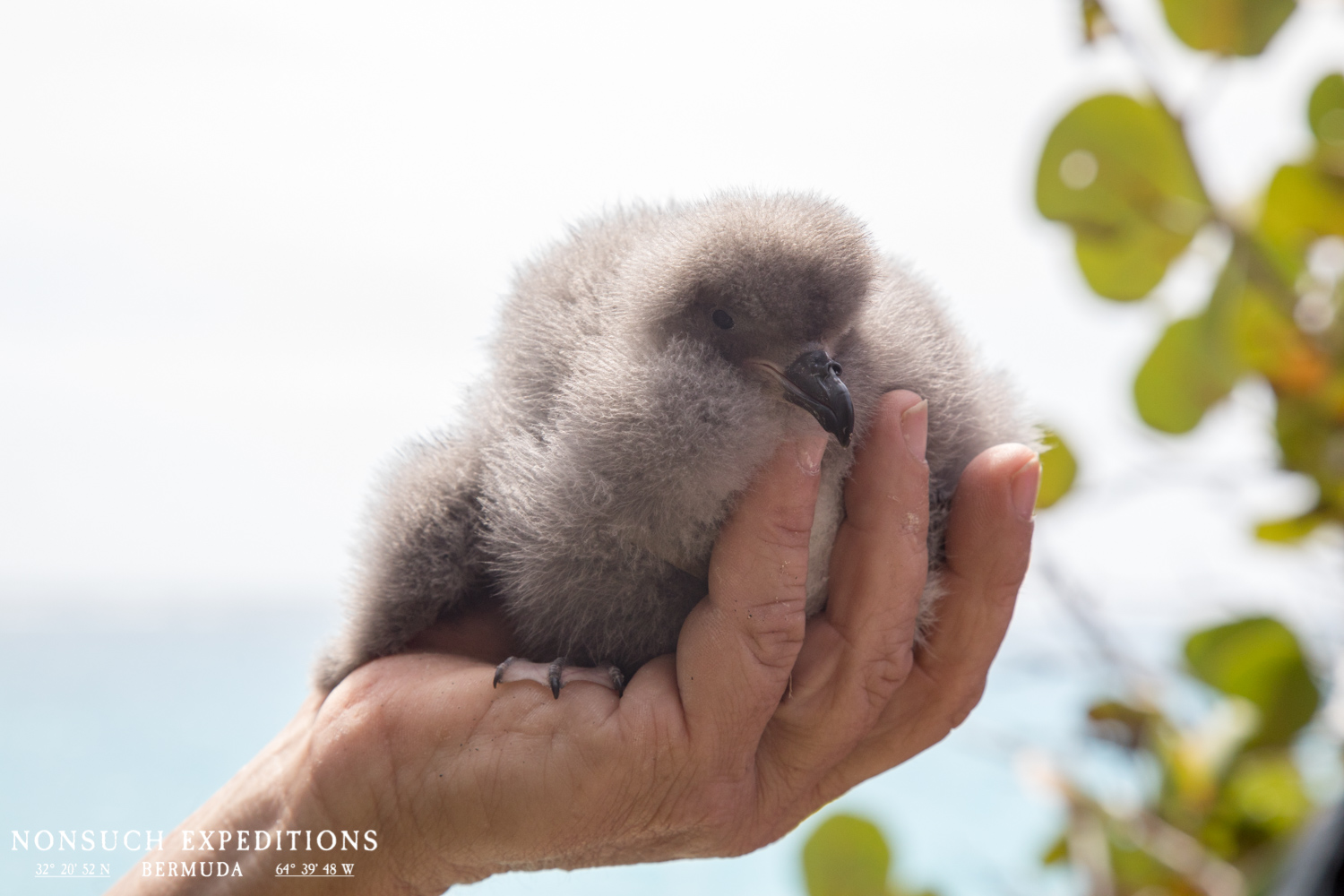
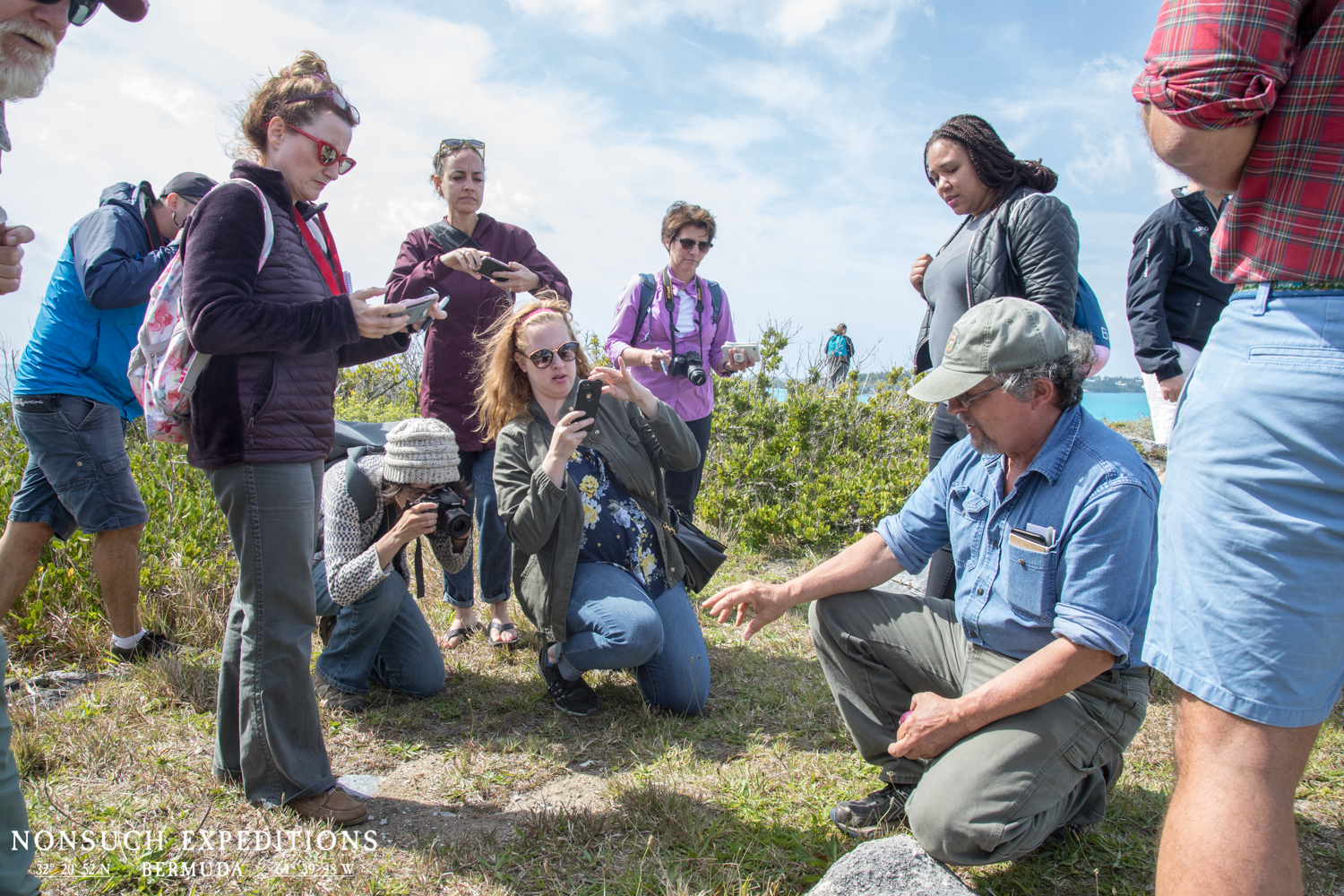
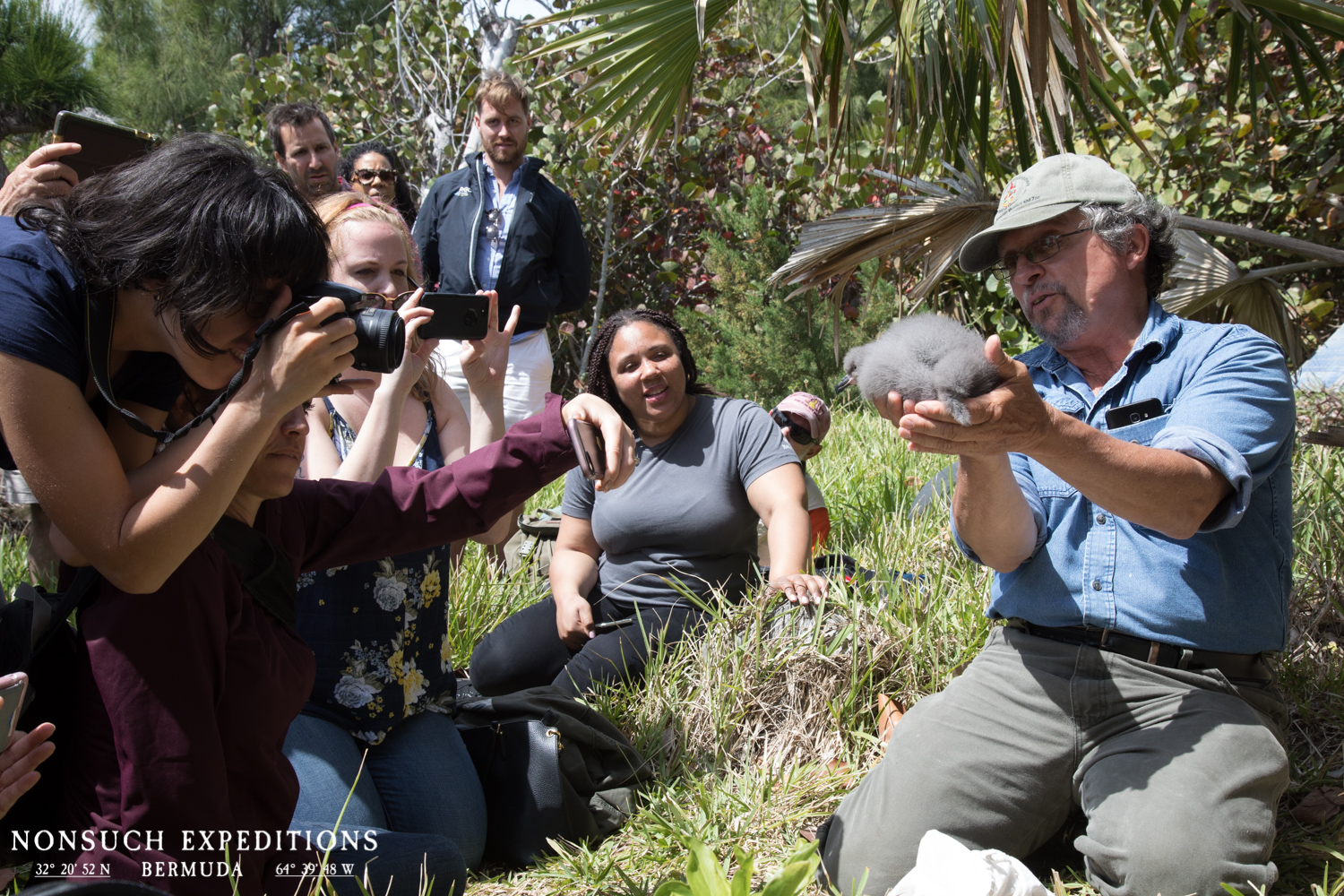
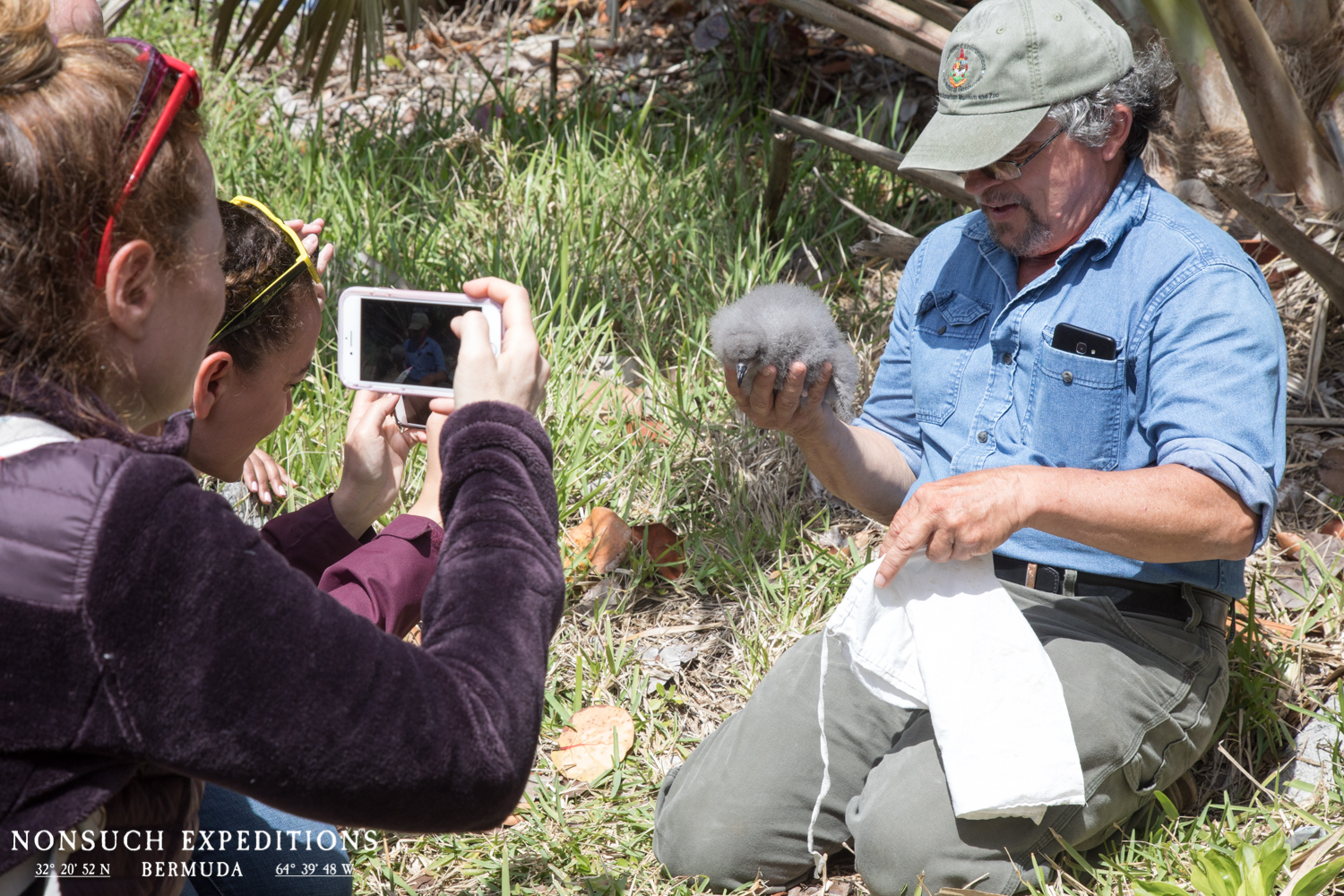
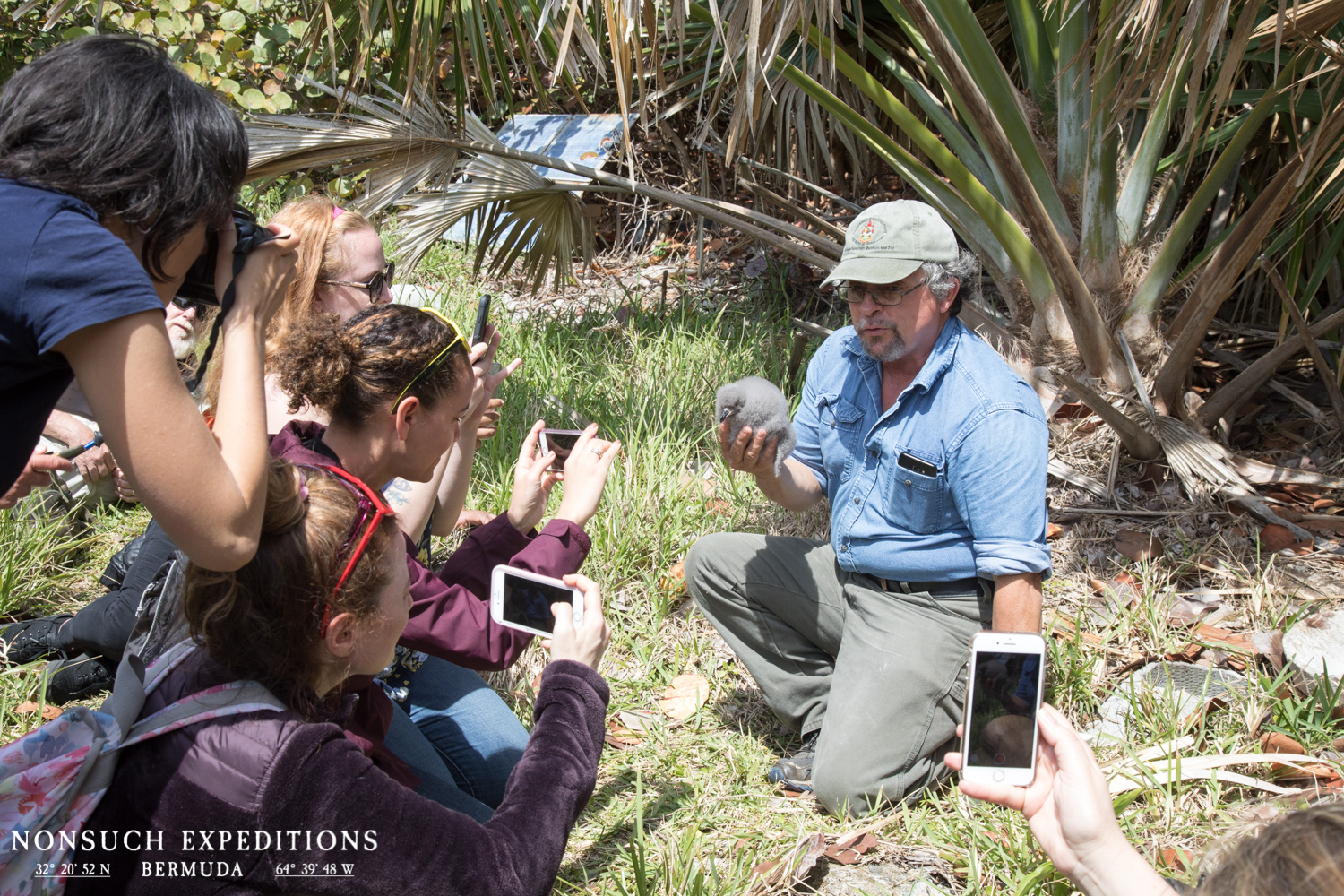
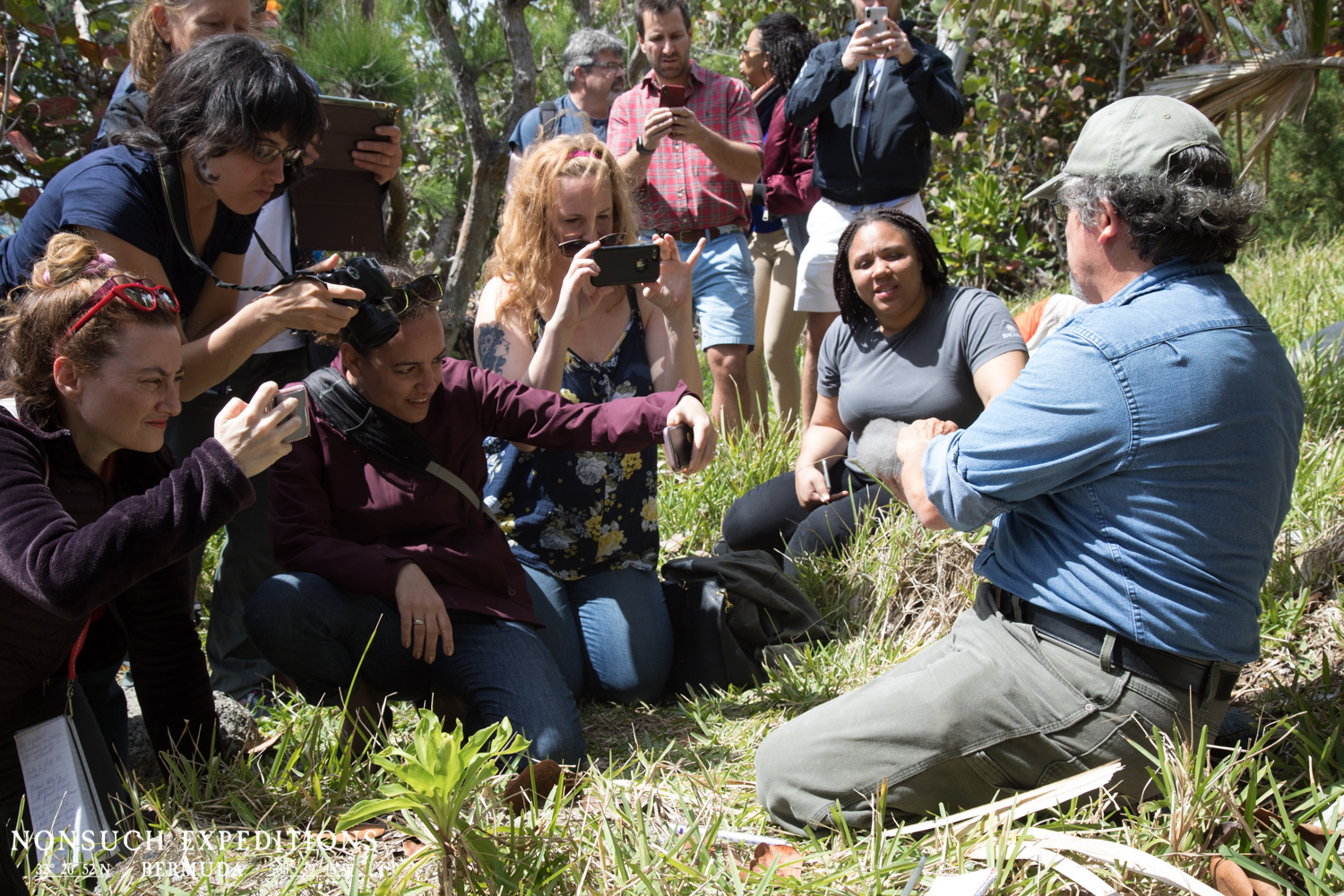
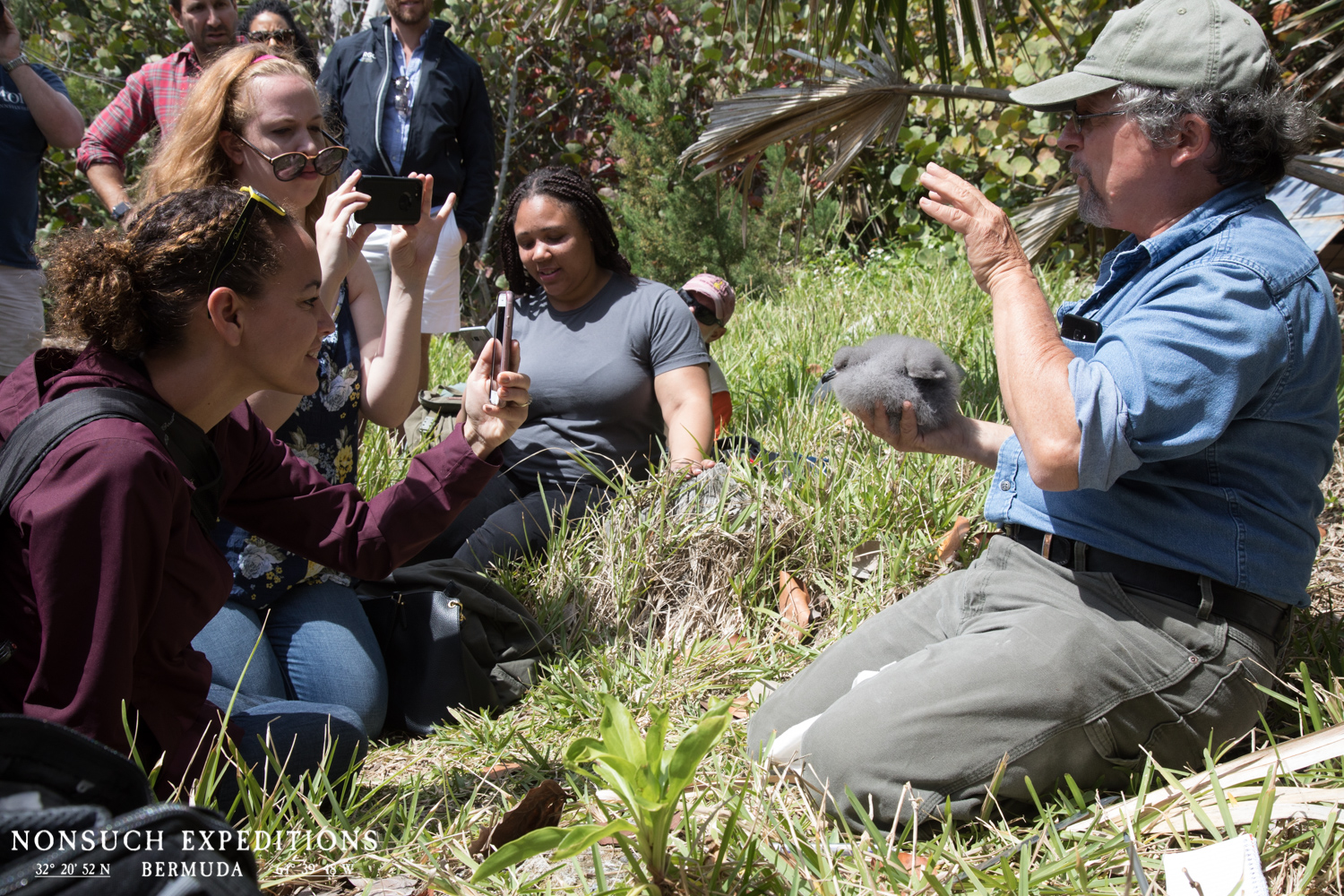
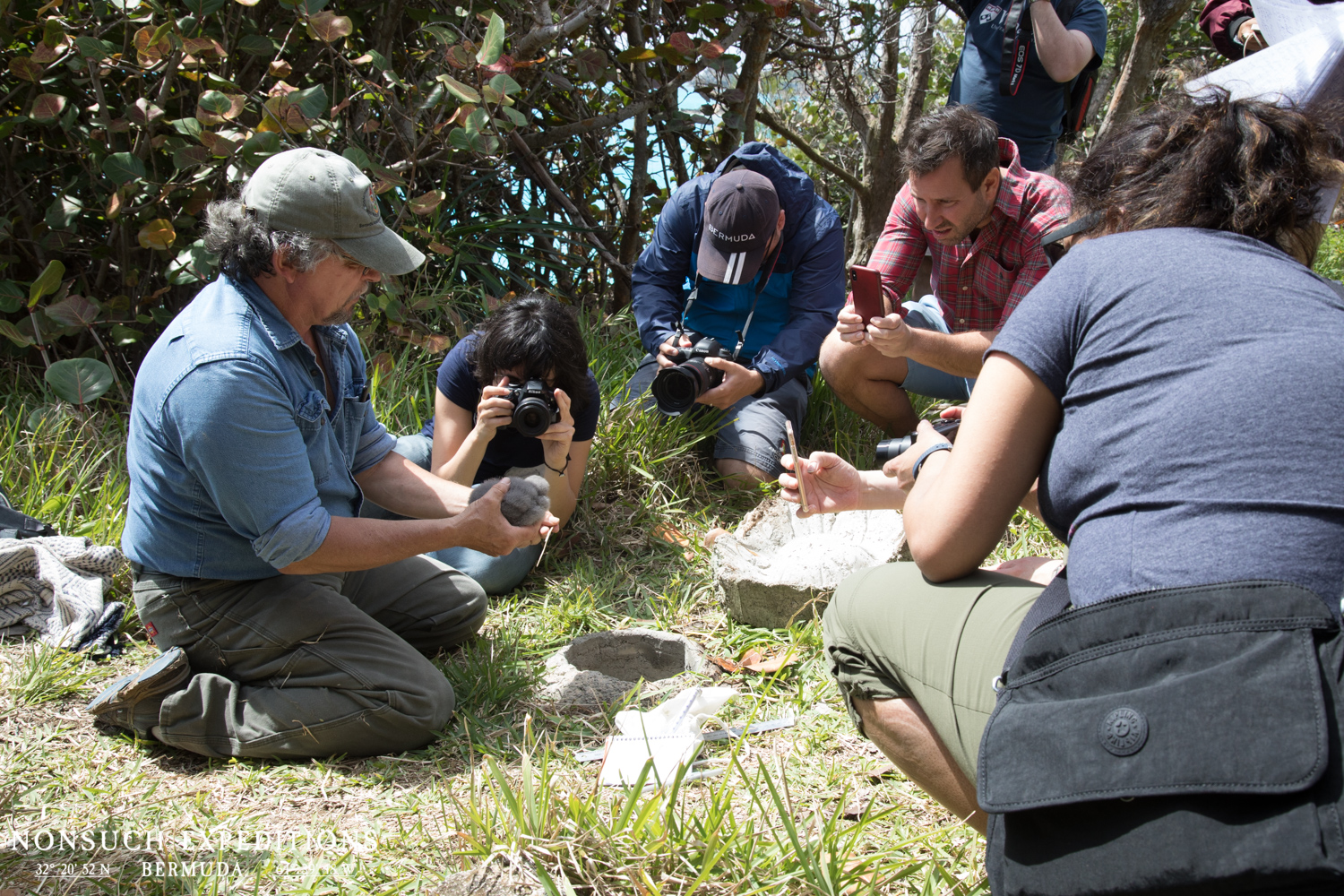
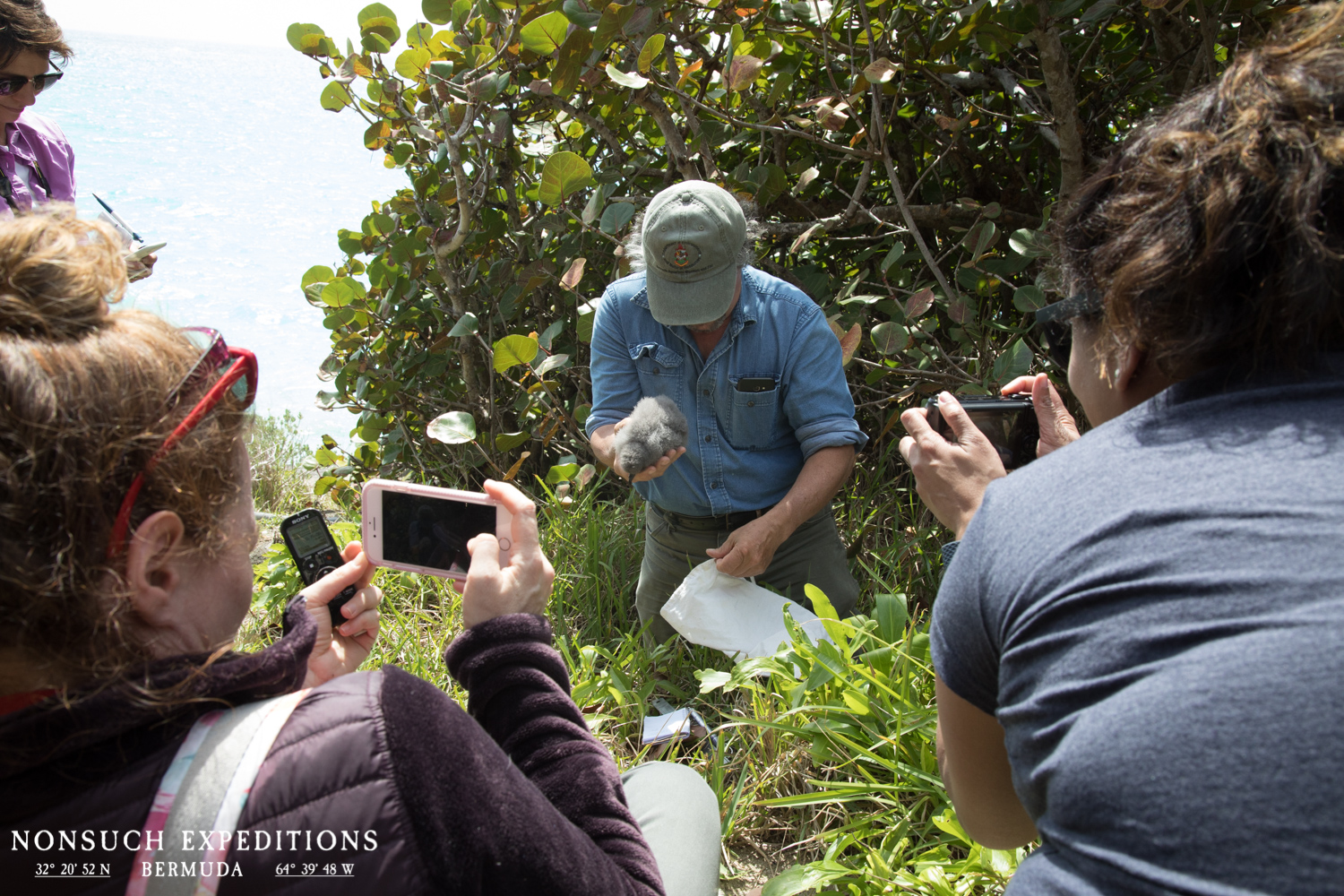
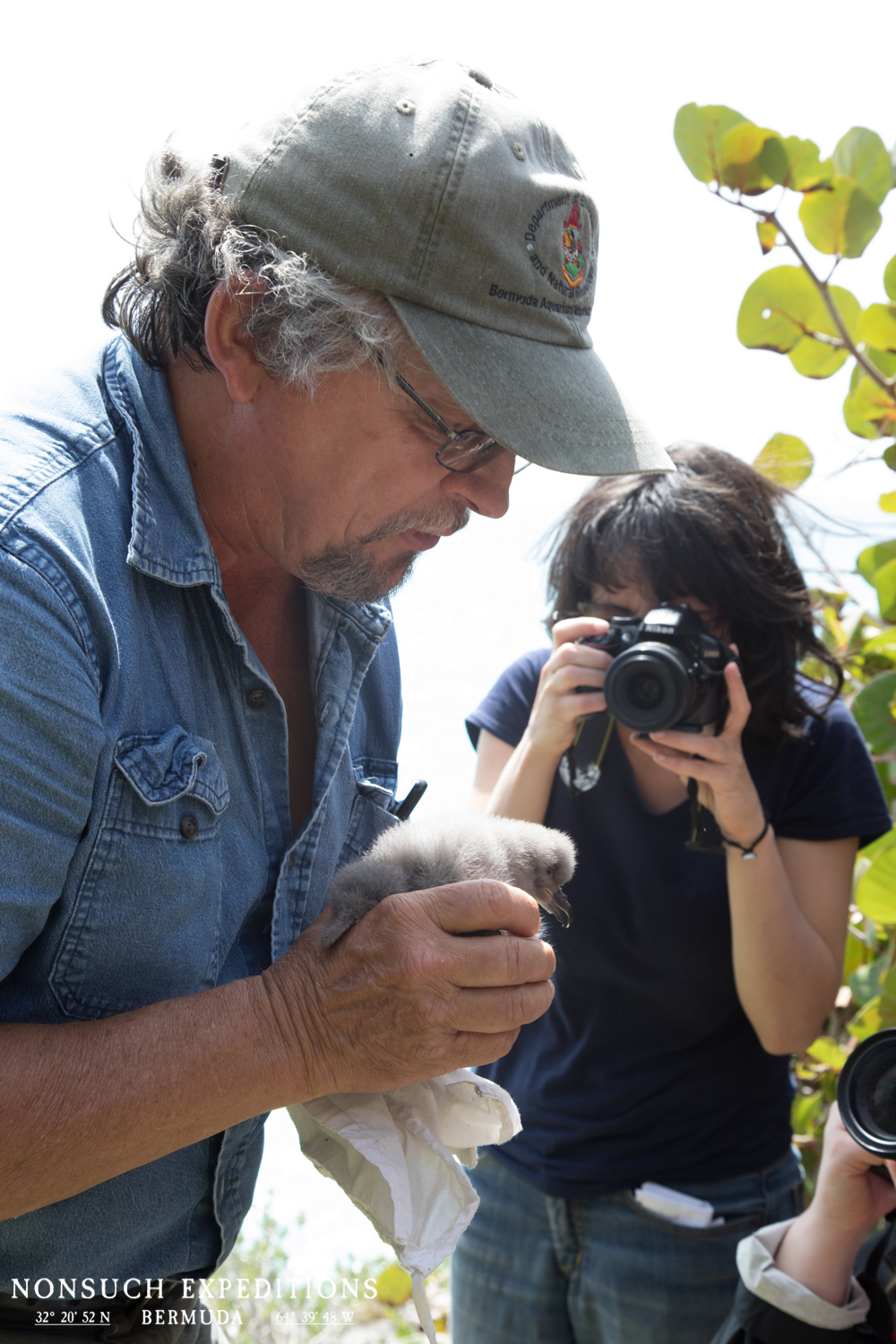
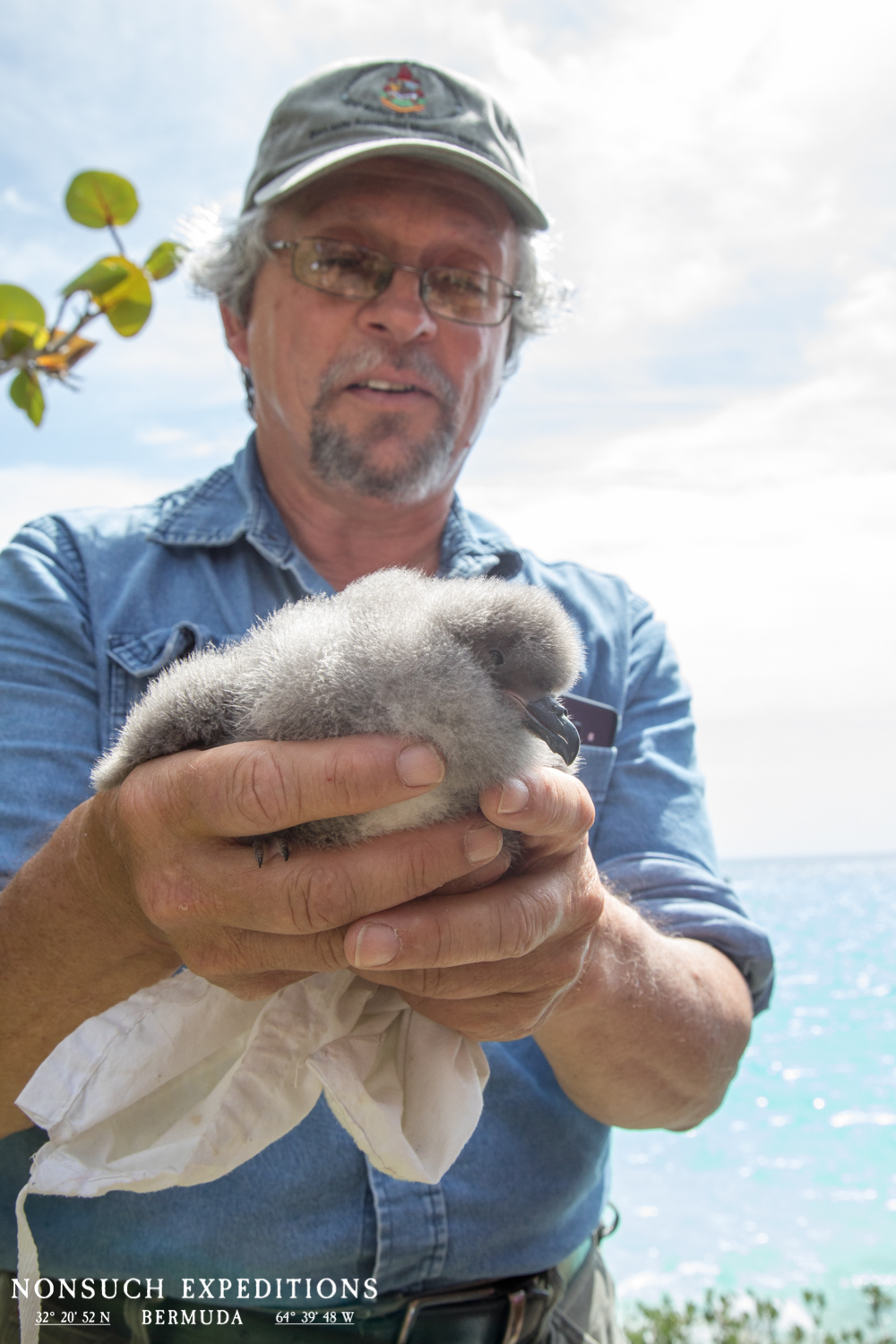
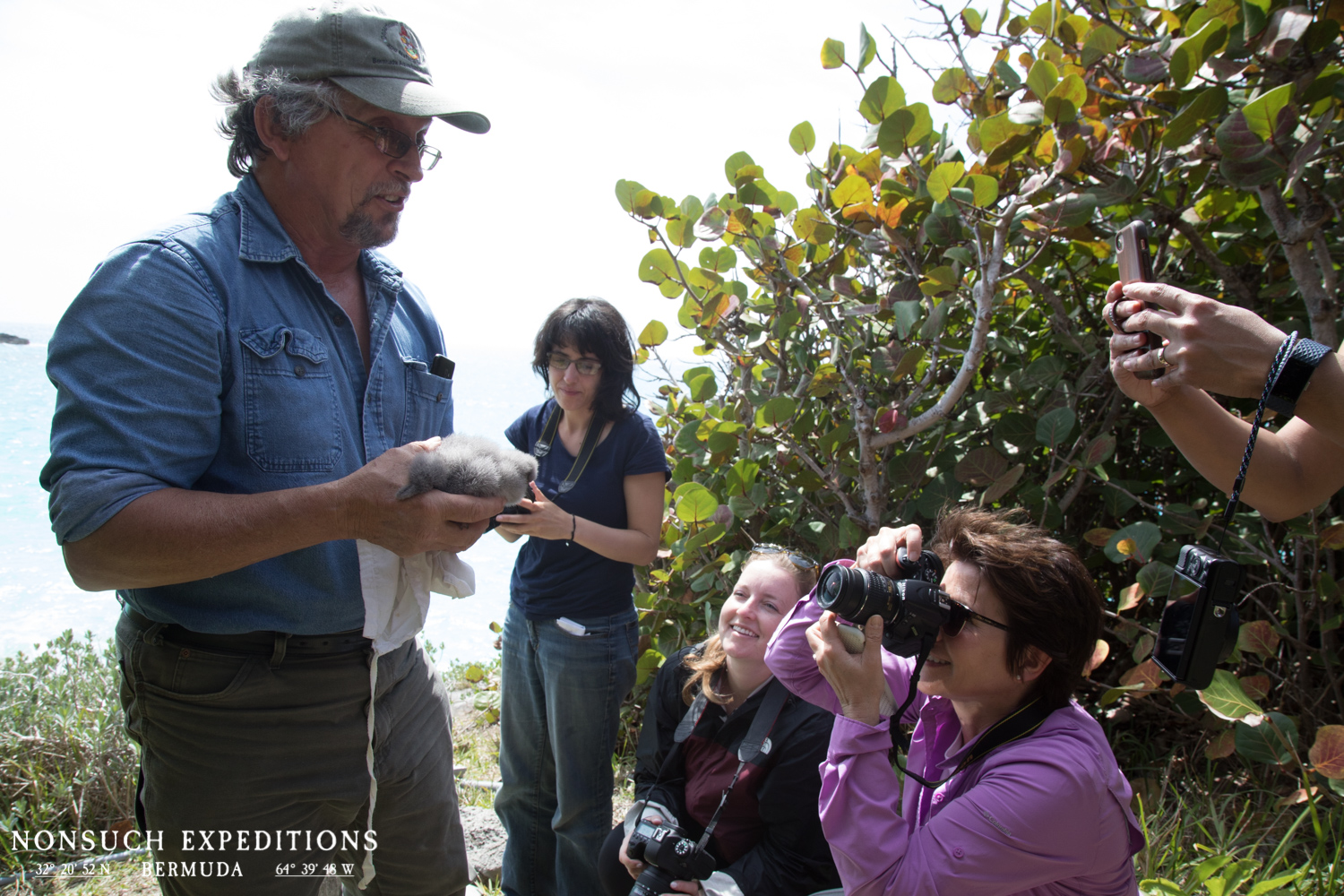
The 2018/2019 breeding season included a number of collaborative research projects that have been undertaken by the Terrestrial Conservation Division of the DENR with international partners. In conjunction with two separate groups, a multi-year program of fitting Cahows and a few Tropicbirds with 2 different types of advanced GPS tags was initiated to accurately map oceanic foraging area use. The first of these groups, including researchers Letizia Campioni of Italy and Monica Silva of Portugal, representing MARE-IPSA and CE3C-FCUL respectively, arrived in Bermuda and spent several weeks in January and February 2019 on Nonsuch deploying 22 GPS units on the tail feathers of adult Cahows that were incubating eggs, to accurately map foraging area use during the egg incubation period, and again in March and April during the early chick provisioning period. These GPS tags record data for up to 5 weeks and do not process or calculate location in real-time; instead, the units record the time taken to contact the GPS satellites, which in turn is used to determine location every 30 minutes when downloaded. These location fixes are accurate to within a meter or two, and by not using a transmitter, the units are even lighter (and a thousand times more accurate) than the archival geolocators used a decade before, at only 3.1 grams in weight.
Almost all tags were eventually recovered from the birds, with extremely detailed location data recorded both during “off-shift” feeding trips by incubating adult Cahows (when their partners relieved them from egg incubation duties), and during provisioning trips out to sea to gather food for the growing chicks. The data showed the birds flying at speeds of up to 40-50 mph when returning to Bermuda from foraging areas, and one of the first tags recovered recorded a visit to the Georges Bank, a well-known fishing ground 120 miles southeast of Boston. The Cahow making this 800-mile trip was a male that incidentally was the first translocated bird confirmed returning back to Nonsuch in 2008!
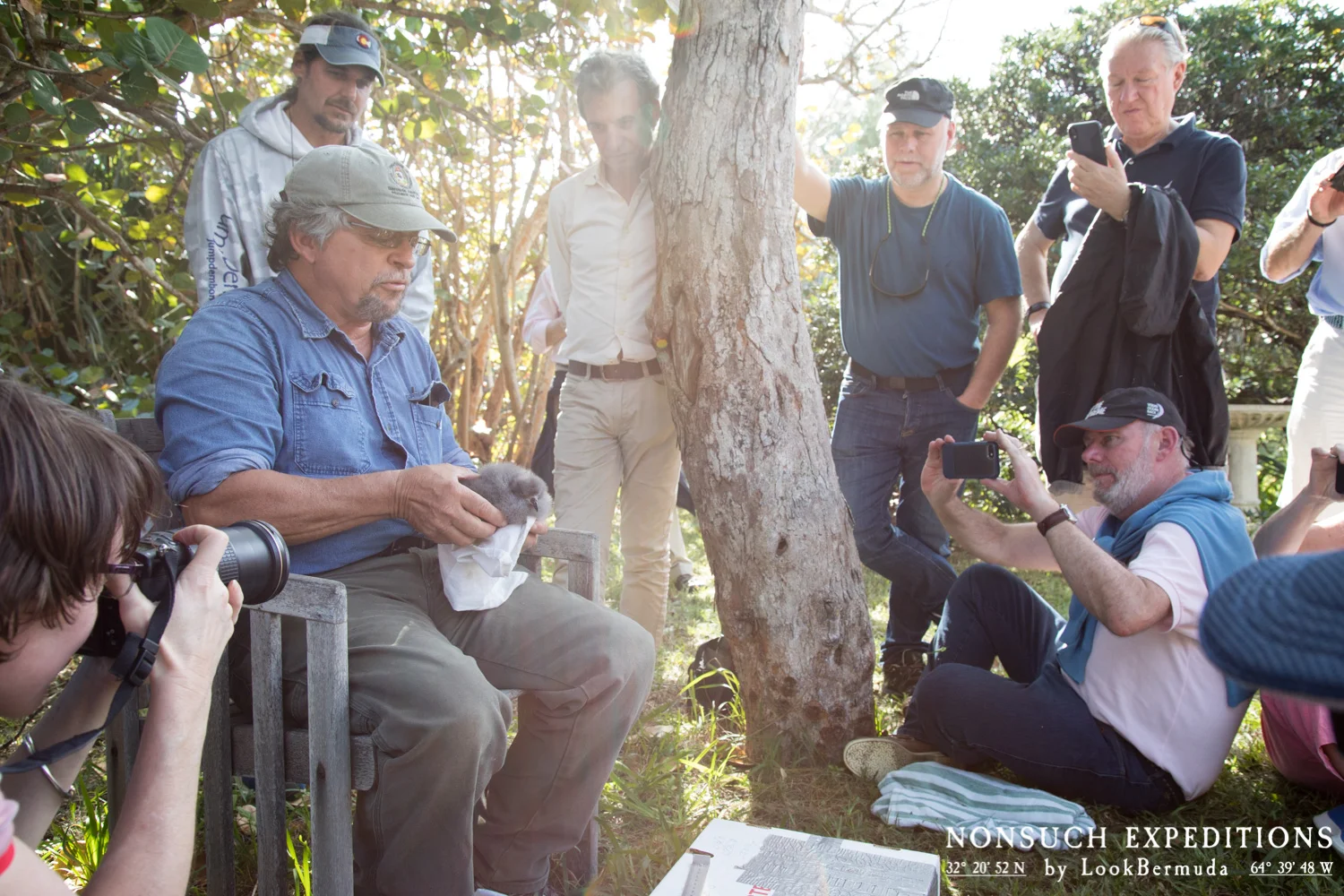
In addition to the GPS studies, blood and feather samples were collected from nearly 90 adult Cahows, and are currently being analyzed to investigate the following:
A) To identify the trophic niche of adult Cahows during the breeding season, by Stable Isotope Analysis of the blood and feathers;
B) To investigate whether birds are exposed to Persistent Organic Pollutants integrated with diet (analyzing blood samples to determine levels of DDT, DDE, PFOs, PCPs etc.);
C) To understand whether the relatively high proportion of infertile, failed eggs is related to the concentration of bioaccumulated contaminants (e.g. DDT/DD have toxic effects causing eggshell thinning) and/or to bird breeding experience (i.e. relatively high percentage of younger, inexperienced breeding adults)
The second group consisted of Carina Gjerdrum of the Canadian department of Environment and Climate Change, and Andre’ Raine of the Kauai Endangered Seabird Recovery Project, who also visited Bermuda in April, staying on Nonsuch Island while they deployed slightly larger German-made GPS tags. These tags use small solar panels to extend battery life so that tags can collect data for much longer periods of as much as 4-6 months. They also transmit their data directly to a base station unit set up on the ground at the nesting colony site, so that the tags do not have to be physically removed from the birds to collect the data. A total of 6 tags were deployed by this team, with location data from chick feeding trips being eventually received from all of them.
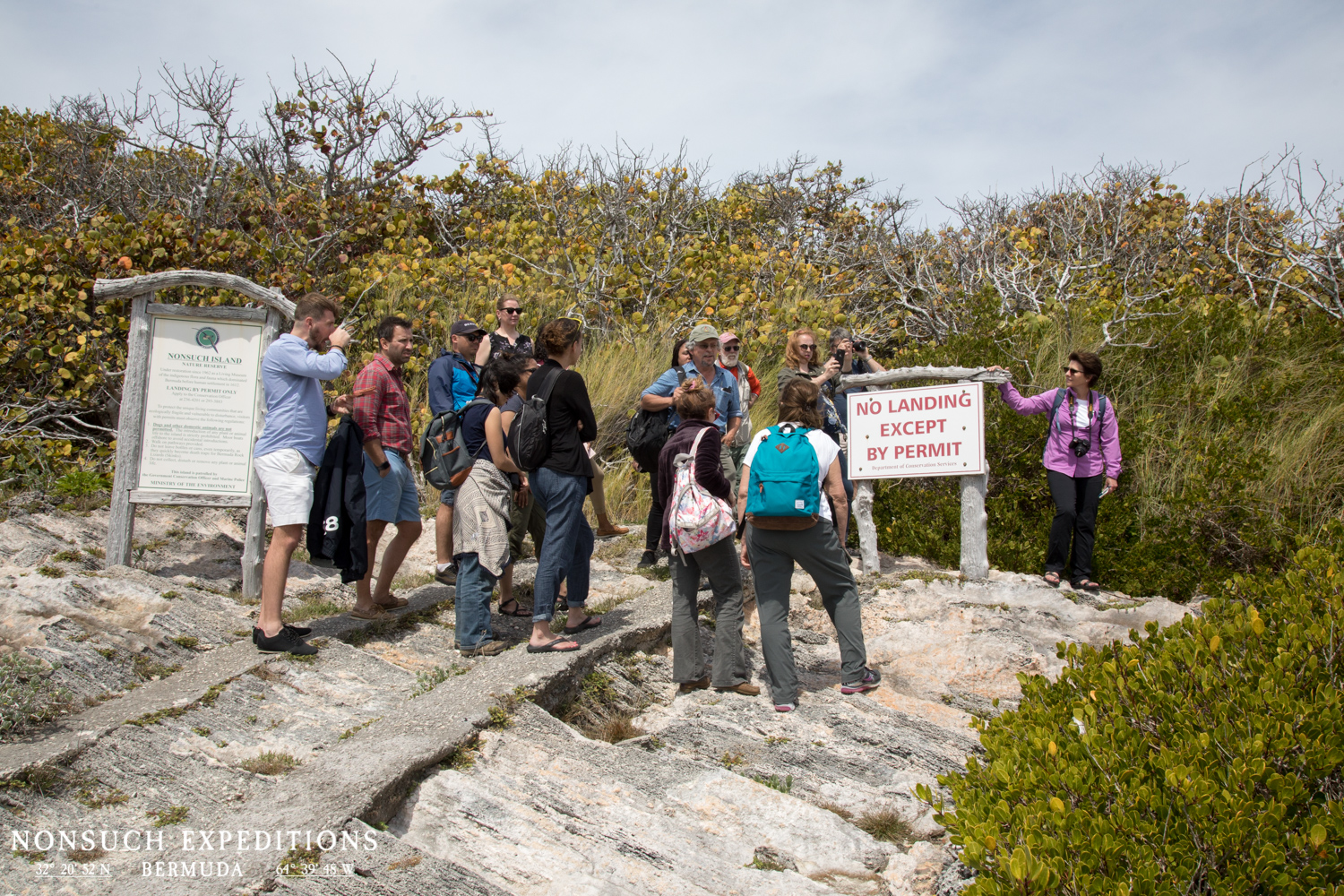
An important development for the Cahow has been the establishment of new nesting colonies on two additional larger islands in Castle Harbour. When recovery efforts began in the early 1960s, the Cahow only nested on four tiny islets with a total area of just 3.401 acres (1.376 ha). An effort to establish a new nesting population on Nonsuch Island (area 16.5 acres / 6.677 ha) began in 2004 with two separate translocation programs, with 102 chicks translocated to Nonsuch 2004-2008, and 65 chicks translocated 2013-2017. These projects have been successful, and there are now two breeding colony sites on Nonsuch, supporting a combined total of 22 established breeding pairs in 2019.
Including Southampton Island, in which natural colonization was confirmed in 2013 and on which a small but growing population of Cahows also nest, the total breeding habitat has increased from 4 islets totaling 3.4 acres, to 6 islands totaling 22.261 acres.
The new Nonsuch Island colonies are especially important for the future recovery of the Cahow, as they could potentially support several thousand nesting pairs. The original nucleus of pairs consisting solely of translocated Cahows at the Nonsuch sites are now increasingly being supplemented by non-translocated prospecting birds attracted from the original nesting islets, and of chicks produced by the new Nonsuch breeding pairs, of which at least 7 have now returned to Nonsuch Island to choose nest burrows and mates. An indication of the success and productivity of the new Nonsuch population is the fact that since the first Nonsuch-born chick, named “Somers” was produced in 2009 by a translocated pair of Cahows, by 2019 a total of 79 successfully fledging chicks have now been produced by the growing Nonsuch population.
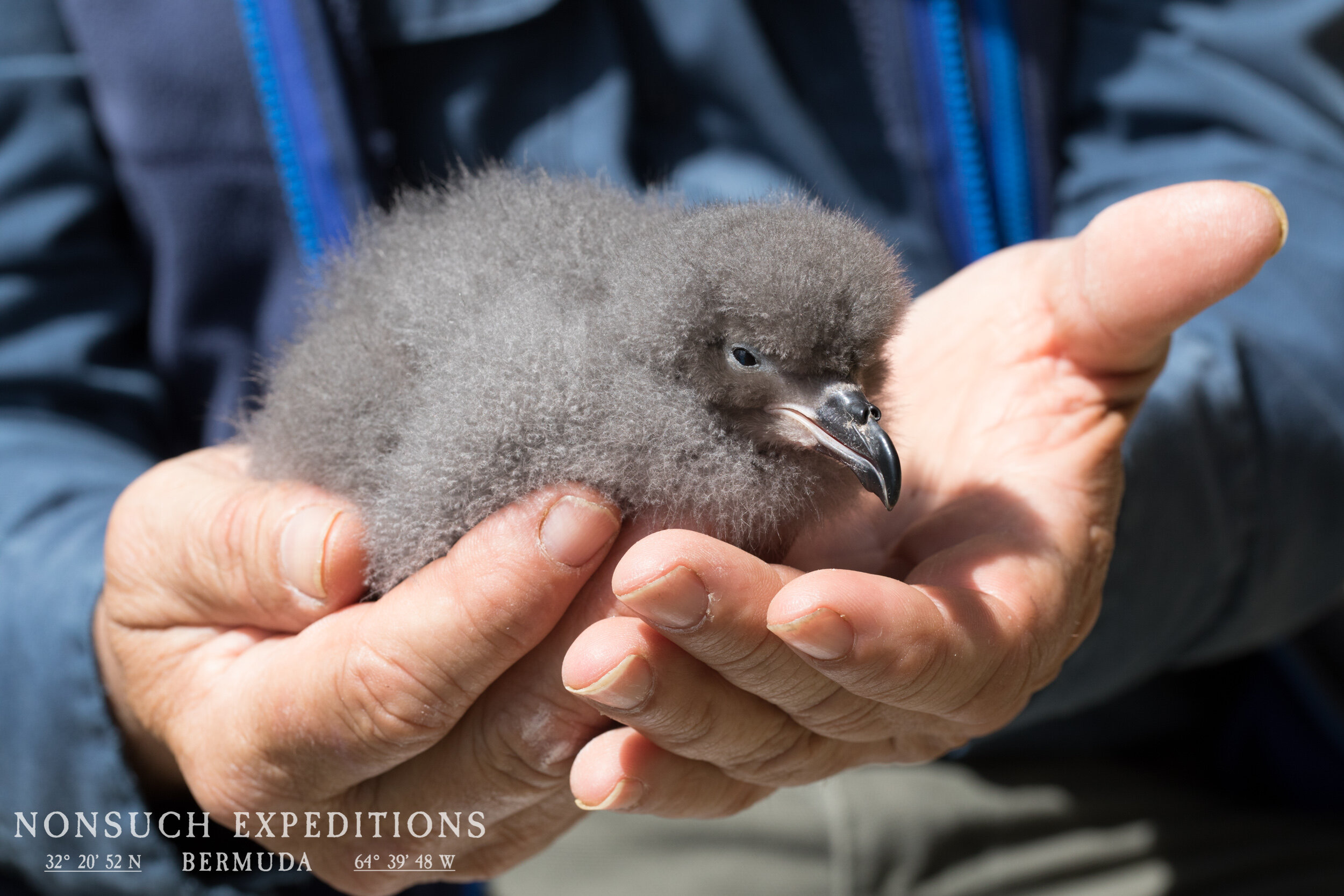
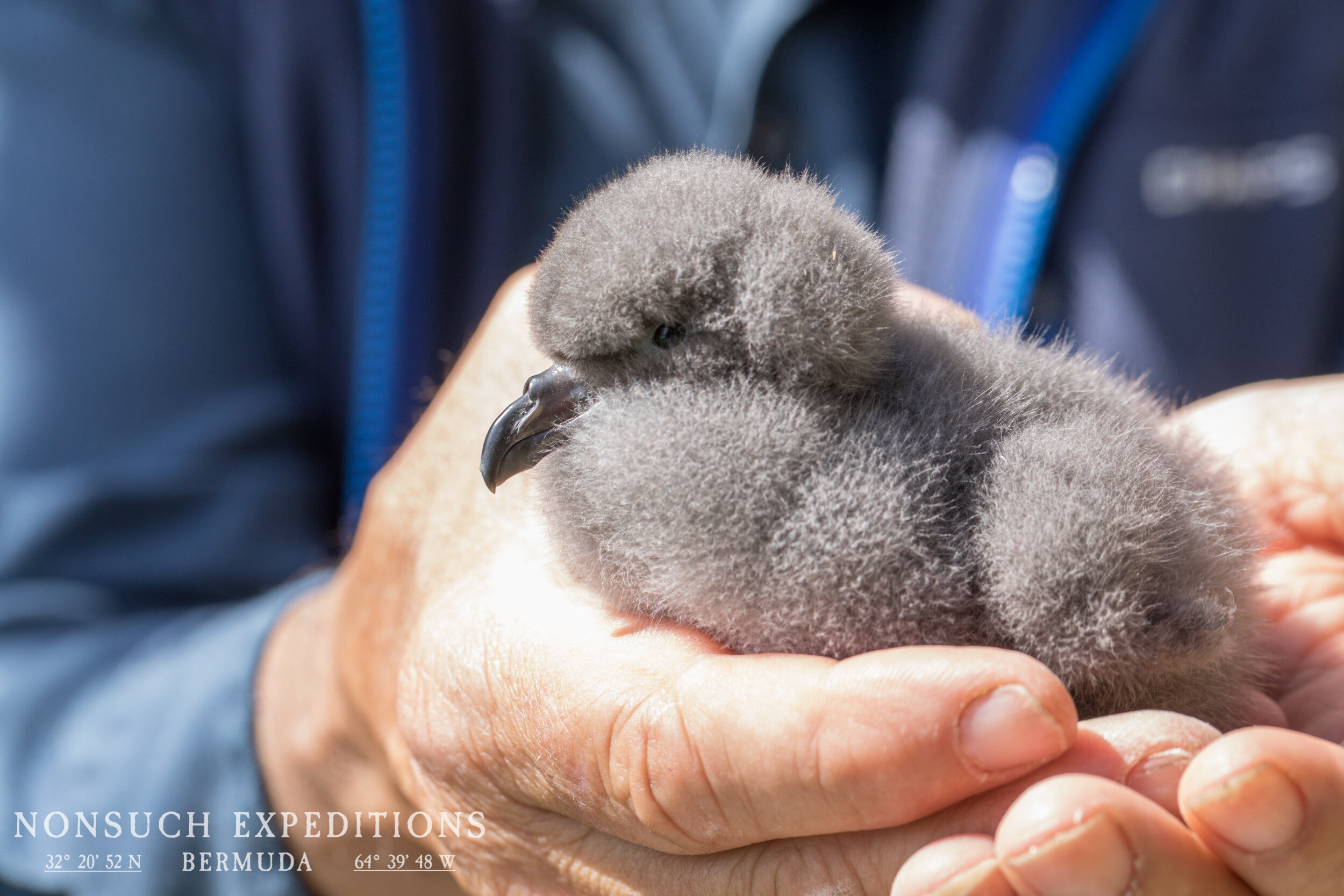
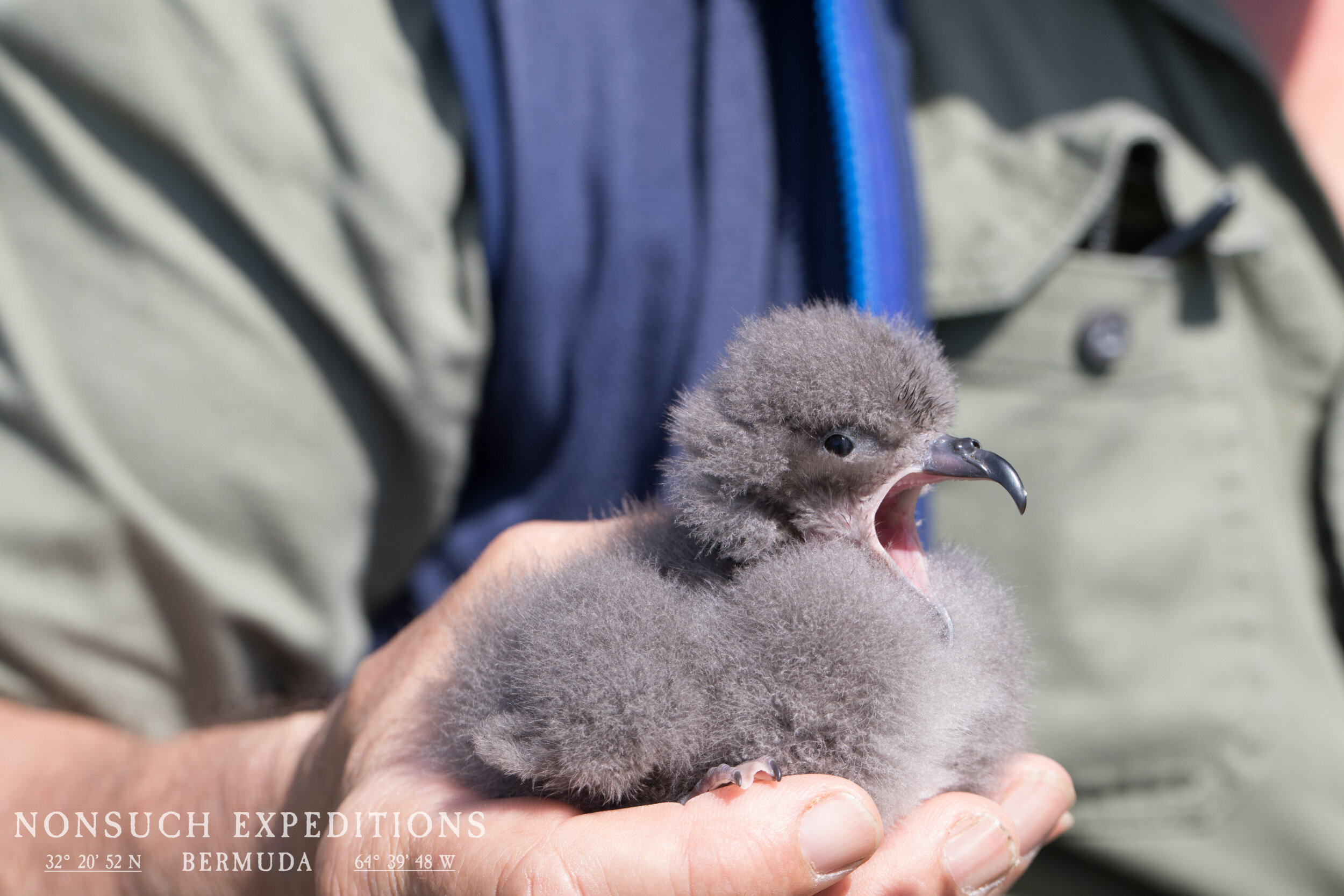
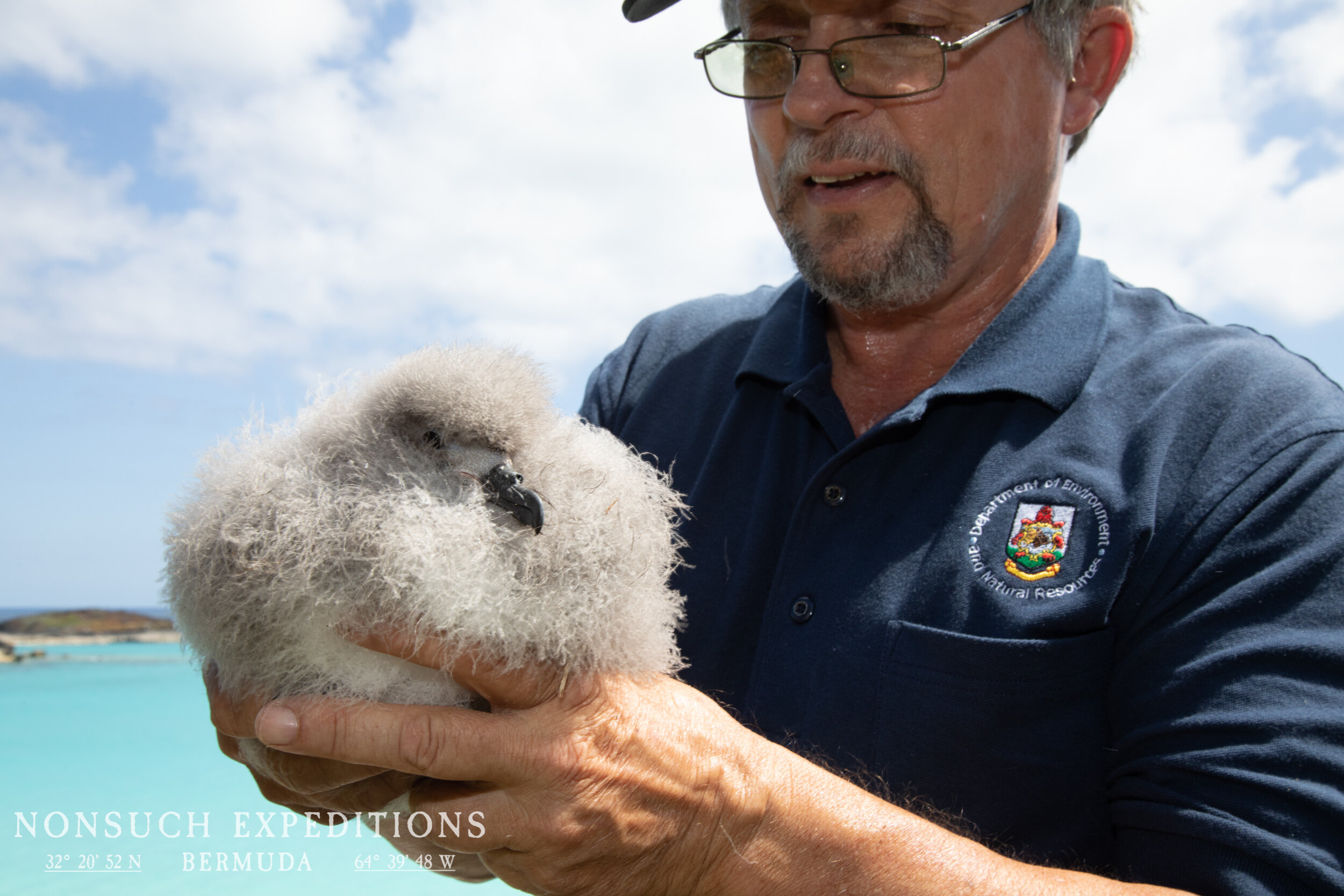
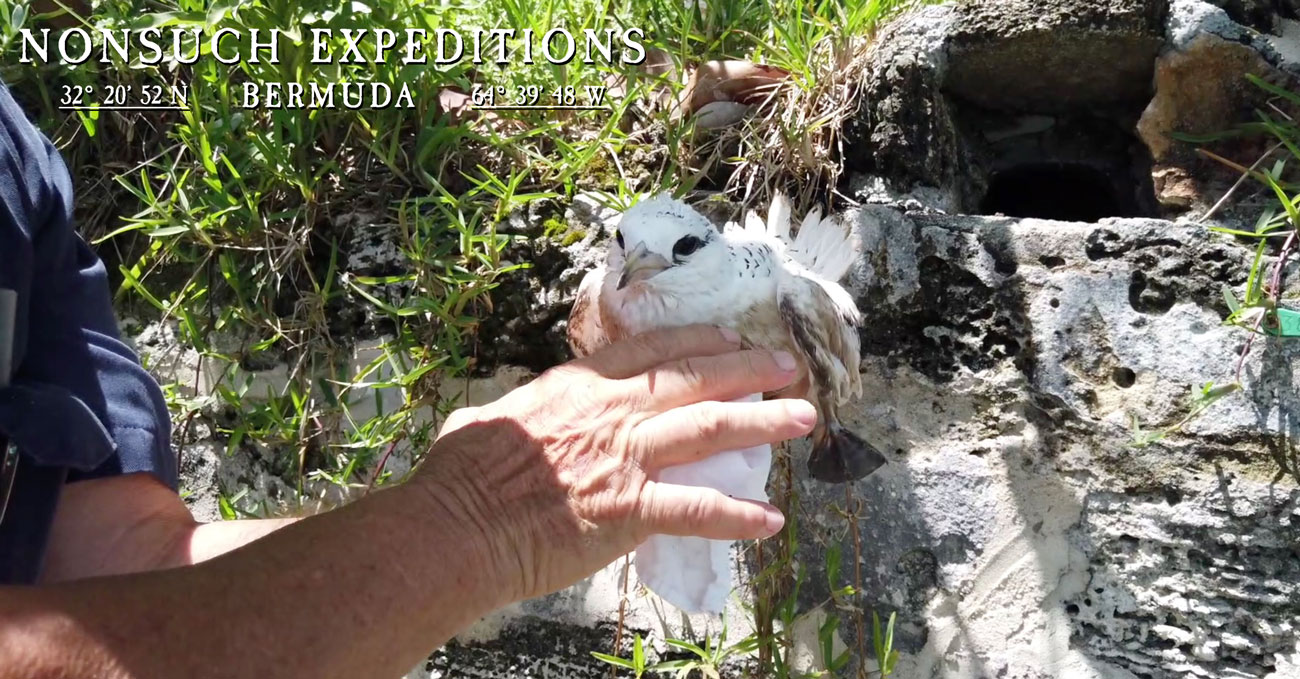
Despite lower than-average weights recorded for a number of the chicks this season, indicating that food was more difficult for the adults to find at their foraging areas, a record number of 73 successfully fledged chicks was recorded for 2019, of which 12 were produced by the Nonsuch colonies. Low weights resulted in a total of 8 chicks having to be taken into care and given supplemental feeding of fresh Anchovies, and I am happy to report that 7 of the 8 chicks recovered enough weight to fledge successfully out to sea.
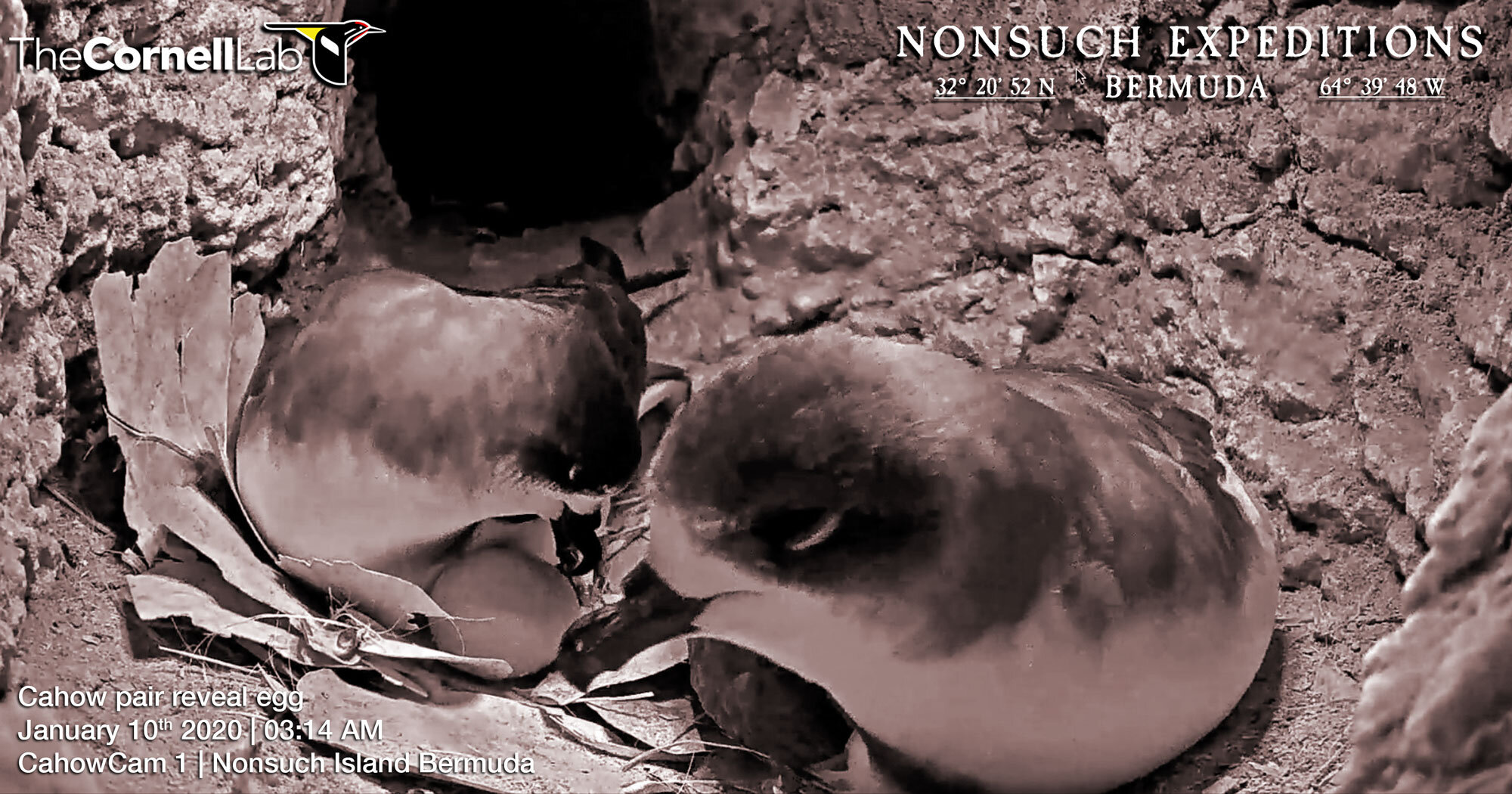
Public outreach efforts using live-streaming infrared video cameras continue to evolve, with two new livestream camera options developed and installed by JP Rouja of LookBermuda / The Nonsuch Expeditions and the Cornell Lab Bird Cams in partnership with the DENR. A new live-cam was installed in a 2nd Cahow burrow, and a new “Surface Cam” provides a view out over the front of the nesting colony and the south coast of Nonsuch Island. This proved timely, as the egg failed in the original “CahowCam 1” nest, but the 2nd camera provided an alternative as the chick hatched and eventually fledged to sea in early June, sharing the nest for a month with a Leaches Storm-petrel! This was likely the same bird seen in the other CahowCam nest on two previous years after the Cahow chicks had fledged. This tool has proved invaluable not only to our Team but also for our public outreach through which researchers, students and followers from around the World have watched over 20 million minutes of CahowCam video over the past 3 seasons!
Preparations are now underway for the return of the Cahows in late October for the 2019-2020 nesting season, and although Bermuda was severely affected by hurricane “Humberto” on the 18th September, with considerable roof, tree and utilities damage throughout Bermuda in winds gusting to 117-126mph, Nonsuch and the smaller Cahow nesting islands suffered very little damage. Because of the approach of the hurricane from the west-southwest, there was almost no storm surge or damaging ground swell damage to the Castle Harbour Islands, and all of the concrete nest lids remained in place on the smaller nesting islets.