
“Extremely windy, stormy weather conditions since the beginning of 2026 have made it difficult to safely make the trip from Flatts Inlet to the nesting islands of the Bermuda petrel (Cahow) in the Castle Harbour Islands Nature Reserve, which has reduced the number of visits to Nonsuch, and the outer nesting islands.
After having last visited on January the 23rd, during which I attempted to repair a “dimple dent” in the CahowCam1 egg, I was finally able to able get back out to Nonsuch with J.P. Rouja on the 4th of February, during a 4 to 5-hour gap in the dominant gale to storm-force winds, to carry out a complete check of nests, Cahows and eggs being incubated at the Nonsuch “B” nesting colony, which will be the subject of another post and video.
After this, before heading back and under the threat of an incoming gale, we were able to quickly check the two CahowCam nests at the Nonsuch “A” colony. There we were able to confirm that the egg in the CahowCam 1 (R831) nest has failed likely after being further damaged in a fight between the resident incubating female bird (band no. E0212) and a suspected invading Cahow, most likely a young prospecting male bird looking for a new nest and trying to evict the resident bird and take over the nest. This egg has now disappeared from the nest chamber and has probably been knocked into the entrance tunnel.
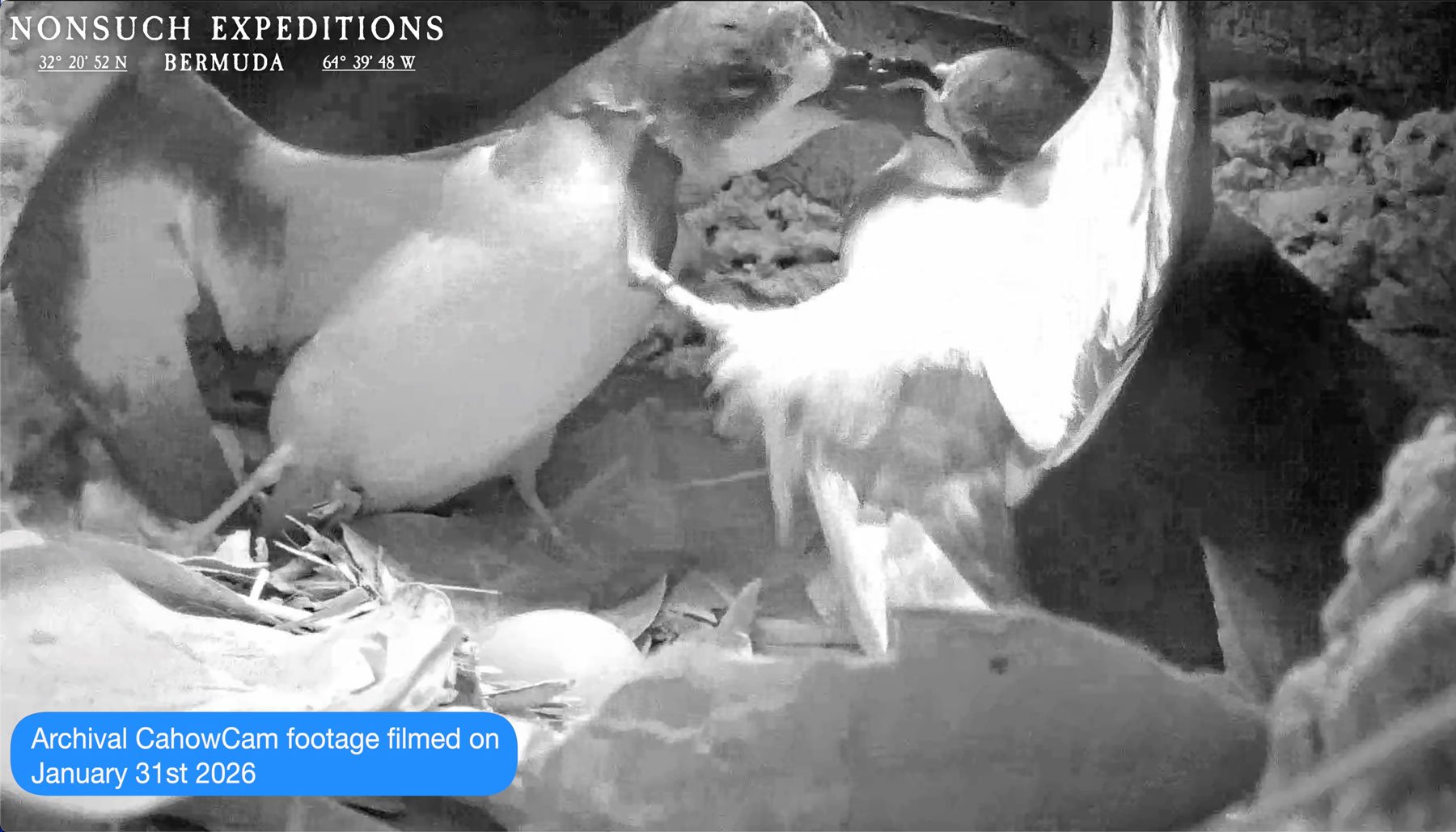
The news is much better in the CahowCam 2 (R832) nest, where on my previous monitoring visit on Jan 23 the resident male bird, “Sampson” (band no. E0174) was incubating a newly laid egg, only laid about 2 to 3 days before. On Feb 4, the female Cahow from this nest (band no. E0643) had returned and taken over incubation of the 57-gram egg, which when candled proved to be fertile, with a well-developed embryo inside.
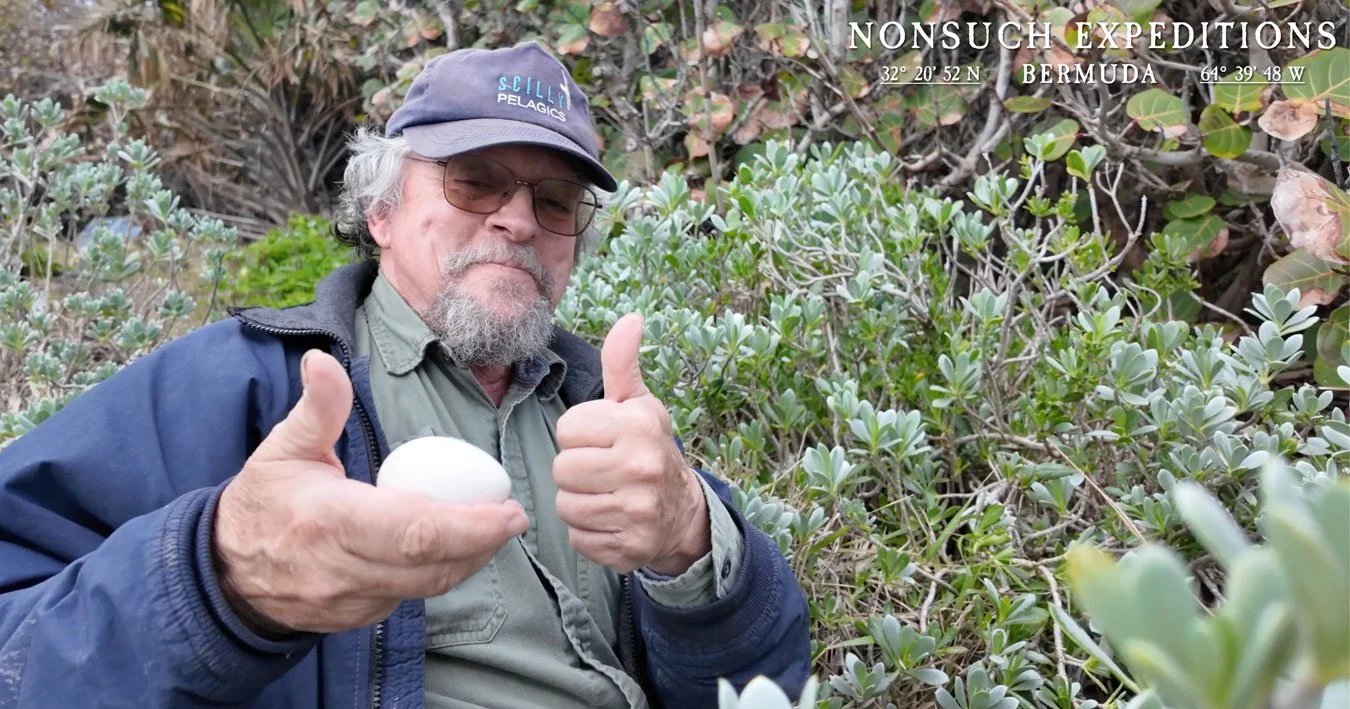
Jeremy after confirming that the CahowCam2 egg is fertile.
Although the CahowCam 1 pair will continue to make occasional visits to their nest, they are essentially finished for this season and will have to wait until the next (2026-2027) nesting season to have their next chance of producing a chick. Meanwhile, we will continue to keep our fingers crossed and monitor the CahowCam2 nest, and hopefully this pair will come through again and produce a downy chick sometime around the 10th of March! So please sign up for the Newsletter alerts and watch the LiveStream.”
Jeremy Madeiros Principle Scientist – Terrestrial Conservation, Dept. of Environment and Natural Resources